
Mangrove Landscape Unit Approach in National RPPEM Becomes Strategy to Preserve Mangrove Ecosystems
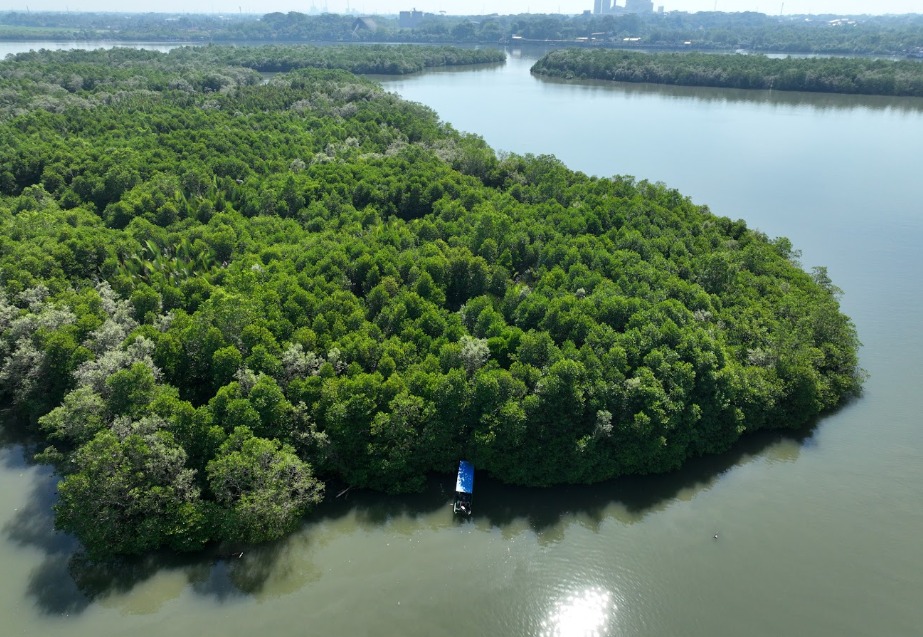
The government is currently in the final stages of completing the National Mangrove Ecosystem Protection and Management Plan (RPPEM) for 2026-2055. The National RPPEM serves as a strategic national foundation aimed at preserving mangrove ecosystem functions and preventing damage through systematic and integrated efforts over a 30-year period.
The National RPPEM adopts a Mangrove Landscape Unit (KLM) approach, which defines the protection and management units of mangrove ecosystems at the downstream of specific River Basins (DAS) or sub-basins. Spatially, the KLM is formed by land systems and land-sea interactions, including the socio-economic systems that influence them, serving as the basis for management planning rather than mere administrative boundaries.
Dr Hero Marhaento, a representative of the KLM concept formulation team, stated that the KLM approach is a new method for managing mangrove ecosystems in Indonesia. “This KLM approach is more holistic. It does not only position existing mangroves, but also the utilisation of their habitat and interactions with surrounding communities. The KLM also considers the socio-economic aspects of the community,” he said.
Hero explained that Indonesia’s mangrove ecosystem is one of the largest in the world, covering 3.45 million hectares. The entire national mangrove ecosystem has been classified into 123 indicative KLM units spread across seven eco-regions (Bali Nusra, Java, Kalimantan, Maluku, Papua, Sulawesi, and Sumatra) with a total area of 5.2 million hectares.
In general, the distribution of KLM area in Indonesia is dominated by the Papua, Kalimantan, and Sumatra regions, while Java and Bali Nusra have a relatively small contribution to the total national KLM. The highest number of KLM units is found in the Sumatra region, while in terms of area, the Papua region is the largest, followed by Kalimantan, which is divided into 22 KLM units.
Through the KLM approach, there are two main objectives: the protection of Protected Functions and the management of Cultivation Functions. The protection of Protected Functions covers approximately 39 per cent of the total KLM area, consisting of strict conservation areas and the prevention of conversion to ensure no new damage occurs in the core ecosystem areas. Meanwhile, the management of Cultivation Functions is divided into two: approximately 26 per cent within forest areas designated for cultivation through sustainable use, and approximately 35 per cent outside forest areas (generally referred to as Other Use Areas/APL), which aims to encourage productive socio-economic utilisation based on ecosystem sustainability.
At the provincial level, KLM management is implemented through spatial planning policies, pond licensing, and the control of coastal land conversion. This places provincial governments in a vital role to coordinate regencies/cities within a single KLM, ensuring that coastal utilisation policies do not conflict. Furthermore, provincial governments are responsible for unifying rehabilitation, planting, and protection programmes funded by the State Budget (APBN), Regional Budget (APBD), or development partners.
“Therefore, collaboration is very important, especially in the process of spatial planning integration and coordination between provinces and regencies/cities, so that the KLM’s protected functions are aligned to avoid mismatches. Coordination with the community is also crucial,” said Hero.
He expressed hope that the survey process for preparing the definitive KLM from the 123 Indicative KLMs across all provinces could be completed soon. This is because the definitive KLM will ensure clear boundaries with other KLMs, mangrove ecosystem inventories, and other essential data.
“A single province can have more than one KLM. With the definitive KLM, we obtain the baseline data used to determine where the protected and cultivation functions are located,” he emphasised.
West Kalimantan Province is one of the regions that has completed surveys for the preparation of definitive KLMs. The mangrove ecosystem area in Bengkulu Province is approximately 162,000 hectares, spread across seven regencies: Kubu Raya, Ketapang, North Kayong, Mempawah, Sambas, Bengkayang, and Singkawang. Kubu Raya Regency possesses the largest mangrove ecosystem, accounting for about 60 per cent of the total mangrove ecosystem in West Kalimantan.
Head of the Protection, Natural Resource Conservation and Ecosystem Division of the West Kalimantan Environmental and Forestry Service, Hairil Anwar, stated that they have received explanations regarding the KLM inventory process conducted by teams from Gadjah Mada University and Tanjungpura University, West Kalimantan. From the draft KLM in seven regencies in West Kalimantan, there are six KLMs with a total area of approximately 180,000 hectares.
This definitive KLM draft will later serve as a reference in preparing the West Kalimantan Provincial RPPEM after the National RPPEM is ratified. The preparation process is currently underway and has the support of the central government.
“We are committed to drafting the provincial RPPEM. We have submitted a letter of commitment signed by the Regional Secretary of West Kalimantan Province to the Ministry of Environment,” he said.
Hairil noted that the West Kalimantan provincial government has formed a provincial RPPEM drafting team consisting of various parties, including academics from Tanjungpura University and provincial government teams, including the Regional Development Planning Agency (Bappeda) and the West Kalimantan Provincial Public Works and Spatial Planning Office (PUPR).
“To synchronise with the Regional Medium-Term Development Plan (RPJMD), we are working with Bappeda. We will carry out the preparation of the provincial RPPEM carefully and continue to consult with the public,” he added.
Source: jawawa.id (https://jawawa.id/newsitem/mangrove-landscape-unit-approach-in-national-rppem-becomes-strategy-to-preserve-mangrove-ecosystems-1781099770)
Originally published by Media Indonesia (https://mediaindonesia.com/humaniora/899104/pendekatan-kesatuan-lanskap-mangrove-dalam-rppem-nasional-jadi-strategi-lestarikan-ekosistem-mangrove), translated from Indonesian