
Mangrove ecosystem rescue action targets critical coastal area in Semarang
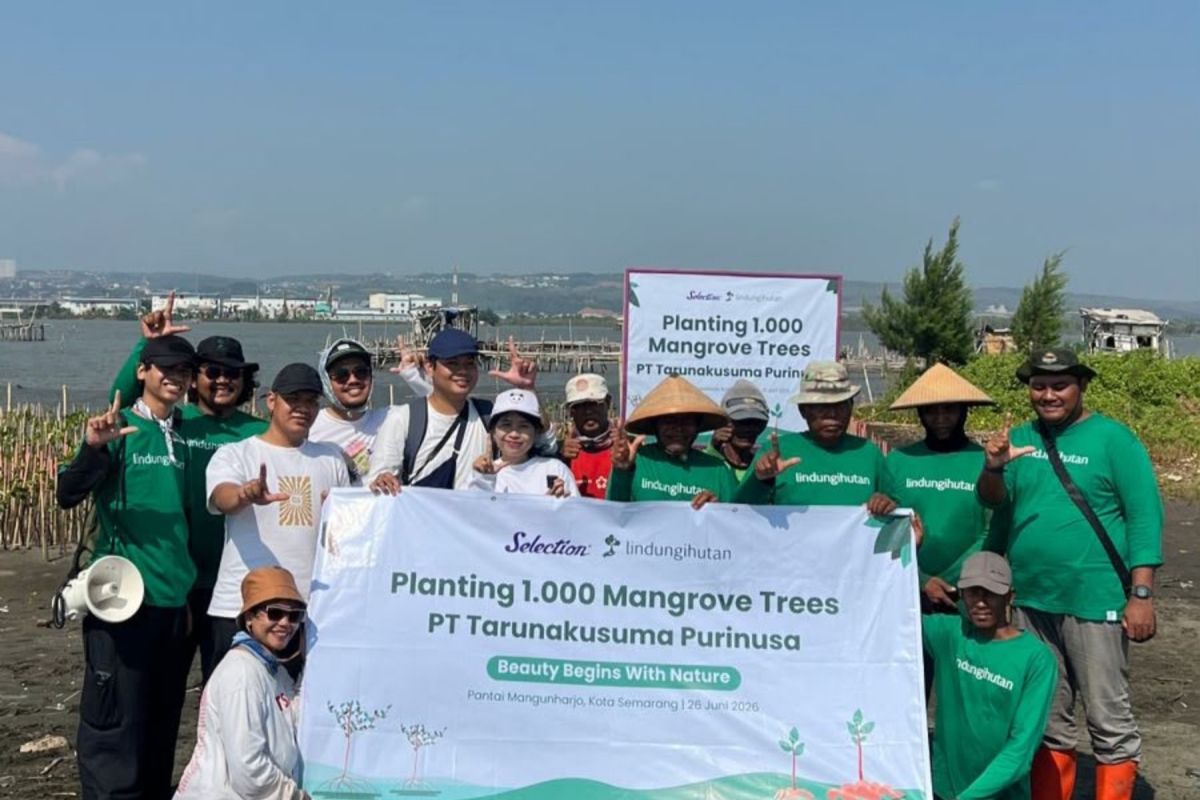
An ecosystem rescue action involving farming groups and the private sector is intensifying mangrove planting efforts, specifically targeting critical coastal areas in Semarang, Central Java.
This commitment was demonstrated by PT Tarunakusuma Purinusa Kapas Selection through a collaboration with the conservation agency LindungiHutan and the Mangrove Lestari Farming Group, planting 1,000 mangrove seedlings at Mangunharjo Beach, Semarang, on Monday.
Stefani Tanaka, from the Kapas Selection CSR team, stated in Jakarta on Monday that the Mangunharjo area currently faces severe environmental challenges, including land subsidence and the threat of abrasion eroding the coastline.
Through the programme titled ‘Beauty Begins with Nature’ to mark World Mangrove Day, the company seeks to create a balance between business growth and environmental responsibility for the sake of future generations.
Mangunharjo Beach was selected as the planting site due to its location on a vulnerable coastal route. The planting of 1,000 mangrove seedlings is expected to slow the rate of abrasion, improve coastal ecosystem conditions, and support the sustainability of habitats for various marine biota.
In addition to serving as a coastal disaster mitigation step, this reforestation programme contributes to achieving Sustainable Development Goals (SDGs), particularly regarding climate action and coastal ecosystems, while increasing carbon sequestration.
Mustafid, the Field Coordinator for the Mangrove Lestari Farming Group in Mangunharjo, added that the group views this ecosystem rescue action positively, as mangroves play a vital role as coastal landscape protectors and serve as an economic mainstay for local communities.
“For us, mangroves are not just trees, but also protectors of the coast from abrasion and a habitat for various biota that are the livelihood of coastal communities. We hope this collaboration can continue,” said Mustafid.
This movement initiated by community and private elements aligns with the government’s efforts to strengthen inter-agency, community, and regional synergy within national environmental recovery programmes.
The Ministry of Environment/Environmental Management Agency (BPLH) noted that the total area of mangrove forests in Indonesia reaches 3.4 million hectares. However, hundreds of thousands of hectares are currently in a critical condition.
The Minister of Environment/Head of BPLH, Jumhur Hidayat, previously emphasised that approximately 700,000 hectares of mangrove areas in Indonesia are currently damaged and require serious handling for ecosystem recovery and increased carbon absorption capacity.
“Out of 3.4 million hectares of mangroves, about 700,000 hectares are problematic and damaged. It is part of our shared responsibility to ensure massive mangrove replanting,” said Jumhur.