
Mangrove Diplomacy: From Natural Wealth to Global Leadership
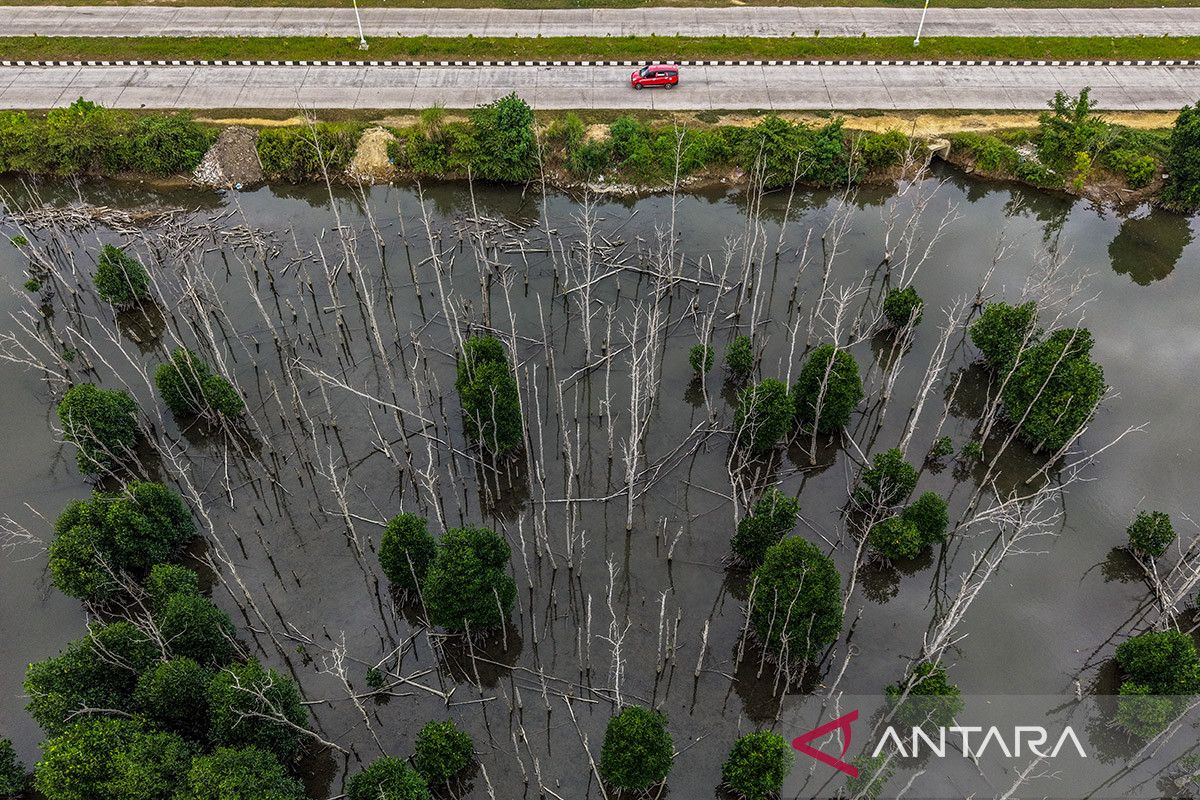
Indonesia possesses nearly one-quarter of the world’s mangroves, making it the country with the largest mangrove ecosystem on the planet. However, this advantage has yet to establish Indonesia as a primary global reference for mangrove science or governance. This gap serves as the foundation for the development of the World Mangrove Center (WMC), an initiative by the Ministry of Forestry to strengthen international collaboration in sustainable mangrove management.
In recent weeks, Indonesia has begun introducing the WMC in various international forums, including the ASEAN Working Group on Forest Management (AWG-FM) in Cambodia, the 30th APEC Experts Group on Illegal Logging and Associated Trade (EGILAT) in Shenzhen, China, and forestry cooperation discussions with Australia. The Ministry of Forestry also stated it will continue to push for the recognition of the WMC through the 30th United Nations Climate Change Conference (COP30), the 21st United Nations Forum on Forests (UNFF21), and the Asia-Pacific Economic Cooperation (APEC) forum.
The growing attention towards the WMC aligns with the shifting role of mangroves in the global agenda. Once primarily known as coastal protectors, these ecosystems are now viewed as vital nature-based solutions for addressing climate change due to their ability to absorb carbon, preserve biodiversity, reduce abrasion risks, and support the livelihoods of coastal communities.
This development provides an opportunity for countries with experience in mangrove management to contribute more significantly to global environmental governance. Indonesia possesses the necessary capital to take this role, with approximately 3.44 million hectares of mangroves. The challenge is no longer merely demonstrating the scale of these resources, but converting that experience into knowledge that benefits other nations.
On this basis, the Ministry of Forestry is developing the WMC as a collaborative centre connecting research, policy, financing, and management practices. During the EGILAT forum in Shenzhen, the Director of Forest Product Levies and Administration (IPHH) of the Ministry of Forestry, Krisdiantio, introduced the initiative to Australia, offering cooperation in research, innovation, and capacity building for coastal ecosystem management.
Thus, the WMC is intended to be more than just a new international forum; it is a means to build knowledge networks and cooperation to strengthen cross-border mangrove management. However, a fundamental question remains: with various existing organisations addressing climate change, forestry, and biodiversity, what unique space will the WMC fill? The answer to this question will determine whether the WMC evolves into a global reference point or merely adds to the list of existing institutions.