
Mangkoenagoro X Urges World Economic Forum to View Cultural Heritage as Future Economic Infrastructure for Asia
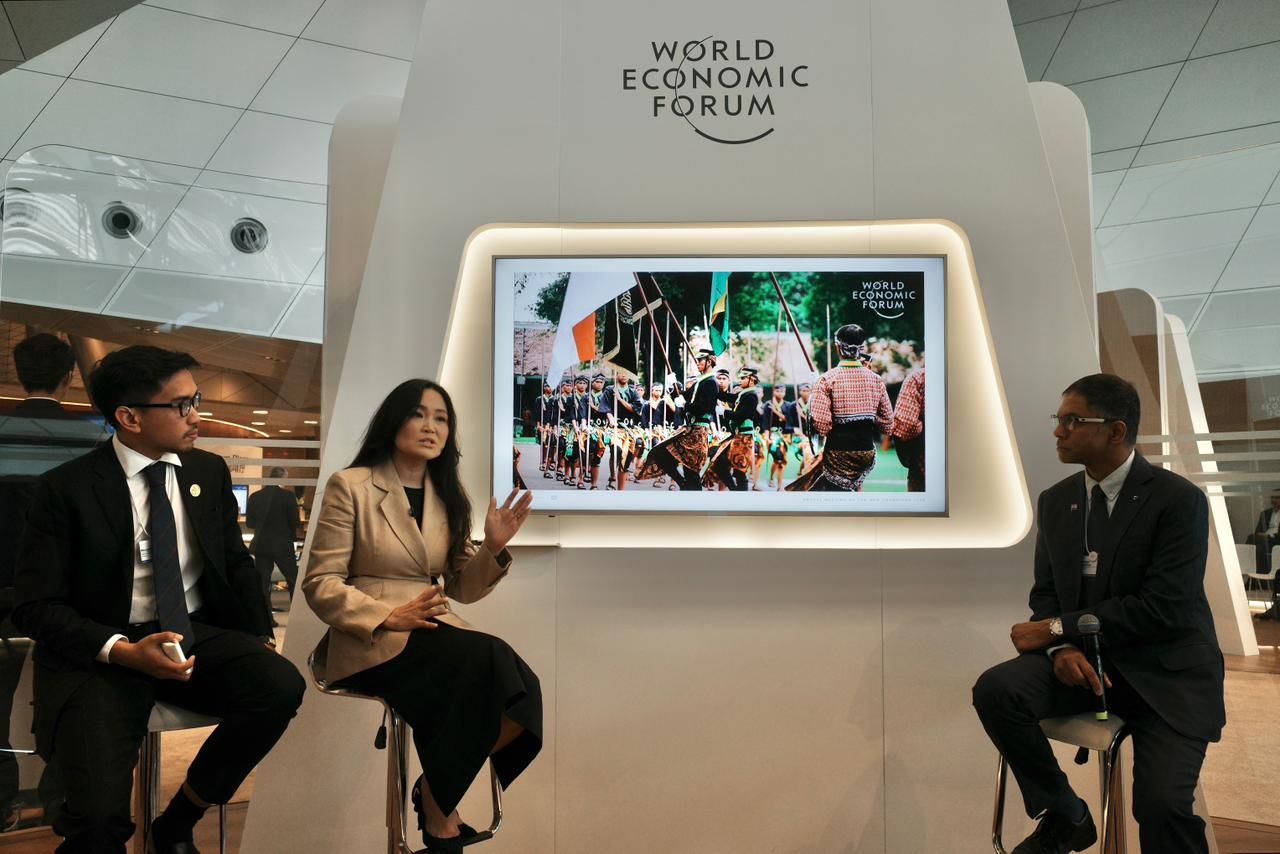
KGPAA Mangkoenagoro X asserted that cultural heritage must be viewed as economic infrastructure capable of creating sustainable value for national development. This idea was presented during his session, “Catching Asia’s Beat,” at the World Economic Forum Annual Meeting of the New Champions (WEF AMNC) 2026 in Dalian, China, on Wednesday (24/6).
In a forum bringing together global industry leaders, policymakers, and innovators, Mangkoenagoro X emphasised that Asia’s future competitive advantage will no longer be determined solely by economies of scale and production efficiency, but by the ability to manage identity and cultural wealth into economic value.
“Culture is infrastructure. Not physical infrastructure, but social infrastructure. Culture creates trust, strengthens identity, and builds social cohesion. Ultimately, culture also drives economic resilience,” Mangkoenagoro X stated before the forum participants.
The WEF AMNC, known as “Summer Davos,” is a prestigious annual event focusing on the future of global economic growth, particularly in Asia and developing nations. Mangkoenagoro X’s presence as a speaker reflects the growing global attention towards the role of cultural institutions in economic development.
In his presentation, Mangkoenagoro X noted that Asia is undergoing a paradigm shift in development. While nations previously competed through efficiency and production capacity, competition is now increasingly determined by the identity, values, and uniqueness of each nation.
He cited Indonesia as having immense potential within the creative economy and cultural sectors. In 2025, the creative economy sector employed approximately 27.4 million people, representing nearly 19 per cent of the national workforce. Meanwhile, the tourism sector is projected to contribute more than Rp1,800 trillion annually to the national economy over the next decade.
Furthermore, Indonesia possesses 13 elements of Intangible Cultural Heritage recognised by UNESCO. According to Mangkoenable X, this recognition demonstrates not only a wealth of tradition but also economic potential that can be developed sustainably.
However, he assessed that the greatest value of culture is not measured solely by economic revenue. “The greatest economic value of culture is not tourism income. The greatest value is confidence. Because culture gives people an understanding of who they are. And when a person knows who they are, they become bolder in imagining who they can become,” he said.
According to him, a strong cultural identity will foster collective confidence, which in turn drives ambition, investment, and prosperity. This chain of connection serves as a vital foundation for sustainable economic development.
“Identity creates confidence. Confidence breeds ambition. Ambition attracts investment. Investment creates prosperity,” he added.
During the session, Mangkoenagoro X also engaged in a dialogue with the Minister of Digital Development, Innovation, and Communications of the Mongolian Government, Nomin Chinbat. The two discussed how Asian nations can utilise cultural heritage as capital for modern development.
Mangkoenagoro X cited Mongolia as a success story in blending thousand-year-old nomadic traditions with modern development agendas. In addition to Mongolia, Japan and South Korea were also noted for successfully transforming cultural identity into globally competitive economic power.
As a concrete example, Mangkoenagoro X presented the management of the Mangkunegaran Palace in Solo, which is 269 years old. Throughout 2024, the area recorded over 120,000 tourist visits.
Various cultural activities organised by Mangkunegaran also provide economic impacts for the community. For instance, the Javanese New Year celebration, Sura, generated an economic impact of over US$1 million in a single night, while the Mangkunegaran Run created an economic turnover of over US$4.5 million over its three-day duration.
Concluding his presentation, Mangkoenagoro X stated that culture will become an increasingly important differentiator in the era of artificial intelligence and globalisation. He noted that while technology and capital can be easily replicated, identity, authenticity, and trust cannot be imitated.
“Cities that attract talent are cities with identity. Destinations that attract tourists are destinations with stories. Economies capable of retaining their human capital are economies that offer meaning and a sense of belonging,” he said.
He emphasised that future competitive economies will not only be those capable of generating wealth, but also those capable of building trust, meaning, a sense of belonging, and confidence within their people. He believes Asia has a significant opportunity to lead this developmental direction through its rich cultural heritage.
Source: jawawa.id (https://jawawa.id/newsitem/mangkoenagoro-x-urges-world-economic-forum-to-view-cultural-heritage-as-future-economic-infrastructure-for-1782406248)
Originally published by Media Indonesia (https://mediaindonesia.com/nusantara/904479/mangkoenagoro-x-dorong-warisan-budaya-jadi-infrastruktur-ekonomi-masa-depan-asia-di-forum-ekonomi-dunia), translated from Indonesian