
Manggarai-Kelapa Gading LRT to Drive Integrated Jakarta Urban Development
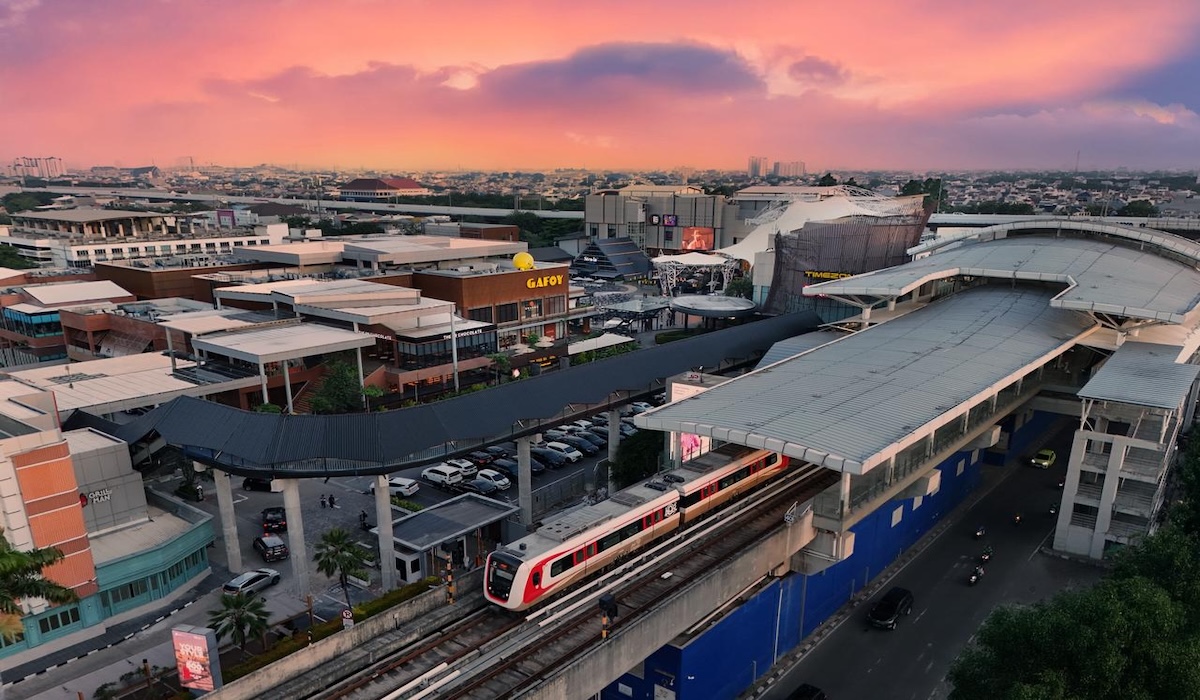
The planned operation of the Jakarta LRT on the Manggarai-Kelapa Gading route is set to expand mass transit connectivity while strengthening regional integration within Jakarta. This route offers more than just a new mobility alternative; the LRT’s connectivity has the potential to bring residential areas closer to business districts, commercial zones, public facilities, and other transport hubs.
This development reinforces the implementation of the Transit Oriented Development (TOD) concept, which focuses on urban development where public transport serves as a primary axis for urban activity. Under this concept, housing, workplaces, shopping centres, and public facilities are developed to be more easily accessible via mass transit.
The Coordinating Minister for Infrastructure and Regional Development, Agus Harimurti Yudhoyono (AHY), stated that modern cities require integration between housing, workplaces, public facilities, and transport systems. “This is our future. The world’s advanced modern cities—meaning cities that are productive and healthy—are all oriented towards interconnected transit systems,” AHY remarked in Bekasi recently.
According to AHY, the success of TOD relies on more than just infrastructure construction. Changing public habits to shift towards safe, comfortable, and connected public transport is also a crucial factor. “This is important because the TOD concept will be highly effective if the community has the mindset to prefer using public transport that is, of course, comfortable and safe,” he said.
In line with the development of the mass transit network, PT Summarecon Agung Tbk (Summarecon) is developing several areas using an integrated township concept that blends residential, commercial, public spaces, and transport access. In Kelapa Gading, the Summarecon area is already connected to the Jakarta LRT via the Boulevard Utara Summarecon Mall Station. This station is directly linked to the commercial area through a connecting bridge approximately 120 metres long, allowing passengers to transfer directly from mass transit to one of the key activity centres in Kelapa Gading.
Integration is further strengthened through a naming rights agreement between Summarecon and PT LRT Jakarta, which introduced the name Boulevard Utara Summarecon Mall Station. Once the Manggarai-Kelapa Gading line is operational, the LRT’s reach to the area will expand significantly, potentially increasing accessibility to and from Kelapa Gading and strengthening links with other activity centres in Jakarta.
For Summarecon, access to mass transit is a key element in area development. Connectivity is intended not only to ease resident mobility but also to open access to business, commercial, educational, and public facilities. A similar approach is applied in other Summarecon developments.
In Bekasi, Summarecon Bekasi is connected to the KRL Commuter Line network via the Bekasi Extension Station. This station was developed to expand access and assist in distributing passenger flows. Summarecon’s President Director, Adrianto P. Adhi, noted that the Bekasi Extension Station serves a different catchment area compared to the existing Bekasi Station. “The Bekasi Extension Station will primarily serve passengers from the west and south, while the existing Bekasi Station serves the north and east,” said Adrianto. Connectivity in Summarecon Bekasi was previously strengthened through the construction of the KH. Noer Ali Flyover in collaboration with the Bekasi City Government.
Meanwhile, in Bandung, Summarecon Bandung is connected to the Whoosh High-Speed Rail network via the Tegalluar Summarecon Station. Access from the station to the area is supported by the Cibiru Hilir Bridge and shuttle bus services. The naming rights agreement for this station is also part of the effort to strengthen the connection between transport hubs and the surrounding area.
In Tangerang, transport integration is currently in the exploration stage through the planned development of the Jakarta MRT East-West Corridor, specifically the Kembangan-Balaraja route. Summarecon Serpong and Summarecon Tangerang are among the areas being considered for connectivity with this network. If realised, the MRT line has the potential to strengthen connectivity between West Jakarta and Tangerang, as well as several growth areas in Banten, opening up access to housing, business centres, trade, and public facilities.
The development of the LRT, KRL, MRT, and High-Speed Rail demonstrates the evolving role of mass transit in urban development. Stations are no longer merely places for passengers to board and alight; they are evolving into hubs that connect housing, workplaces, public facilities, shopping centres, and commercial spaces. This concept is central to Summarecon’s integrated township development, where residential, commercial, educational, and public spaces are developed within a single, interconnected ecosystem. As mass transit networks expand, the integration of transport and urban planning becomes increasingly vital. The challenge lies not only in building tracks and stations but in ensuring that people can move from home to work and other activity centres with ease, without total reliance on private vehicles.
Source: jawawa.id (https://jawawa.id/newsitem/manggarai-kelapa-gading-lrt-to-drive-integrated-jakarta-urban-development-1788418432)
Originally published by Media Indonesia (https://mediaindonesia.com/megapolitan/929225/lrt-manggarai-kelapa-gading-jadi-pengungkit-kawasan-terintegrasi-jakarta), translated from Indonesian