
Mandiri Sekuritas Projects IHSG Could Reach 9,000, Energy Pressure Risks Still Loom
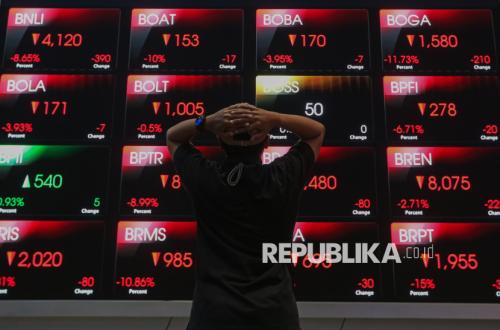
Deputy Head of Equity Research & Strategy at Mandiri Sekuritas, Kresna Hutabarat, stated that the Indonesian capital market still has opportunities for continued growth amid intense global uncertainty challenges. He projects that by 2026, the Composite Stock Price Index (IHSG) has the potential to reach the 9,000 level.
“Regarding the future IHSG target, we are maintaining our IHSG target at 9,050 points. However, we see the potential for a downward revision considering the possibility of margin pressure due to increasing macroeconomic volatility and also future energy burden pressures,” Kresna said during the Mandiri Macro and Market Brief Quarter II 2026 press conference held online on Monday (11/5/2026).
Kresna explained that external macroeconomic pressures are very strong on the stock market. In addition, there are still many domestic factors that need to be addressed to ensure better stock market performance in the future.
Throughout 2026, the Indonesian stock market has indeed experienced a decline in performance, reflected in the IHSG which has corrected by around 17-18 per cent year to date (ytd). This has placed Indonesia under quite severe stock market pressure compared to neighbouring countries that have relatively been able to withstand the heavy outflow of capital.
“We indeed acknowledge that geopolitical conflicts and pressures or surges in global energy prices bring global risks, exerting macroeconomic pressure on the stock market as well as expectations for business growth and our stock market issuers,” he said.
On the other hand, global capital absorption is still consistently occurring in developed markets such as the United States and other stock markets that have issuers in the artificial intelligence (AI) and technology sectors. This trend is putting pressure on emerging markets, such as Indonesia.
“So there is indeed a lot of global capital flow towards issuers that are achieving profit growth and significant investment interest, especially in the US, Korean, and Taiwanese stock markets, where AI and technology businesses are achieving superior profit and revenue growth,” he explained.
Furthermore, from the investor trend perspective towards risk aversion or parking funding from rupiah-denominated asset classes to the US dollar, including commodities considered safe havens like gold, this has also become one of the reasons why emerging market capital markets are battered by quite strong foreign selling pressure.
“We must note that in the last one to two months, the selling pressure in our stock market which has resulted in year-to-date stock performance being even worse compared to peers. However, going forward, we must monitor that the risks to the earnings of issuers, especially IDX80 for example, which are followed by global and domestic investors, must be acknowledged to face additional pressure considering the transmission from rising energy prices and rising prices of petrochemical derivatives,” he explained.