
Mandatory Nutri-Level Food Labelling Regulations on the Way, Ministry of Industry Responds Thus
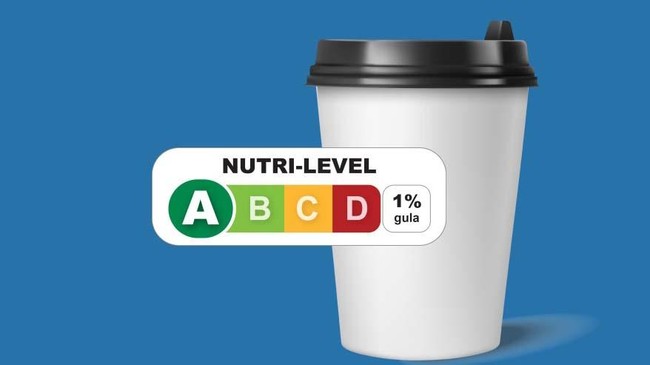
Jakarta, CNBC Indonesia - The nutrition labelling policy or Nutri-Level is starting to attract attention from the government and food and beverage industry players. This regulation is considered important for increasing public awareness in choosing products. However, the implementation of this policy requires time because the industry must make various adjustments. “We welcome the Nutri-Level. This is a medium to educate the Indonesian public in choosing products,” said Director of the Beverage, Tobacco Products, and Refreshing Ingredients Industry, Merrijantij Punguan Pintaria (Merri) at the Ministry of Industry, quoted on Tuesday (21/4/2026). The government views this policy as a positive step in promoting healthier consumption patterns. Nevertheless, the adaptation process cannot be done instantly. The industry needs room to adjust product formulations and production strategies to remain compliant with applicable regulations. “Actually, there is already a regulation from the Food and Drug Supervisory Agency (BPOM) stating 6 grams of sugar per 100 millilitres,” Merri said. In practice, businesses have started following various existing regulations. This shows the industry’s readiness to adapt to new policies. However, there are several challenges, particularly regarding the use of artificial sugar that has not been fully accommodated in the assessment system. “The industry also hopes to be given room to innovate because the sweetness in products does not only come from natural sugar, but can also from artificial sugar,” Merri said. Differences in policies with other countries are also a concern. This has the potential to affect product competitiveness in the global market. “If we refer to Singapore, the use of artificial sugar is still allowed in category B,” Merri noted. With these various challenges, the government considers it important to provide sufficient transition time for the industry. “The industry needs time to adapt if this policy is truly implemented,” Merri said. When Will Mandatory Nutri-Level Labelling Apply? For information, Minister of Health Budi Gunadi Sadikin issued a Ministry of Health regulation on the inclusion of nutrition labels in the form of Nutri-Level on ready-to-eat foods, especially sweetened drinks, which will be applied to large-scale businesses as an effort to encourage healthier consumption patterns among the public. The regulation is contained in the Minister of Health Decree (KMK) Number HK.01.07/MENKES/301/2026 on the inclusion of nutrition labels and health messages on ready-to-eat foods, issued on Tuesday (14/4/2026). Budi said the policy is taken as an educational effort to prevent excessive consumption of sugar, salt, and fat (GGL), which causes various risks of non-communicable diseases, including obesity, hypertension, cardiovascular disease, stroke, and type 2 diabetes. So, when will this regulation apply? Will it be made mandatory? The Food and Drug Supervisory Agency (BPOM) is in the process of finalising new regulations related to nutrition content labelling on food products called Nutri-Level. This policy will serve as a guide for the public in choosing healthier food. BPOM Head Taruna Ikrar said the Nutri-Level regulation has been decided to be implemented, but it is still in the technical preparation and harmonisation stage with industry players. “The implementation will be gradual, starting from education, then voluntary, then healthier choices, and finally mandatory,” Taruna said after a meeting with Commission IX of the House of Representatives at the DPR Building, Senayan, Jakarta, on Monday (20/4/2026).