
Mandatory Halal Certification Delayed from October 2026 to 2028; ALPHI Makes Five Recommendations
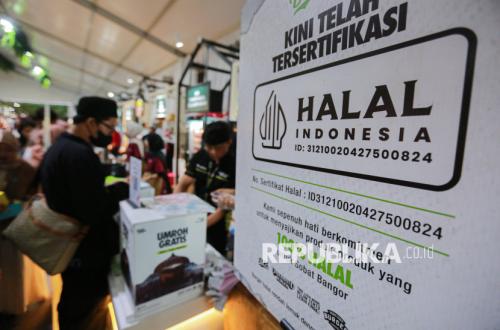
The Indonesian Association of Halal Inspection Bodies (ALPHI), which represents accredited Halal Inspection Bodies (LPH) involved in halal certification alongside the Halal Product Assurance Organising Agency (BPJPH) and the Indonesian Ulema Council (MUI), has praised the government’s commitment and achievements in delivering Halal Product Assurance (JPH) in Indonesia.
ALPHI chair Elvina A Rahayu said the association regretted repeated delays to mandatory halal certification, from the start of the certification requirement in 2019, through its extension in 2024, to the latest decision to postpone it from October 2026 to 2028. Nevertheless, ALPHI respected and supported the government’s decision in view of business readiness, while urging concrete, measurable action to ensure the transition period is used effectively and that businesses’ lack of preparedness is not again cited as a reason for postponement after 2028.
“ALPHI stresses that JPH requirements apply equally to domestic and imported products. Businesses, including ingredient manufacturers, must ensure the traceability of materials and production processes. This assurance must be carried out by Main Halal Inspection Bodies and Foreign Halal Institutions (LHLN) in accordance with their respective scopes and authority, under equivalent inspection standards and levels of halal assurance,” Elvina told Republika on Monday, 19 October 2026.
She said the transition period through to 2028 should be an opportunity to strengthen the system, not merely an extension of time. The success of JPH should be measured not only by the number of certificates issued, but also by the consistency of halal status that can be verified and continuously accounted for.
In connection with plans to amend Government Regulation No. 42 of 2024 and its implementing regulations, ALPHI put forward five recommendations in support of government policy.
Strengthen the independence and impartiality of JPH administration. Governance and the division of authority should be reinforced, taking into account the provisions on coordination and cooperation between ministries and agencies in Articles 123–135 of Government Regulation No. 42 of 2024. Clear separation of regulatory, inspection, halal determination, certification decision-making and supervisory functions is needed to protect independence, impartiality and accountability, and to prevent conflicts of interest.
Involve ALPHI in regulatory revisions and harmonise standards for LPH and LHLN. ALPHI should be actively involved in amending Government Regulation No. 42 of 2024 and its implementing rules, particularly to ensure equivalent inspection standards, auditor competence, audit depth, traceability of objective evidence and oversight of LPH and LHLN. Simplifying procedures must not undermine the quality and credibility of halal assurance.
Support regular halal certification for micro and small enterprises (MSEs). As of October 2026, 4,452,314 halal certificates had been issued to 3,517,861 businesses, with 3.52 per cent issued through the regular scheme and 96.48 per cent through self-declaration. This disparity points to the need to expand budget allocations for regular halal certification for MSEs that do not meet self-declaration criteria, with support from BPJPH, relevant ministries, local governments, state-owned enterprise social and environmental responsibility or corporate social responsibility programmes, and the private sector. Assistance should reflect the nature of ingredients and the complexity of production processes to ensure fair access to certification.
Strengthen halal awareness and consumer protection. Public education and awareness of product halal status should be increased, given that some materials and production practices may not meet halal requirements. Transparency of information and oversight should also be strengthened to protect Muslim consumers. “Halal certification may be delayed, but consuming halal products cannot be delayed.”
Ensure ongoing halal assurance through surveillance audits and review of certificate validity. The policy under which halal certificates currently have no specified expiry date should be reviewed, taking account of alignment with international certification standards. Regular surveillance audits by LPH should be an integral part of the certification system to ensure continued compliance with JPH requirements after a certificate is issued, while sustaining the role of LPH, the effectiveness of oversight and international recognition.
Elvina added that ALPHI was ready to work with the government and all stakeholders to strengthen Indonesia’s Halal Product Assurance System so that it is credible, independent, impartial, equitable and internationally recognised.