
Mandatory Halal Certification Delayed Again: Obligations May Be Postponed, but Certainty Must Not
By Dr Dece Kurniadi, S.H., M.M., and Umar Aditiawarman, PhD
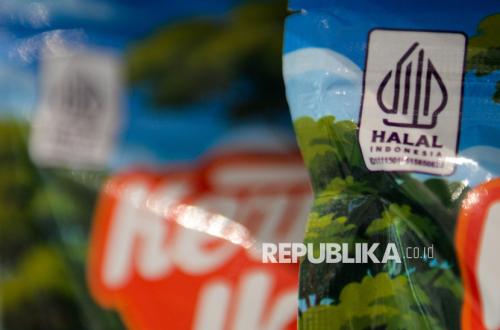
JAKARTA — On Friday, 16 October 2026, two days before the deadline, the government announced that mandatory halal certification for food and drink products from micro and small businesses, slaughtered products, slaughtering services, cosmetics, health supplements and imported products would be deferred until October 2028. The stated reason was the readiness of the ecosystem.
We should be clear from the outset: in our view, the certification requirement should take effect as scheduled on 18 October 2026. The date was no surprise; it had been set out in Government Regulation No. 42/2024 two years earlier, following an earlier delay. However, once the amending regulation is promulgated, it becomes positive law and must be respected, including by those who disagree with it.
Capacity constraints are real. According to the Halal Product Assurance Agency (BPJPH), as of September 2026 there were only 133 halal inspection bodies (LPH), with around 2,958 trained auditors, and 116 foreign halal bodies (LHLN) recognised by BPJPH. But limited capacity is a reason to strengthen the system faster, with measurable targets—not to shift the requirement without conditions. Concerns about superficial compliance or illegal charges would be better addressed through strict oversight than through postponement.
There is a significant difference between delaying an obligation and delaying certainty. The first can still be debated. The second cannot be justified.
An announcement is not a regulation
The rules of our legal system are straightforward: a new regulation becomes binding only after it is promulgated (Article 81 in conjunction with Article 87 of Law No. 12/2011). A press release, however official, is not recognised in the hierarchy of laws and regulations. At the time of writing, the number and promulgation date of the regulation amending Government Regulation No. 42/2024 had not been announced publicly. Until that happens, the previous provisions remain in force as a matter of law.
This means businesses relying on news reports do not yet have a firm legal basis. And this is not the first time. Government Regulation No. 42/2024 itself was adopted and promulgated on 17 October 2024, one day before the first-stage requirement came into force. For the second time in succession, the fate of the halal requirement has been decided at the last minute.
The situation has become more confusing because, from 9 to 14 October 2026, BPJPH, as the implementing agency, repeatedly said there would be no delay. Lon Fuller identified consistency between announced rules and official conduct as one of the minimum conditions of a sound legal system. When two official positions contradict one another within days, public trust is the first casualty. The Government Administration Law also makes legal certainty, care and openness principles that officials are required to uphold (Article 10 of Law No. 30/2014).
Three values out of balance
Gustav Radbruch reminds us that good law must weigh three values at once: certainty, justice and utility. This postponement rests almost entirely on utility—namely, the smooth operation of businesses, purchasing power and trade flows.
Certainty is eroded because a deadline announced in 2024 has proved negotiable. Justice is undermined because businesses that have complied—incurring costs, preparing halal product assurance systems and undergoing audits—must now compete on equal terms with those that chose to wait. We are sending the wrong message: those who comply bear the costs, while those who delay are rewarded with more time.
Consumers also have rights. Article 3 of Law No. 33/2014 sets out consumer comfort, security, safety and certainty of access to halal products as objectives of the halal product assurance system. Article 4 of Law No. 8/1999 guarantees consumers the right to accurate, clear and honest information. Two extra years mean consumers once again have to rely on assumptions rather than guarantees.
The structure is weak, but the substance is being delayed
Borrowing Lawrence Friedman’s framework, a legal system works when its substance, structure and legal culture function in tandem. The stated reason of “ecosystem readiness” is effectively an admission that the structure is not ready. Yet the remedy being applied is to delay the substance of the law.
The greatest risk lies in legal culture. For micro and small businesses, this is the second consecutive postponement: from 2024 to 2026, and now to 2028. If this pattern is allowed to continue, the 2028 deadline will be treated the same way—businesses will wait, hoping it is pushed back again.