
Mandatory Halal 2026: Indonesia's push for a global halal identity
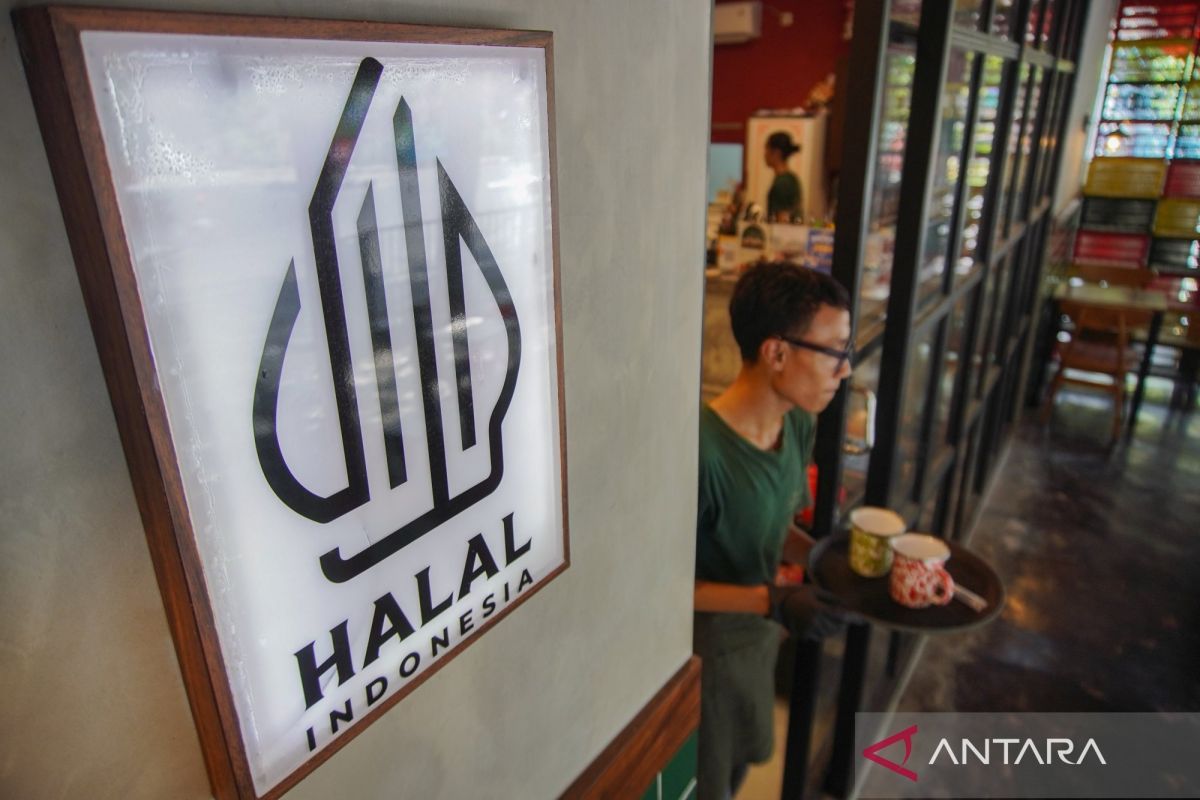
Halal products from Malaysia, Thailand, and even Brazil easily enter the domestic market, while Indonesia’s own products still struggle to penetrate the halal export market significantly.
The government’s Mandatory Halal policy, set for October 2026, aims to flip this situation. This move reinforces Indonesia’s commitment to transforming itself from a mere spectator into a major player in the global halal industry.
In truth, this policy is not a sudden step. Its legal foundation is rooted in Law No. 33 of 2014 on Halal Product Assurance, which was later strengthened by Government Regulation No. 42 of 2024.
Implementation is being carried out in phases, with medium and large enterprises having been required to hold halal certification since October 2024, while imported products alongside micro and small enterprises have been given until October 2026 to comply.
As the main authority, the Halal Product Assurance Agency (BPJPH) manages the entire process, from certification and oversight to facilitation programs.
For micro and small enterprises specifically, a dedicated facility called SEHATI (Free Halal Certification) is available with a quota of 1.35 million certificates for 2026, up from one million the previous year.
More than 11,000 Halal Product Process Facilitators have been deployed to assist businesses in the submission process. These figures reflect the infrastructure the government is building to establish a halal ecosystem that reaches the grassroots level of the economy.
One of the significant shifts in the October 2026 Mandatory Halal policy is how the government positions halal certification. While a halal label was once viewed strictly through a religious lens—as a matter of ritual compliance and spiritual peace of mind for Muslim consumers—the narrative has now shifted toward economics and competitiveness.
BPJPH Head Ahmad Haikal Hasan emphasized that halal certification has transformed from merely a matter of religious compliance into a commitment to transparency, accountability, and consumer trust.
This is aligned with the situation of the global halal market ecosystem which is not only driven by Muslim consumers. In many countries, halal labels now serve as an indicator of quality and safety, on par with international hygiene standards that transcend religious identity.
The State of the Global Islamic Economy Report ranks Indonesia third in the world’s halal industry ecosystem, behind Malaysia and Saudi Arabia.
While this position is still a point of pride for the country, it raises a critical question: why has the world’s most populous Muslim-majority nation not yet become the dominant player? The answer is complex, but one of the key factors is how far halal certification can penetrate the entire supply chain, from raw materials to the final product.
Therefore, the mandatory halal certification policy plays a strategic role that goes far beyond simple legal compliance.
Challenges ahead
Nevertheless, this policy is also not immune to challenges on the ground. One of the most significant ones is the issue of the upstream supply chain.
While many micro and small enterprises eagerly seek halal certification for their products, they struggle to verify the compliance of their raw materials, which often circulate in the market uncertified.
Bakers, pastry makers, or local meatball vendors, for instance, often buy meat and seasonings that are sold in bulk at traditional markets. These items are mostly unpackaged, unbranded, and lacking any clear halal status. This means that a policy at the downstream level does not automatically solve problems upstream.
To address this issue, relying solely on educating business owners will not be enough. What is needed is an accelerated certification process for raw material suppliers, the equitable development of halal-certified distribution hubs, and the integration of traceability systems spanning from producer to consumer.
While several institutions have begun moving toward this direction, their reach is still far from matching the scale of the problem.
Another challenge lies in the oversight of imported products. In this regard, the government, through a memorandum of understanding (MoU) signed by BPJPH and the Indonesian Quarantine Agency (Barantin), has integrated its oversight at the country’s entry points, with trial inspections already underway in key trading partner nations such as Thailand, Malaysia, Vietnam, China, and South Korea.
This move is aimed at addressing products with unilateral halal claims that lack adequate verification.
However, building an effective cross-institutional oversight system requires a robust technological integration and bureaucratic coordination—two areas that often become Indonesia’s weak points in policy implementation.
Beyond these technical and administrative complexities, the October 2026 mandatory halal certification policy is essentially a project of economic identity. Indonesia is striving to redefine its position on the global trade stage: shifting from a massive passive market to a trusted source of halal production.
Data shows that Indonesia’s halal product exports recorded a surplus of US$29.09 billion in the period of January–October 2024, with exports reaching US$41.42 billion in total, dominated by processed food. While these are impressive figures, they have not yet fully reflected Indonesia’s full potential, with its massive Muslim population, abundant natural resources, and regulations that are increasingly robust.
The key to closing this gap does not lie merely in the number of certificates issued. A certificate is simply an instrument, not the ultimate goal. What matters more is how deeply the halal ecosystem is embedded within the national production system.
Business owners must understand the core principles, supply chains must be rigorously verified, oversight must be executed with the highest level of integrity, and consumers—both domestic and global—must be fully confident that