
Managing Risk and Integrity: Holding Perkebunan Nusantara Strengthens Understanding of Business Judgment Rule
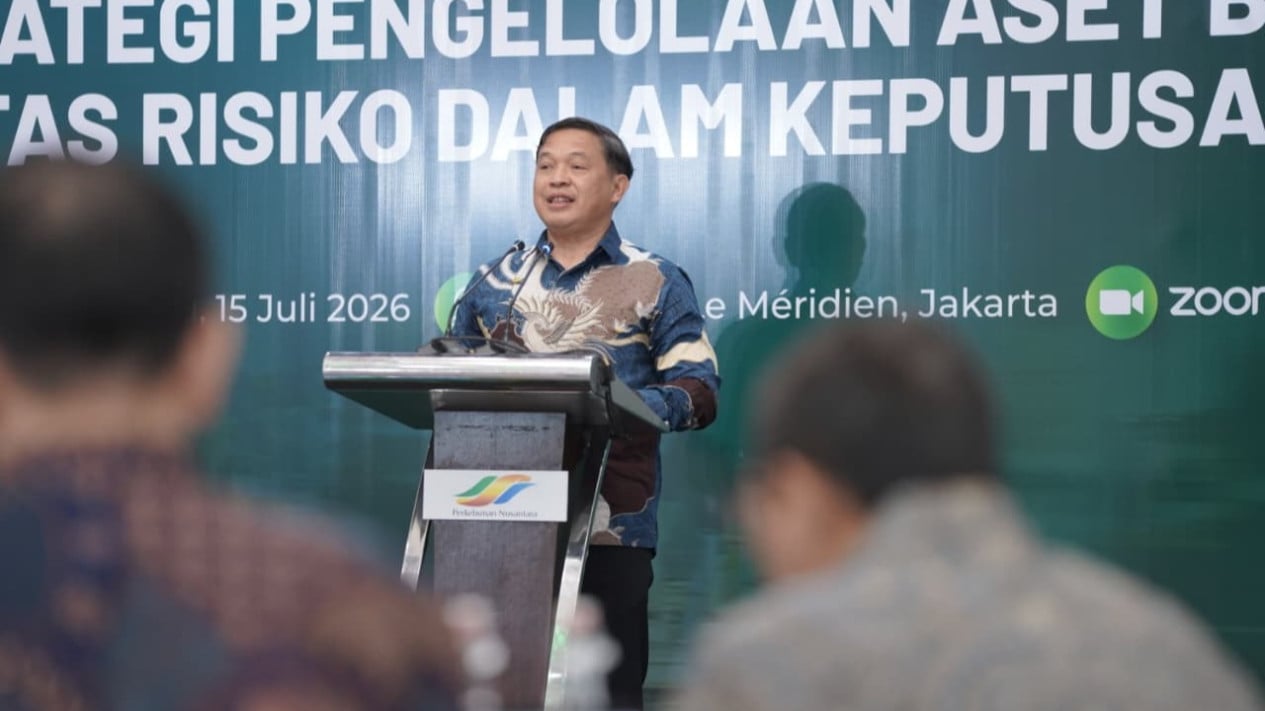
Holding Perkebunan Nusantara, PT Perkebunan Nusantara III (Persero), has stated that state-owned enterprises (BUMN) are not only required to deliver healthy and competitive business performance but also to carry out various strategic state assignments. Director of Assets at PT Perkebunan Nusantara III (Persero), Agung Setya Imam Effendi, said this condition makes every business decision taken by the board of directors of a BUMN more complex compared to a typical corporation. ‘Therefore, legal certainty, an understanding of the Business Judgment Rule (BJR) principle, and good corporate governance are important foundations so that every decision can be taken professionally, accountably, and provide benefits to the state,’ Agung said in a statement on Friday, 17 July 2026. He stressed that BUMNs have different characteristics from private companies because, in addition to pursuing business growth, they also carry the mandate of national development. ‘This mandate has been regulated by law, so every assignment must be able to provide real benefits to the community,’ he said. According to Agung, business decisions within a BUMN environment must consider the interests of the company, shareholders, and the state. ‘Therefore, an understanding of business risk boundaries and legal protection for decision-makers is important so that business transformation and development can run optimally,’ he stated. Meanwhile, the Director of Corporate Affairs at the Directorate General of General Legal Administration of the Ministry of Law, Andi Taletting Langi, explained that profit and loss are part of business activity. However, in the context of BUMNs, every decision has a higher complexity because it must consider multiple interests simultaneously. ‘The board of directors is essentially seen as a parameter for the corporation. There is authority, good faith, the principle of prudence, no conflict of interest, and also the company’s interests here,’ Andi said. He added that decision-making in BUMNs must pay attention to the interests of the company, shareholders, national strategic policies, government assignments, and public accountability. Therefore, risk mitigation to understand the grey areas and what is permissible or not is very important to be understood collectively. ‘So that leaders as decision-makers, end users, and decision makers are not afraid to take a stance,’ he said.