
Man Loses Tens of Millions After Clicking Link: Here's the Chronology
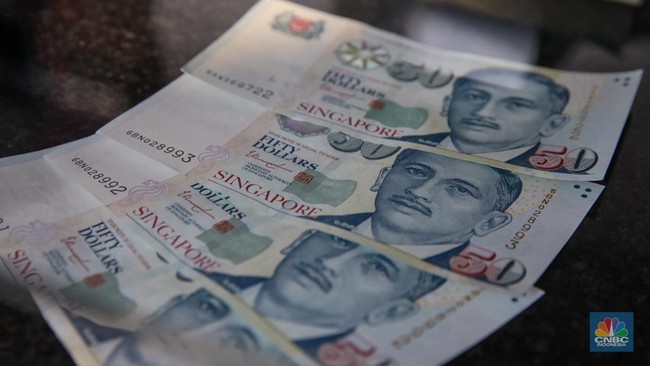
A TikTok user has reportedly suffered significant financial losses after browsing content on the platform. The user lost SGD 3,800, which is approximately Rp 52.37 million (assuming an exchange rate of Rp 13,782/SGD).
The user subsequently reported the fraudulent activity to the Small Claims Tribunals (SCT) in an attempt to recover the lost funds. However, the court only awarded a recovery of SGD 355, or approximately Rp 4.89 million.
The court ruled that the user must bear the remaining loss of approximately SGD 3,455, or about Rp 47.62 million, because he ignored several warnings and notifications from his bank in a “series of continuous negligence” that constituted gross negligence on his part.
In a ruling dated 12 June 2026, Judge Joel Tan of the Court dismissed the man’s claim but noted that his losses due to the fraud were “deserving of sympathy,” while emphasising the importance of vigilance.
The names of the fraud victim and the bank were kept confidential in the ruling, as is standard practice in Small Claims Tribunals (SCT) cases, which are heard privately.
This incident highlights the resurgence of phishing scams, particularly for social media users who may frequently click on unverified links or buttons.
According to the ruling, the fraudulent method involved scammers deceiving the victim into revealing credit card details, including the primary account number, expiry date, and security code.
The fraudsters then entered these details into a digital wallet application on their own mobile devices, initiating a process known as tokenisation.
This security mechanism replaces the victim’s original card details with a unique device account number that serves as a cryptographic substitute for the original credentials.
Tokenisation usually requires authentication by the cardholder, with one common method being a one-time password (OTP) sent via SMS to the cardholder.
According to the judge, scammers often obtain these passwords through phishing.
Once the tokenisation process is complete, the fraudsters possess what is essentially a digital key to the victim’s credit card, which they can use to make fraudulent purchases and payments.
The issuing bank will then request payment from the victim for these fraudulent transactions. If a cardholder disputes a transaction as unauthorised, credit card schemes typically provide a charge-back mechanism that can reverse the settlement process, placing the risk of loss on the merchant.
However, merchants can shift this responsibility by demonstrating that the transaction was secured according to industry standards. If the merchant can prove this, the loss will be borne by the issuing bank or the victim, depending on the circumstances.
Chronology of the fraud:
At approximately 11:15 PM Singapore time on 4 June 2024, the plaintiff’s credit card was added to an Apple device’s digital wallet without his consent.
Despite receiving an SMS notification that night, as well as further notifications on 6 June and 12 June, the user took no remedial action. Between 17 June and 23 June 2024, 22 transactions were charged to the man’s credit card account.
These transactions were made via Apple Pay in Japanese Yen, processed by merchants within the Japanese electronic money ecosystem to top up prepaid wallet balances.
The total amount was 430,000 yen, equivalent to SGD 3,811.72 based on the exchange rate at the time.
The plaintiff did not receive notifications from the bank for these transactions because the values were below SGD 200, and his account was configured to send alerts for purchases of SGD 500 and above.
On 23 June 2024, the bank flagged these transactions as suspicious and attempted to contact the applicant via telephone for verification, but was unsuccessful.
The bank then took anticipatory measures by temporarily blocking the credit card to prevent further transactions and sent an SMS to the applicant to notify him of the block.
The complainant subsequently called back and confirmed that he had not authorised the transactions. The card was permanently blocked and the tokenisation was revoked.
The bank advised the man to complete a dispute statement form, which he submitted on 22 July 2024. The credit card bill was paid via automatic deduction from his bank account balance in August 2024.
The 22 transactions with the merchants were guaranteed transactions, and there was no right to initiate a charge-back against the merchants.
The man made every effort to recover the money but only succeeded for two transactions totalling SGD 355.34.
He felt that the remaining loss of SGD 3,456.38 for the 20 transactions should be borne by the bank, but the bank denied his request for a refund.
The case was referred to the Financial Industry Disputes Resolution Centre (FIDReC) in Singapore, but the ruling held in July 2025 was not in favour of the plaintiff.
Dissatisfied with the outcome, he brought the case against the bank to the SCT.
Judge Tan stated that the claim arose from the contractual relationship between the man and his bank regarding credit card services.
It is undeniable that the 20 transactions were unauthorised and carried out by unknown fraudsters through tokenisation.
The credit card agreement between the man and his bank states that the cardholder will not be liable for unauthorised card transactions made after notification to the bank. Liability is limited to SGD 100 for each transaction that is not…
Source: jawawa.id (https://jawawa.id/newsitem/man-loses-tens-of-millions-after-clicking-link-heres-the-chronology-1781607097)
Originally published by CNBC Indonesia (https://www.cnbcindonesia.com/tech/20260616140443-37-743145/pria-ini-kehilangan-puluhan-juta-usai-klik-link-begini-kronologinya), translated from Indonesian