
Maluku Provincial Government to Develop People's Schools in 14 Locations
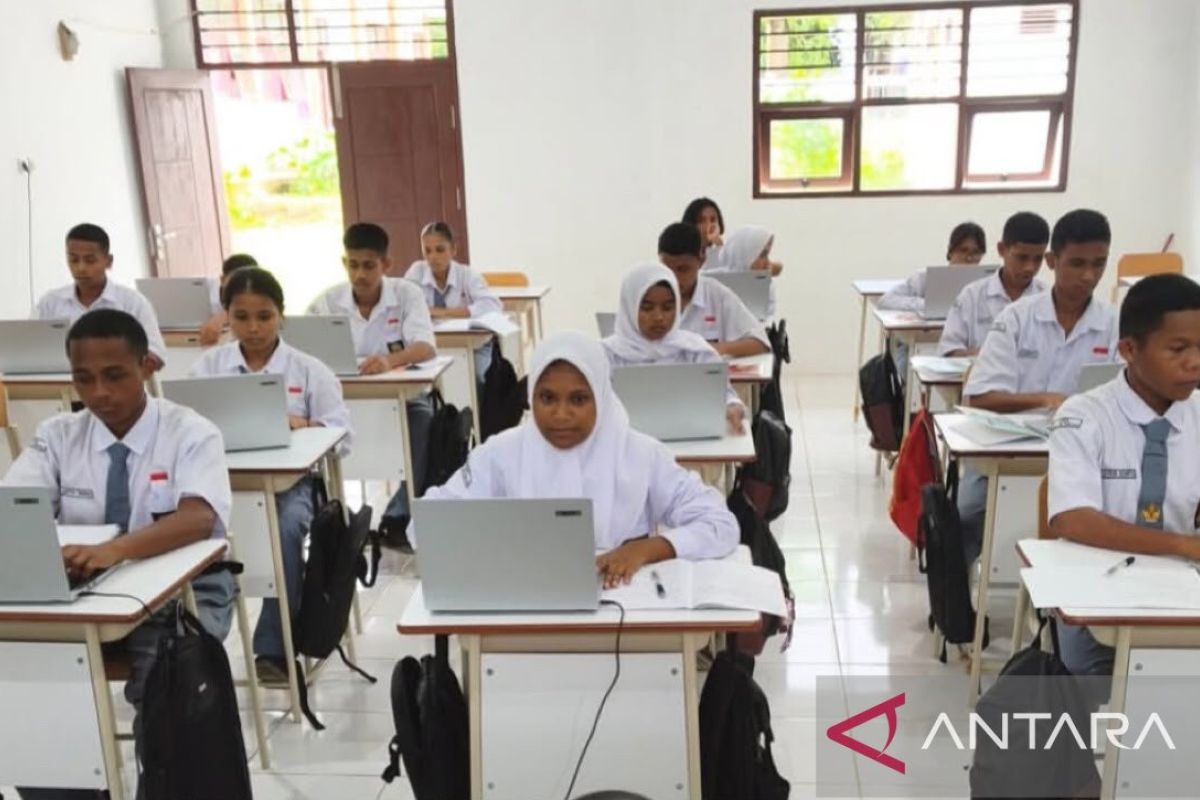
The Maluku Provincial Government is developing the People’s School programme at 14 locations spread across 11 regencies and cities as an effort to expand access to education for the public, particularly children from poor and extremely poor families.
Maluku Governor Hendrik Lewerissa in Ambon on Saturday said the People’s School programme currently operates in three locations, namely Tual City, Ambon City, and Central Maluku Regency, before being gradually expanded to 14 sites.
“The People’s School education programme is already running in three locations, namely Tual City, Ambon City, and Central Maluku. Going forward, we will develop it at 14 points in 11 regencies and cities,” he said.
According to him, the development of People’s Schools is part of the government’s efforts to open broader educational opportunities for children from families that have so far faced economic limitations.
The programme, Hendrik said, does not merely provide a place to learn but is directed at breaking the intergenerational chain of poverty through quality and sustainable education.
People’s Schools are a government programme initiated by President Prabowo Subianto with the main target being children from poor and extremely poor families recorded in the National Socio-Economic Single Data (DTSEN).
“This is part of the government’s efforts to ensure that children from underprivileged families also receive proper, quality education and have equal opportunities to develop,” he said.
Hendrik said the boarding-based characteristic of People’s Schools is one of the programme’s advantages because students not only receive learning but also care and the fulfilment of basic needs during their education.
The programme is provided free of charge, including education, accommodation in dormitories, three meals a day, uniforms, textbooks, and health services covered by the state through the Ministry of Social Affairs budget.
“Children do not only come to learn, but their educational support needs are also attended to. Thus, economic factors no longer become a barrier for them to obtain education,” he said.
He explained that People’s Schools continue to use the national curriculum in accordance with the standards of the Ministry of Primary and Secondary Education. The diplomas obtained by students are also equivalent to regular schools so that graduates have the opportunity to continue their education to a higher level.
The development of People’s Schools in the archipelagic region of Maluku also poses its own challenges due to the geographical conditions consisting of islands with unequal access to transportation and basic services.
Therefore, the expansion target of up to 14 locations is expected to bring education services closer to community groups in need while reducing disparities in educational access between regions.
“What we are building is not only the schools, but opportunities for the children of Maluku to have a better future,” he said.