
Maluku Immigration Office Brings Services Closer to Border Communities
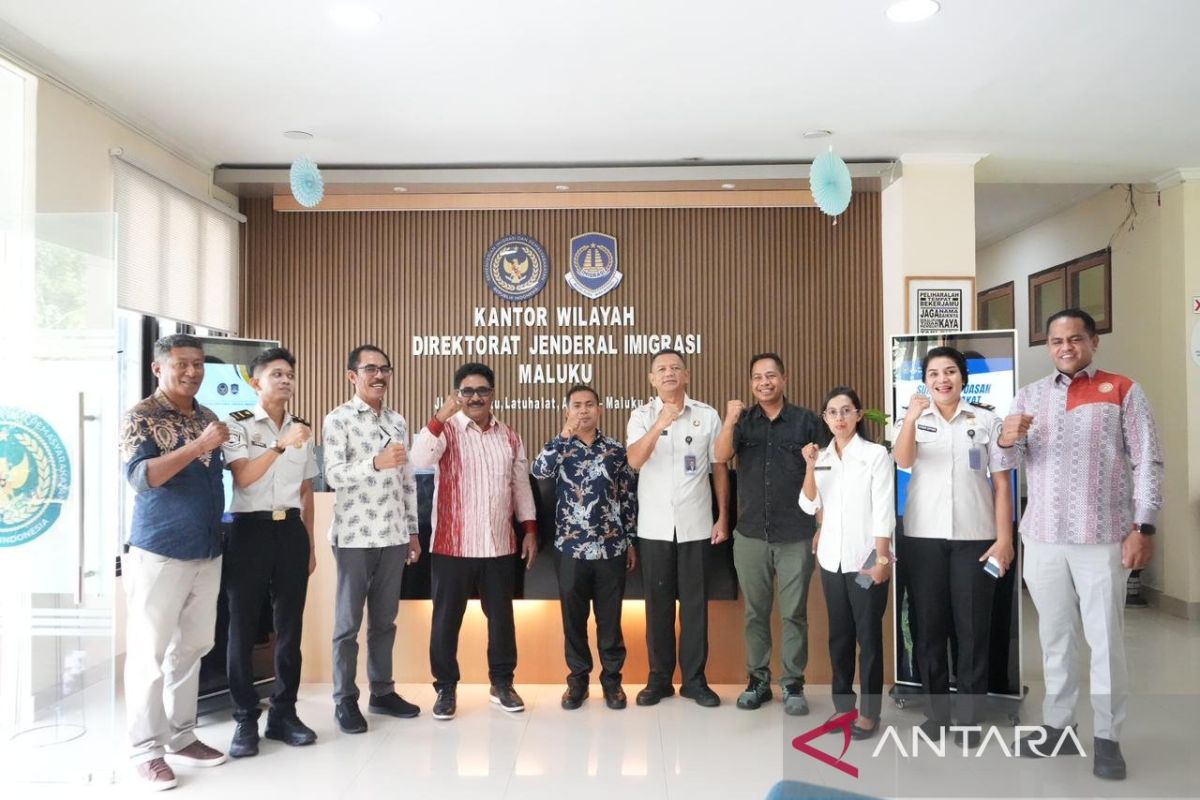
Ambon (ANTARA) - The Maluku Regional Office of the Directorate General of Immigration is bringing services closer to border communities to facilitate immigration services for residents in Southwest Maluku (MBD). “Following coordination with Commission I of the MBD DPRD, we are planning the establishment of sponsored immigration villages as a strategic step to bring immigration services closer to the community, particularly in the MBD border area,” said the Head of the Law Enforcement and Internal Compliance Division of Maluku Immigration, Jose Rizal, in Ambon on Tuesday. He explained that the sponsored immigration villages will be focused as centres for information services, education, and administrative assistance for immigration at the village level, so that people in island areas do not have to travel far to the immigration office. According to him, in the meeting with the MBD DPRD, several main challenges in the field were identified, including limited facilities and infrastructure, shortages of human resources (HR), and the suboptimal function of the Special Terminal (Tersus) Immigration Checkpoint (TPI) on Moa Island and Lirang Island. As a concrete step, in addition to establishing sponsored villages, his side is also promoting the implementation of the Easy Passport programme to accelerate and simplify passport issuance services for people in border areas. In response, Deputy Chairman of Commission I of the MBD DPRD, Johand A. Mose, expressed support for strengthening immigration services, including encouraging agreements between Immigration and the MBD Regional Government in strengthening the operational aspects of Tersus TPI. He also proposed that passport printing services be brought directly to MBD to reduce the cost and time burden on the community in accessing immigration services. In addition, the establishment of a Border Crossing Post on Lirang Island also became a focus of discussion. This facility is considered important for regulating border resident mobility in a simpler and more effective manner. Cross-agency synergy as well as regional government support are the main keys in realising immigration services that are closer, faster, and more adaptive in the Maluku border areas.