
Maluku Health Office Intensifies Leprosy Screening for Schoolchildren
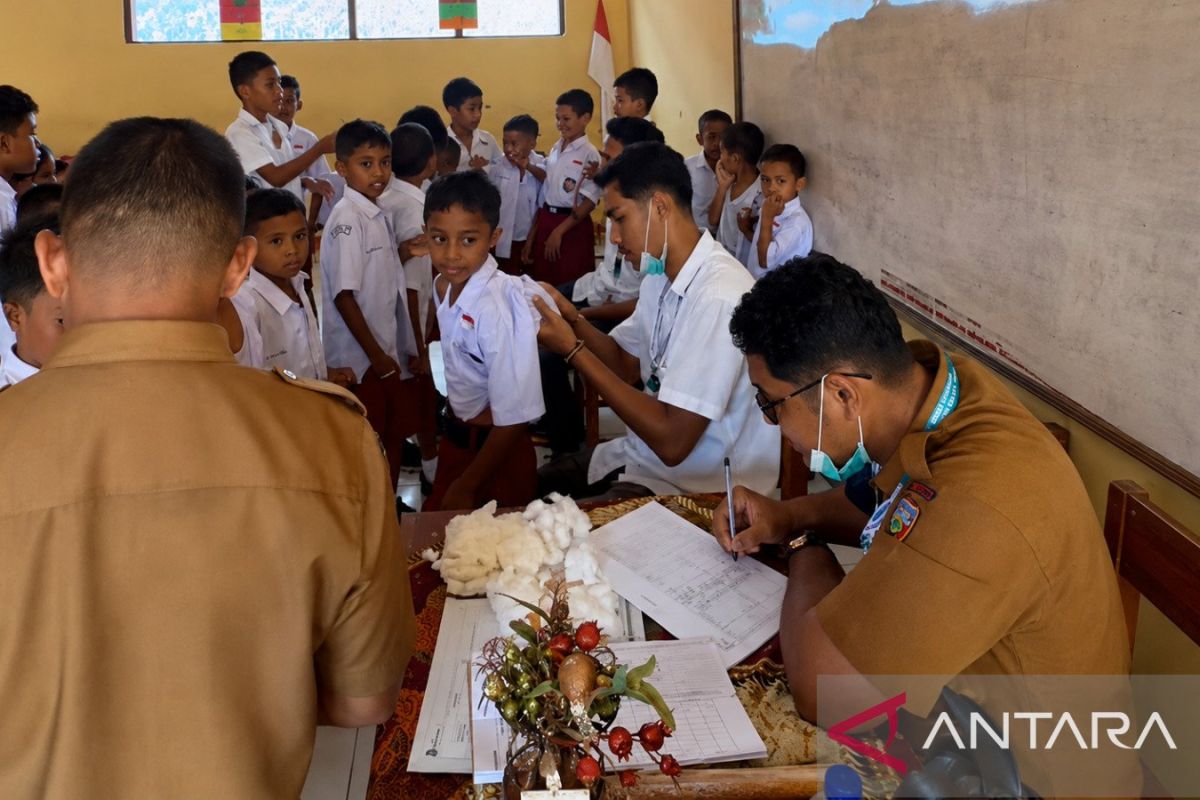
The Maluku Provincial Health Office is intensifying screening or early detection of leprosy among primary school students as an effort to break the chain of transmission from an early age and accelerate the achievement of leprosy elimination in the region.
Head of the Maluku Health Office Elna Anakotta in Ambon on Friday said screening is carried out actively by visiting schools, especially in areas of concern for leprosy control, including Central Maluku Regency.
“The Maluku Health Office has taken the initiative to be present directly, because we want to try to maximise leprosy elimination in the community and among children, and even break the chain,” said Elna.
According to Elna, the measure is important because leprosy cases in children indicate that transmission of the disease is still occurring in the community.
Since the beginning of 2026 until July, 179 leprosy cases have been recorded in adults and 22 cases in children in Maluku. Child cases account for around 12 percent of all cases found.
“If not handled, the dangerous part is the side effects. Leprosy transmission is indeed low, but its impact can become a problem if it is found and treated late,” she said.
She explained that leprosy is a chronic infectious disease caused by the bacterium Mycobacterium leprae and mainly attacks the skin and peripheral nerves. The disease can be marked, among other things, by the appearance of patches on the skin that experience changes in sensation or numbness.
Therefore, Elna stressed the importance of finding cases as early as possible, so that sufferers can immediately receive treatment and the risk of disability due to nerve damage can be prevented.
“School principals are the people who know the condition of the children. Therefore, this activity must also be campaigned to create a safe and comfortable school culture,” she said.
She added that a safe school environment is not only related to physical health, but also to the school community’s understanding of leprosy.
Education is needed so that students experiencing leprosy symptoms do not experience stigma, lose self-confidence, or become victims of bullying.
“Handling and education regarding leprosy in children must go hand in hand, so that the impact of leprosy does not cause children to lose confidence or even be bullied,” said Elna.
The Maluku Health Office also continues to educate the public that leprosy is not a curse or a disease caused by mystical things, but rather an infectious disease that can be treated and cured.
In addition to Central Maluku, Ambon City is also being directed as a pilot area to accelerate leprosy elimination efforts through strengthening case finding, treatment, monitoring of close contacts, and public education.
Screening efforts in schools are expected to accelerate the discovery of new cases in children while encouraging families and the community to immediately seek examination if they find changes in the skin or sensory disturbances that point to leprosy symptoms.
Source: jawawa.id (https://jawawa.id/newsitem/maluku-health-office-intensifies-leprosy-screening-for-schoolchildren-1786712124)
Originally published by Antara (Indonesian) (https://www.antaranews.com/berita/5694883/dinkes-maluku-gencarkan-skrining-kusta-bagi-siswa), translated from Indonesian