
Maluku Cultural Centre: Papalele Highlights Women's Role in Boosting Economy
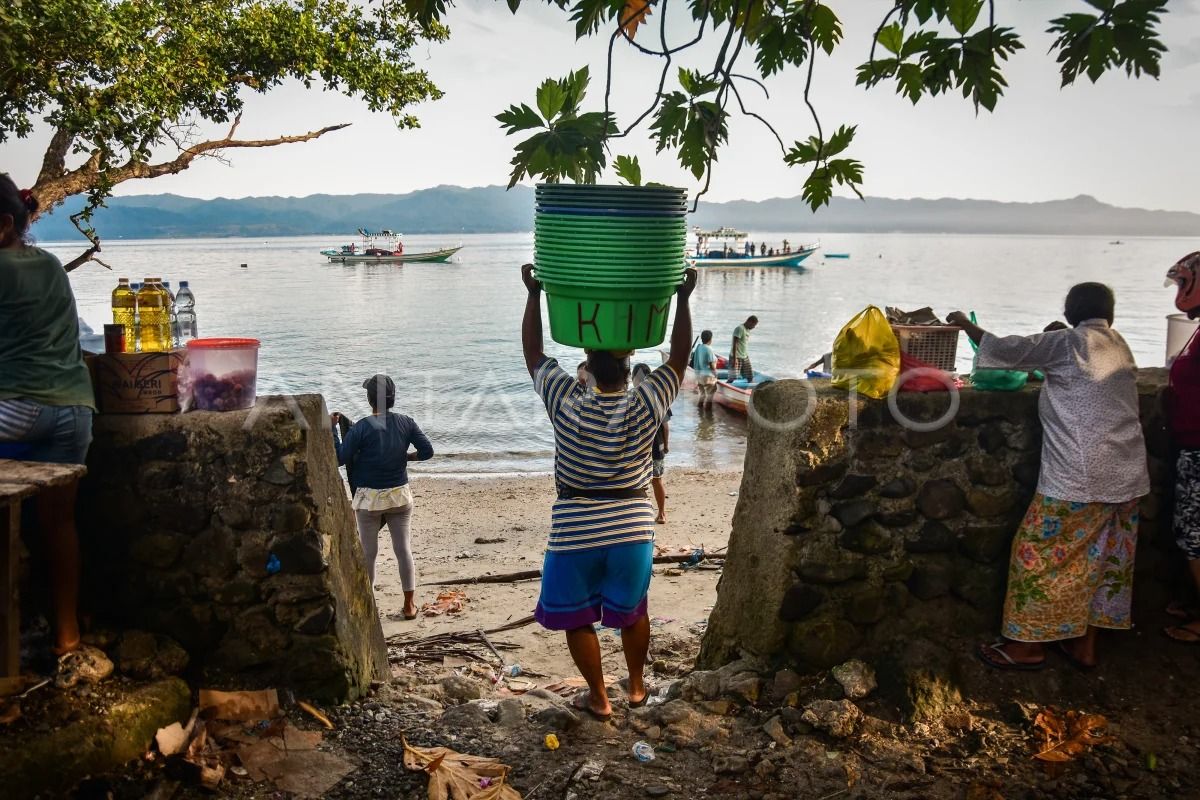
Ambon (ANTARA) - The Cultural Heritage Centre (BPK) for Region XX Maluku has stated that the Papalele or Jibujibu tradition is tangible proof of the important role of Maluku women in driving the family economy while maintaining the sustainability of local cultural values.
Mezak Wakim, a Junior Cultural Officer at the Maluku Cultural Heritage Centre, said in Ambon on Monday that Papalele is a trading tradition that has long been part of the life of the Maluku community and has made a significant contribution to strengthening household economies.
“Papalele is a real form of independence for Maluku women. They are not just traders, but also cultural agents and family economists. That is why Papalele has been designated as an Intangible Cultural Heritage,” he said.
He explained that in practice, the Papalele or Jibujibu take fish catches from fishermen and then market them to various areas in a traditional way. This activity makes women the primary lifeblood in developing the family economy as well as the link between fishermen and consumers.
The women market their goods in a distinctive style, wearing traditional kebaya, while carrying buckets or rattan containers filled with fishery and agricultural commodities on their heads. For them, walking from village to village and into the city centre is a daily habit to strengthen the family economy.
According to Mezak, the designation of Papalele as an Indonesian Intangible Cultural Heritage (WBTb) is a recognition of the noble values contained within it, such as hard work, solidarity, mutual cooperation, and social responsibility within the family.
“This designation is not just about cultural preservation, but also recognition of the struggle of resilient Maluku women who have been the backbone of the family economy,” he stated.
He added that the government is currently preparing various measures to ensure the sustainability of this tradition so that it survives amidst the changing times. “We want them to continue to exist, but with the ability to adapt in the modern era,” he said.
According to him, recognition as a WBTb is an initial step in preservation efforts. The next challenge is ensuring the regeneration of Papalele practitioners, improving their welfare, and the ability to adapt to technological developments and the digital economy.
“Papalele is not just a story of the past, but a living practice that continues to evolve. Behind every winnowing tray carried on the head, there is a story of struggle, love, and pride of Maluku women,” he said.
Mezak stated that cultural preservation is carried out not only through documentation and protection, but also through the utilisation of culture as part of community life so that it remains relevant and provides economic benefits.
Therefore, the Maluku BPK continues to strengthen cultural education and socialisation programmes for students, university students, communities, and the wider public to increase awareness of the importance of safeguarding regional cultural heritage.
In addition, his party is also encouraging the utilisation of cultural values to support community economic development, one of which is by promoting the Papalele concept as an identity and branding in the development of micro, small, and medium enterprises (MSMEs).
“Papalele has economic value as well as a strong cultural identity. These values can be an inspiration in the development of culture-based MSMEs, thus providing benefits to the community while maintaining the sustainability of the tradition,” he said.