
Maluku Correctional Services Strengthen Empowerment Services for Inmates Towards Self-Sufficiency
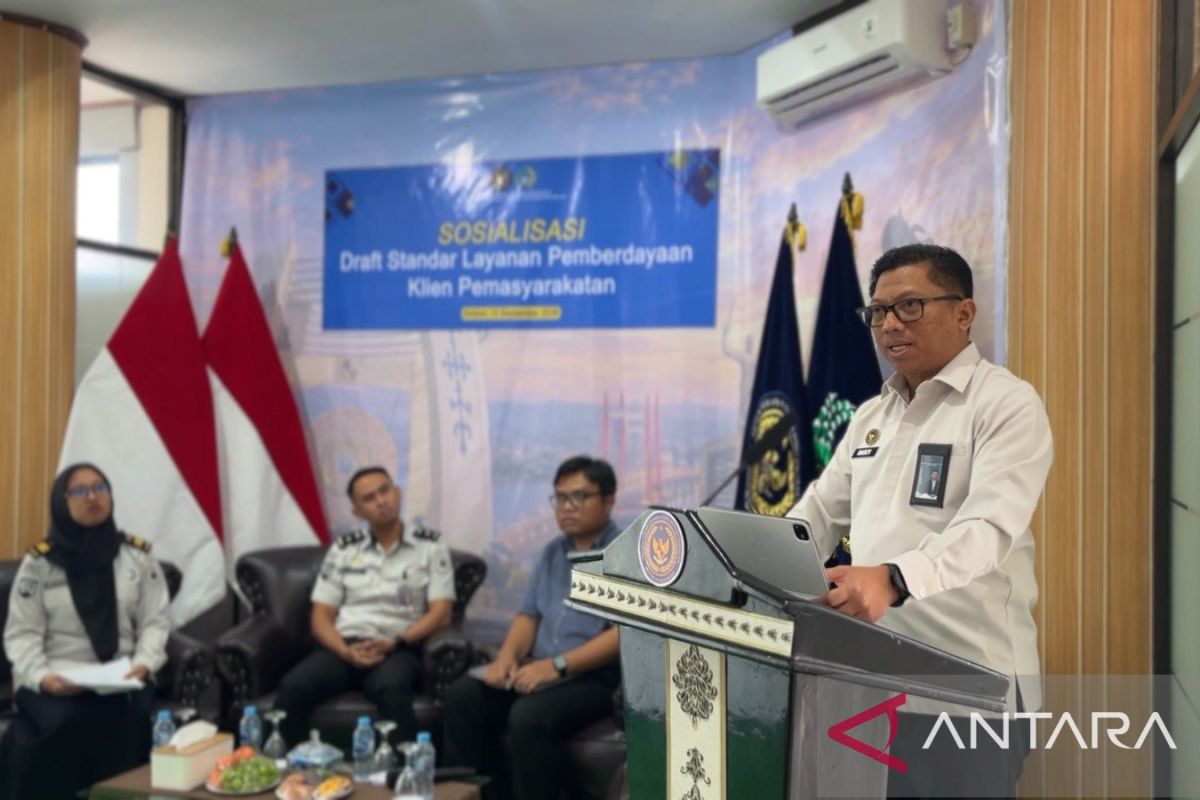
AMBON — The Maluku Regional Office of the Directorate General of Corrections (Kanwil Ditjenpas) is strengthening the service standards for the empowerment of inmates and correctional clients to ensure that the rehabilitation process encourages self-sufficiency and prepares them to resume their roles within society.
The Head of the Maluku Regional Office of the Directorate General of Corrections, Ricky Dwi Biantoro, stated in Ambon on Friday that strengthening service standards is necessary to ensure that empowerment programmes do not merely fulfil procedures but provide real benefits tailored to the needs and conditions of each client.
“Service standards must provide certainty that every client receives an equal opportunity to develop. The most important thing is not just that the programme is implemented, but that there is a tangible change and benefit felt by the clients when they return to society,” he said.
The strengthening of these services was discussed during the Socialisation of the Draft Service Standards for the Empowerment of Correctional Clients in Ambon.
He explained that empowerment is a vital part of the social reintegration process, as the success of correctional services is measured not only by the completion of the rehabilitation period but also by an individual’s readiness to live independently after returning to their social environment.
Therefore, service standards need to clarify the stages of assistance, ranging from needs mapping to providing access to skills and productive opportunities that align with the clients’ potential.
According to him, this approach is essential to implement in Maluku, which possesses an archipelagic characteristic with varying social conditions and economic potentials across different regions.
“We want to change the perception that guidance ends once administrative obligations are met. The real challenge is how clients are able to rebuild their lives, obtain employment opportunities, and be accepted by their social environment,” he noted.
He added that the implementation of service standards must still refer to national policies, yet execution must be adaptive to geographical conditions, community character, and local economic potential.
During the discussion, Ceno Herseti_tiko from the Directorate of Community Guidance highlighted the importance of clear standards so that the guidance and empowerment processes can be carried out consistently and measurably.
Meanwhile, Ervan Togatorop, an academic from the Faculty of Economics and Business at Pattimura University, provided a perspective regarding economic independence and the capacity building of clients as part of successful social reintegration.
He stated that the empowerment approach needs to provide space for clients to develop their potential, thereby increasing their chances of working, entrepreneurship, and being productive after returning to society.
Responding to the various inputs, the Head of the Regional Office stated that strengthening service standards cannot be achieved by the correctional ranks alone. Support from local governments, the business sector, educational institutions, communities, and the public is required to open access to training, employment, and business opportunities for clients.
“We want these standards not to remain merely as policy documents. The standards must become an instrument that is truly used to accompany clients so they possess the ability to build a better and more independent life,” he said.
He expressed hope that the implementation of more targeted empowerment services could increase the chances for clients to leave their past behind, build new lives, and contribute positively to society.
Source: jawawa.id (https://jawawa.id/newsitem/maluku-correctional-services-strengthen-empowerment-services-for-inmates-towards-self-sufficiency-1789132292)
Originally published by Antara (Indonesian) (https://www.antaranews.com/berita/5736936/ditjenpas-maluku-perkuat-layanan-pemberdayaan-wbp-menuju-kemandirian), translated from Indonesian