
Malole Family Festival in Rote Ndao: The Role of Fathers and 'Kintal Gizi' in Reducing Stunting
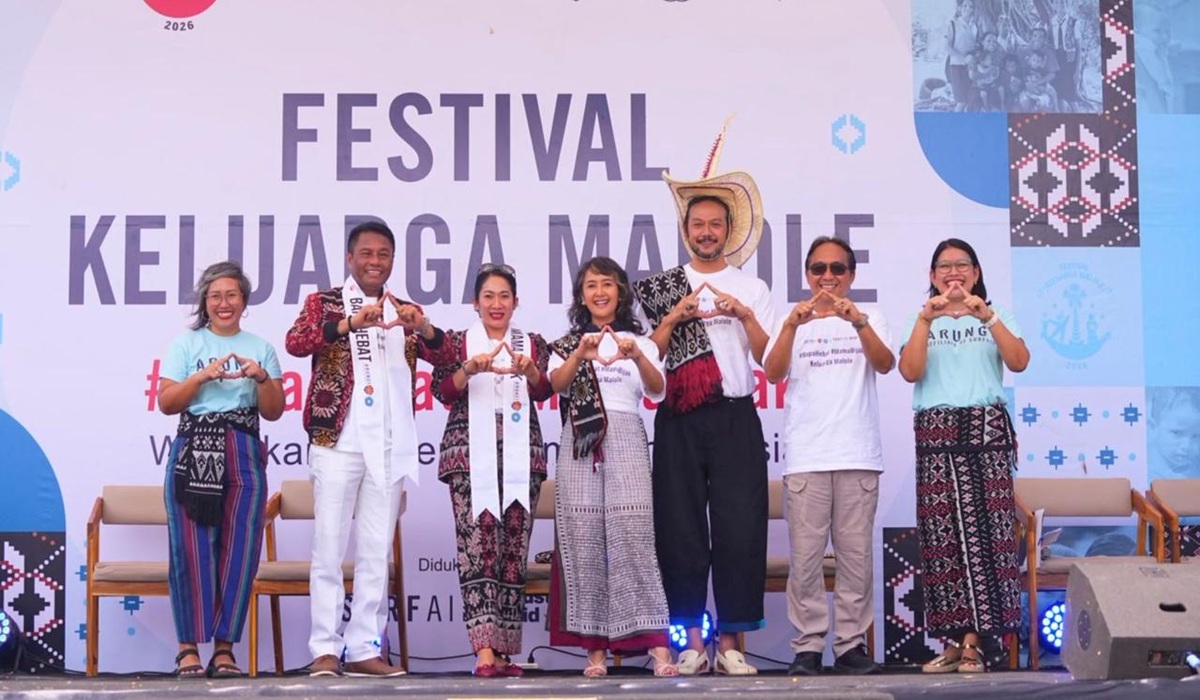
The issue of stunting in Indonesia, particularly in East Nusa Tenggara (NTT), is no longer viewed merely as a problem of nutritional deficiency. More than that, the active involvement of fathers in parenting and the optimisation of home gardens have become strategic keys in building family resilience. This spirit underpinned the Malole Family Festival with the #BapaHebat #MamaBijak movement, held at the official residence of the Rote Ndao Regent on Tuesday (9/6/2026). The event, initiated by the ARUNGI Foundation, an affiliate of SurfAid International, together with the Rote Ndao Regency Government, aims to break the chain of traditional views that childcare is the sole task of the mother. Data shows that health challenges in this region remain significant. The high prevalence of stunting demands real collaboration between the government and the community to change parenting patterns at the household level. Rote Ndao Regent Paulus Henuk, S.H., asserted that human resource development must start from the smallest unit, the family. ‘The family is the first school for a child. We welcome this movement because it encourages the joint involvement of fathers and mothers to build the future generation of Rote Ndao,’ he said. Based on the results of a Focus Group Discussion conducted by ARUNGI in February 2026 with 73 fathers in 6 villages, it was found that the majority of fathers were not yet actively involved in parenting. In fact, almost all participants admitted they had never prepared food for their children. ARUNGI Executive Director Dinnia Joedadibrata explained that when fathers are present emotionally and practically, the mother’s burden is reduced and the child’s health quality improves. ‘Shared parenting is an important part of the stunting prevention solution,’ she stressed. A similar sentiment was conveyed by Deputy for Population Control at BKKBN, Dr. Bonivasius Prasetya Ichtiarto. He stated that stunting prevention requires strengthening the eight family functions, from religious function, love and affection, to environmental development. The festival was not only a ceremonial event but also a moment to announce the Rote Ndao Regency Government’s commitment to replicate 1,200 Kintal Gizi models across the entire district by 2027. This step was taken after witnessing the success of the ARUNGI-assisted model in independently improving access to nutritious food. The festival’s liveliness was further enhanced by the presence of celebrity couple Widi Mulia and Dwi Sasono. As family activists, they shared real experiences on how to build harmony and share roles amidst professional busyness. With the attendance of more than 300 participants and 50 strategic partners, the Malole Family Festival is expected to be a catalyst for sustainable behavioural change. ‘Every child in Rote Ndao has the right to grow up healthy and happy. That foundation lies in a family that supports and respects each other,’ concluded Paulus Henuk.