
Mall Owner Ignored Contractor Warnings, Leading to 502 Deaths
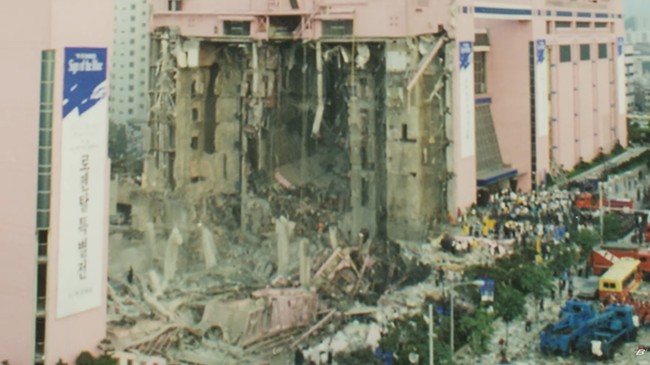
Safety regulations are a mandatory requirement in all aspects of life, including the construction of high-rise buildings. These rules cover earthquake-resistant structures, fire protection, emergency evacuation facilities, load-bearing strength, and oversight by a safety committee. They also require evacuation routes, emergency exits, and warnings regarding lift usage or prohibitions. Before construction, a Building Approval (PBG) must be obtained, and after completion, a Certificate of Occupancy (SLF) is required. Every building process must therefore meet mandated safety provisions. Failure to do so can result in tragedy, claiming hundreds of lives. Such was the case in South Korea with the collapse of the Sampoong Department Store on 29 June 1995. The incident stemmed from problems dismissed by the owner, who refused to repair the building despite the appearance of large cracks. According to The Guardian, the management of Sampoong Department Store had known the building was in a dangerous condition three months prior. In April 1995, signs of damage had already emerged, including long cracks in the ceiling and walls of the fifth floor. However, these danger signs were ignored. Management merely relocated tenants and shops from the fifth floor to lower levels, while mall operations continued as usual. The Guardian’s investigation report revealed that the root of the tragedy dated back to the building’s construction in 1987. The land on which Sampoong stood was a former rubbish dump, deemed insufficiently stable to support the weight of a large shopping centre. The contractor had reportedly warned of this risk and even proposed that the owner reconsider the project with a stronger concrete structure. However, the mall owner, Lee Joon, insisted and ignored the initial contractor’s suggestions and warnings. The contractor who refused the owner’s wishes was dismissed, and another contractor willing to carry out his plans was hired. The subsequent investigation into the incident found that the collapse of the Sampoong Department Store resulted from a combination of poor construction planning and the owner’s disregard for safety regulations. The court later sentenced Lee Joon to 10 years in prison and his son, Lee Han-Sang, to 7 years. Danger signs peaked on 29 June 1995, around 5:50 pm local time. Cracking and rumbling sounds were suddenly heard inside the building. Mall visitors panicked and ran towards the exits. That day, the cracks widened and spread to the fourth floor, yet management remained indifferent. Driven by greed and unwilling to lose revenue while the mall was busy, management merely closed the fourth floor and turned off the air conditioning throughout the building. Tragically, senior management chose to leave the building that day, leaving staff to continue serving arriving customers. When the incident occurred, it was too late despite the danger alarms sounding. Survivor Park Seung-Hyun recounted hearing a sound like a subway train entering a station, followed by people running in panic before concrete fell on his head and he lost consciousness. Within seven minutes, the building collapsed in about 20 seconds, burying over 1,500 people under the rubble. According to Britannica, 502 people lost their lives that day. Rescue teams managed to evacuate 937 injured victims, while six others were never found.