
Mall Bosses State Indonesians Still Love Shopping, But Seek Cheaper Goods
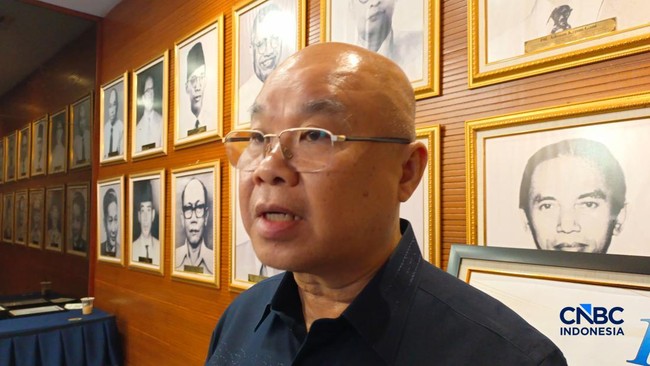
Amidst ongoing discussions regarding weakening purchasing power, shopping centre managers have revealed that the Indonesian public continues to visit malls in large numbers. However, consumer shopping patterns are currently undergoing a shift.
Alphonzus Widjaya, Chairman of the Indonesian Shopping Centre Management Association (APPBI), stated that visitor levels to shopping centres have remained relatively stable. According to him, there has not yet been a significant decline in the number of mall visitors.
“The public continues to visit shopping centres. Based on our data, visitor levels remain stable; there are slight fluctuations, but I believe the condition is stable,” Alphonzus said when met at the Auditorium of the Ministry of Trade in Jakarta on Monday.
He noted that what has changed is not the habit of visiting shopping centres, but rather the way people shop. Over the last one to two years, consumers have become more selective, choosing products with lower unit prices.
“What is happening is a change in shopping trends. In the last year or two, trends have shifted because they tend to buy products where the unit price is low or small,” he explained.
Nevertheless, Alphonzus emphasised that almost all product categories are still being purchased by the public; consumers are simply opting for more affordable options.
This phenomenon, he continued, explains why low-priced products are increasingly in demand in the market, including illegal imports and second-hand clothing.
“That is why illegal imports are becoming more widespread and second-hand clothing is increasingly sought after. Essentially, all types of goods are being bought, but it is the products with low unit prices that are chosen,” he added.
He also assessed that the Indonesian culture of socialising is one of the reasons mall footfall remains steady despite challenging economic conditions.
“Visitor levels… the public continues to visit shopping centres. There hasn’t been a significant decline in footfall. Moreover, Indonesian culture involves a love for gathering. Regardless of the difficulty, people will still gather, and shopping centres are one of the primary venues for this,” he explained.
This shift in shopping patterns is ultimately impacting retail sales performance. Alphonzus noted that while turnover growth is still occurring, it is not as high as the retail industry’s current potential would suggest.
According to him, this is evident from the emergence of many new shopping centres and the entry of various foreign brands into Indonesia, which theoretically should have driven higher sales growth.
“There is a decline, in the sense that there is no increase—or perhaps it is more accurate to say there is no significant rise. If there were an increase, it would be because many factors are driving it up, such as the increasing number of shopping centres,” he said.
Alphonzus explained that the expansion of shopping centres and retailers continues, including outside of Jakarta. Furthermore, many foreign brands, particularly from China, are entering Indonesia and opening outlets.
“In reality, there should be a significant increase. For example, many foreign brands are entering, such as Chinese brands and others. Shopping centres are also increasing, especially in regions that previously lacked them,” he explained.
“Retailers are also opening many new stores outside of the Jakarta area,” he continued.
However, various economic pressures mean this growth is not meeting expectations. Consequently, the increase in sales has not yet reflected the true potential of the national retail industry.
“Theoretically, there should be a significant increase, but due to pressures on purchasing power and various global pressures, that increase is not significant,” he concluded.