
Malioboro Full Pedestrian Scheme to Begin November 2026
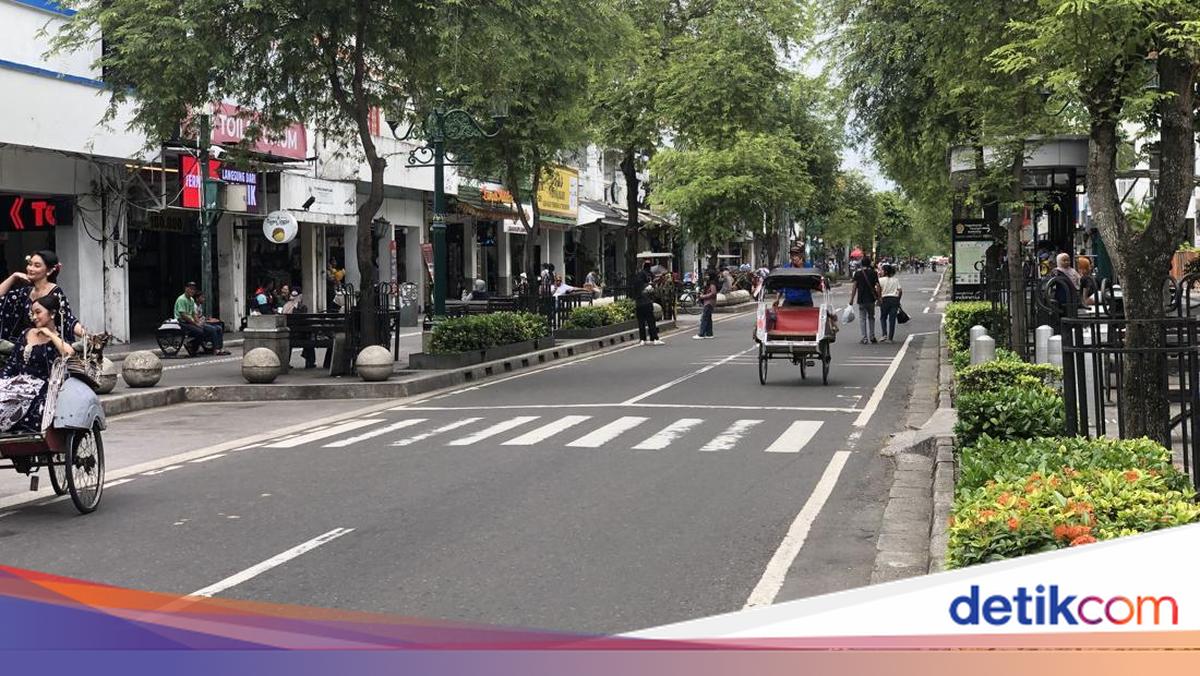
The implementation of full pedestrianisation in the Malioboro area of Yogyakarta is set to begin in November 2026. Details regarding the implementation scheme have been disclosed.
It is understood that the government has conducted several trials of full pedestrianisation in Malioboro. Currently, all technical matters are being finalised based on the evaluation results from previous trials.
The Regional Secretary of the Special Region of Yogyakarta (DIY), Ni Made Dwi Panti Indrayanti, stated that the work being refined following previous evaluations includes the regulation of the side streets (sirip-sirip) connected to Malioboro.
“Yes (full pedestrianisation starts in November); we are looking at it, because how much longer can we delay it?” said Made when met at the Kepatihan Complex, Yogyakarta, on Wednesday (1/7/wide/2026).
“However, it is necessary, as this is not a collaboration solely with the DIY Regional Government, but also with the Yogyakarta City Government. One of the tasks remaining is the regulation of the side streets,” she added.
From previous full pedestrianisation trials, such as during this year’s Yogyakarta City Anniversary, the evaluation results highlighted the need to regulate side streets and traditional vehicles.
“We are testing it. Since June, the design includes placing portals at each side street,” said Made.
“We will also monitor it. Full pedestrianisation does not mean the area will be deserted without any access; there are exceptions for specific vehicles, such as ambulances, fire engines in emergencies, or state guests,” she continued.
The DIY Regional Government is also currently developing a scheme for the drop-off of tourists using tour buses. There are plans to designate specific locations for tour buses to disembark passengers.
“That is also being designed. We actually need to conduct simulations for these tour buses regarding the drop-off points. Our hope is that there will be a specific location, but there is still an ongoing study by the city government regarding this,” said Made.
Made added that the public is expected to understand this policy. Besides Malioboro becoming a low-emission zone, the vehicle load in Malioboro is considered too heavy, frequently leading to traffic congestion.
“The purpose of this restructuring is not that we dislike visitors, but we want to create comfort. The sustainability of an area depends on how it is regulated,” said Made.
“If the vehicle volume remains high, it will eventually have a negative impact on the area. The carrying capacity will be significantly affected if we do not regulate it. Furthermore, there are many heritage buildings that may gradually be disturbed by external factors, such as vibrations and other disturbances,” she explained.