
Malind Indigenous Community Sends 14.5 Tonnes of Copra from Merauke to Surabaya
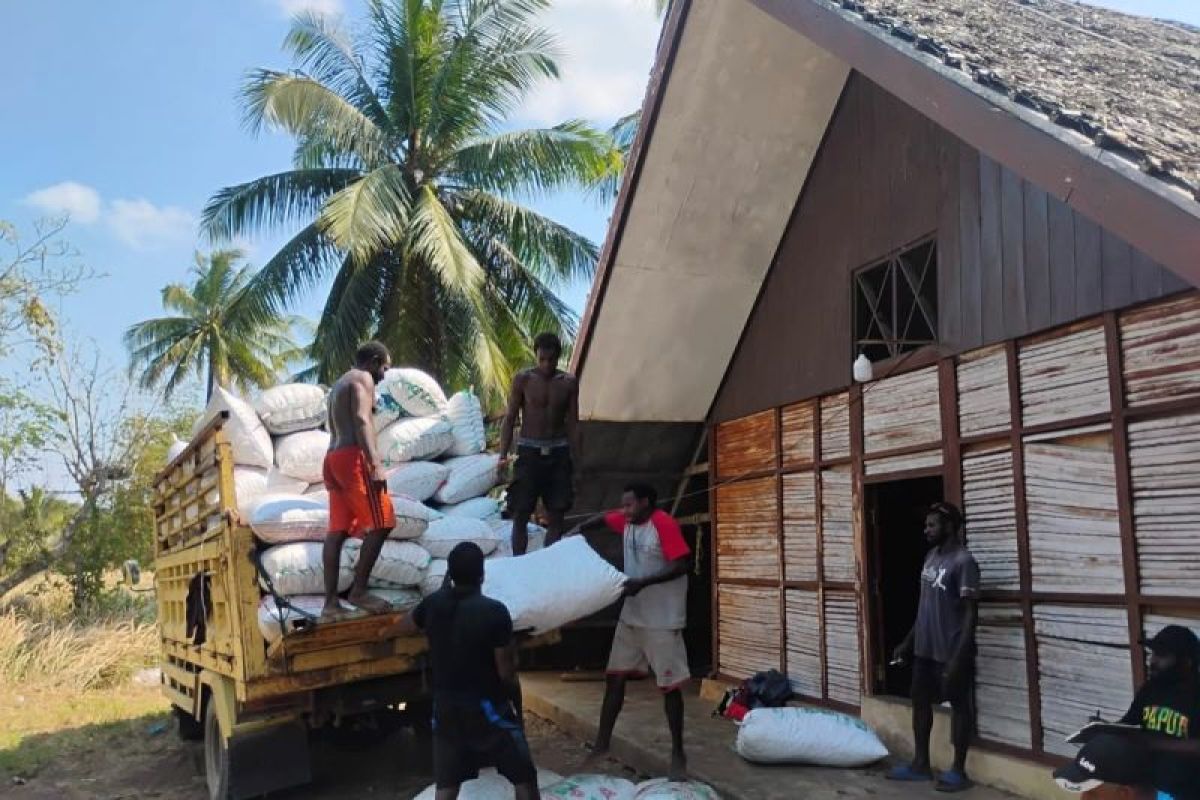
The Malind indigenous community from three villages in the Semangga District, Merauke Regency, South Papua, has made its inaugural shipment of 14.5 tonnes of copra to Surabaya, East Java, in an effort to develop coconut potential and strengthen the local economy.
The shipment took place on 24 August 2026, following approximately six months of collection and processing of coconut commodities by the community.
The copra originated from the villages of Matara, Waninggap Nanggo, and Urumb, collected through the Yora Mekhande Jaya Cooperative with assistance from the EcoNusa Foundation.
Moses Ramsis Boi, Program Associate of the EcoNusa Foundation in Merauke, stated on Wednesday that the development of copra production utilises the existing coconut potential within indigenous territories.
“Coconut commodities have now become a crucial economic mainstay for the Malind indigenous people in these three villages, especially when sea and swamp harvests are unpredictable,” said Moses.
He explained that copra production in Matara Village had previously been carried out between 2000 and 2010 but was later abandoned due to unstable commodity prices. Subsequently, the community had mostly sold whole coconuts to collectors.
EcoNusa began assisting the revival of copra production in early 2026 through the Yora Mekhande Jaya Cooperative. The cooperative purchases produce directly from farmers, assists in quality improvement, and provides storage warehouses.
Since the programme commenced on 26 January 2026, the number of copra processors has increased from five to 25 people. Between late January and April, approximately 15 tonnes of copra were collected, though a reweighing recorded 12,461 kilograms due to high moisture content.
Jamina Rineke Rumbewas, Chairperson of the Yora Mekhande Jaya Cooperative, noted that the potential for coconut development remains vast. Matara Village alone has around 6,000 coconut trees near the village, excluding those in community hamlets.
However, farmers still face obstacles such as market access, price fluctuations, copra quality, logistics costs, and limited cash capital.
Meanwhile, Sumarni Kaize, Chairperson of the Sinai MSME in Urumb Village, said that the development of copra is encouraging the community to manage coconut plantations once again. Several youths who previously worked as truck labourers and sand diggers have now transitioned into copra processing.
“They are beginning to tend to the coconut groves again, harvesting their own produce, and actively planting new coconut seedlings,” said Sumarni.
The second phase of copra collection for 2026 began in early September, with targets for larger shipments and explorations into expanding the commodity to other villages in the Merauke Regency.
Source: jawawa.id (https://jawawa.id/newsitem/malind-indigenous-community-sends-14-5-tonnes-of-copra-from-merauke-to-surabaya-1790575910)
Originally published by Antara (Indonesian) (https://www.antaranews.com/berita/5761284/masyarakat-adat-malind-kirim-145-ton-kopra-merauke-ke-surabaya), translated from Indonesian