
Maleo Programme in Makarti Jaya Village Enters Transition Phase
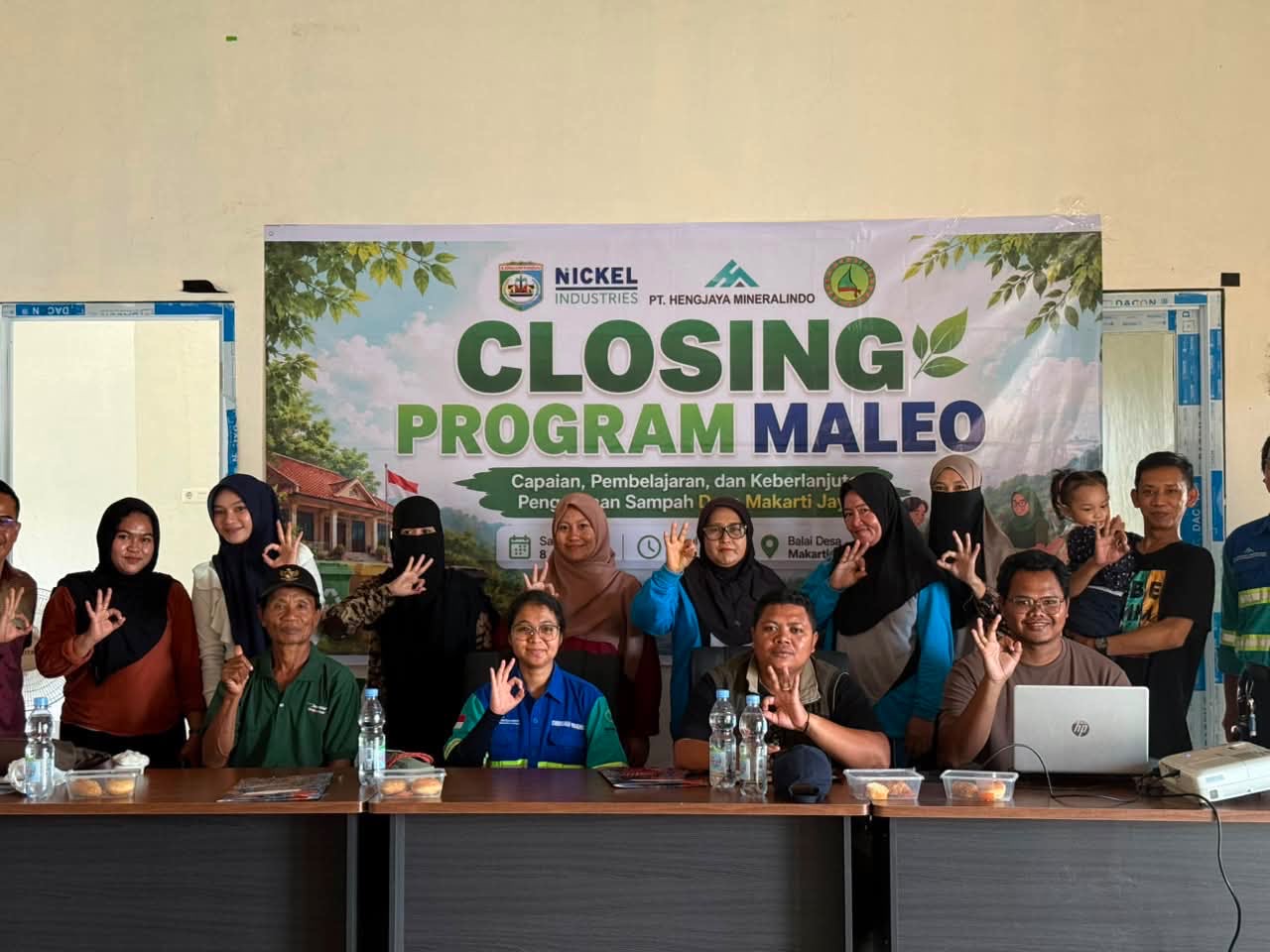
The Makarti Jaya Village Government, in collaboration with Nickel Industries and the local community of Morowali Regency, has successfully conducted the final presentation for the Makarti Jaya Lestari Waste Processing (Maleo) programme. Held on 6 June 2026 at the Makarti Jaya Village Hall, the event focused on the theme ‘Building a Circular Ecosystem: From Awareness to Economic Impact and Significant Waste Reduction’.
This event marks the conclusion of the programme’s initiation phase and serves as a turning point for Makarti Jaya Village as it transitions towards an independent and sustainable waste management system. The Maleo programme has been credited with building a strong foundation for community-based waste governance. Key achievements include the establishment and active operation of five Waste Bank Units (BSU), the strengthening of the Central Waste Bank (BSI) institution, and an increase in active participating members.
Beyond physical infrastructure, the most crucial outcome of the Male extquote;o Programme is the shift in community paradigm. Waste, previously viewed as a problem, is now recognised as a resource with verifiable ecological, social, and economic value. To date, 84 households are registered as BSU customers across five hamlets in Makarti Jaya Village. Since June 2025, the waste banks have successfully reduced a total of 7.1 tonnes of plastic, paper, and metal waste, generating an economic value of 19 million rupiah since the BSU institutions were established.
Syamsudin, Director of Operations at the Peduli Negeri Foundation, highlighted the direct socio-economic impact on villagers. He noted that the focus was to ensure residents act as drivers of change, proving that continuous education can lead to tangible social and economic impacts. The presence of the waste banks not only reduces environmental pollution but also provides savings for residents and paves the way for micro, small, and medium enterprises (MSMEs) in recycling.
Chrisma Virginia, Industrial Process Sustainability Lead from Nickel Industries Limited, expressed appreciation for the support from the village government and the community. She stated that the programme reflects the company’s commitment to sustainability and creating a positive impact. Looking forward, Nickel Industries has committed to supporting the next transition phase by advocating for waste management integration into village regulations to ensure the long-term institutional strength of the BSI and BSU.