
Malaysians Asked to Join Indonesia, Pledging Allegiance to Their Homeland
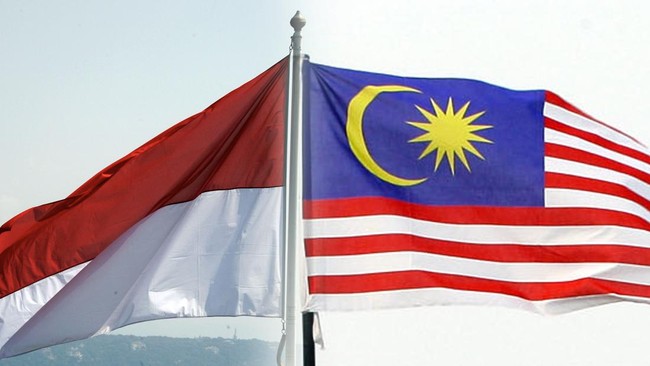
Jakarta, CNBC Indonesia — Indonesia and Malaysia once came close to forming a single state entity called Indonesia Raya. The ambitious idea emerged in the run-up to Indonesia’s independence in 1945, when several Malay nationalist figures sought to integrate Malaya with Indonesia.
The spirit of unity was even marked by the raising of the Red and White flag in Malaya. However, rapidly shifting geopolitical dynamics ultimately scuppered plans to unite the two neighbouring territories.
The history dates back to 12 August 1945, when three leading figures from the Preparatory Committee for Indonesian Independence (PPKI)—Soekarno, Mohammad Hatta and Radjiman Wedyodiningrat—were summoned to Dalat, Vietnam, to meet Marshal Terauchi, the Japanese Army’s Supreme Commander for the Southern Region. At the meeting, Japan promised Indonesia independence on 24 August 1945.
On their way home, Soekarno’s party stopped in Singapore before flying on to Taiping, Perak. There, they held a secret meeting with Ibrahim Yaacob and Burhanuddin Al-Helmy, two leading figures in the Malay nationalist movement who were committed to securing Malaya’s independence from British rule.
The strategic meeting focused on developing the concept of a Greater Indonesia state. Its proposed territory was vast, encompassing the Indonesian archipelago, Malaya, Singapore, Brunei and North Borneo (Sabah and Sarawak).
Malay nationalists’ commitment
During the talks, Soekarno called for the creation of a shared homeland for people with common historical roots, culture and Nusantara identity.
Ibrahim Yaacob welcomed the idea and voiced full support for Malaya’s integration into an independent Republic of Indonesia. He emphasised the Malay community’s commitment to struggle side by side in pursuit of unity.
The grand vision of Indonesia Raya nevertheless faced internal resistance. Historian Cheah Boon Kheng, in his book Red Star Over Malaya (1983), notes that Mohammad Hatta and several other founding figures held fundamentally different views, tending to take a more pragmatic stance on the borders of the former Dutch East Indies.
Japan’s surrender ended the Greater Indonesia ambition
The political landscape changed dramatically after Japan formally surrendered unconditionally to the Allies on 14 August 1945. Japan’s defeat intensified domestic political tensions, with young activists pressing Soekarno and Hatta to proclaim independence immediately, without Japanese involvement.
Following the Rengasdengklok Incident, Indonesia officially proclaimed its independence on 17 August 1945—much earlier than the date originally proposed by Japan.
As a result of the accelerated proclamation and post-war developments, the idea of creating a Greater Indonesia faded. Ibrahim Yaacob was forced to revise his political strategy in response to the return of Allied forces to Malaya.
Malaya eventually gained independence from Britain on 31 August 1957, 12 years after Indonesia became a sovereign state.
This historical episode is evidence of the close historical ties between Indonesia and Malaysia. The proposal to integrate their territories, which briefly gathered momentum during the nationalist movement, ultimately foundered because of differing political calculations and changes in the international legal order after the Second World War.