
Malaysian Tanker Crosses Strait of Hormuz, Iran Does Not Forget Its Friends
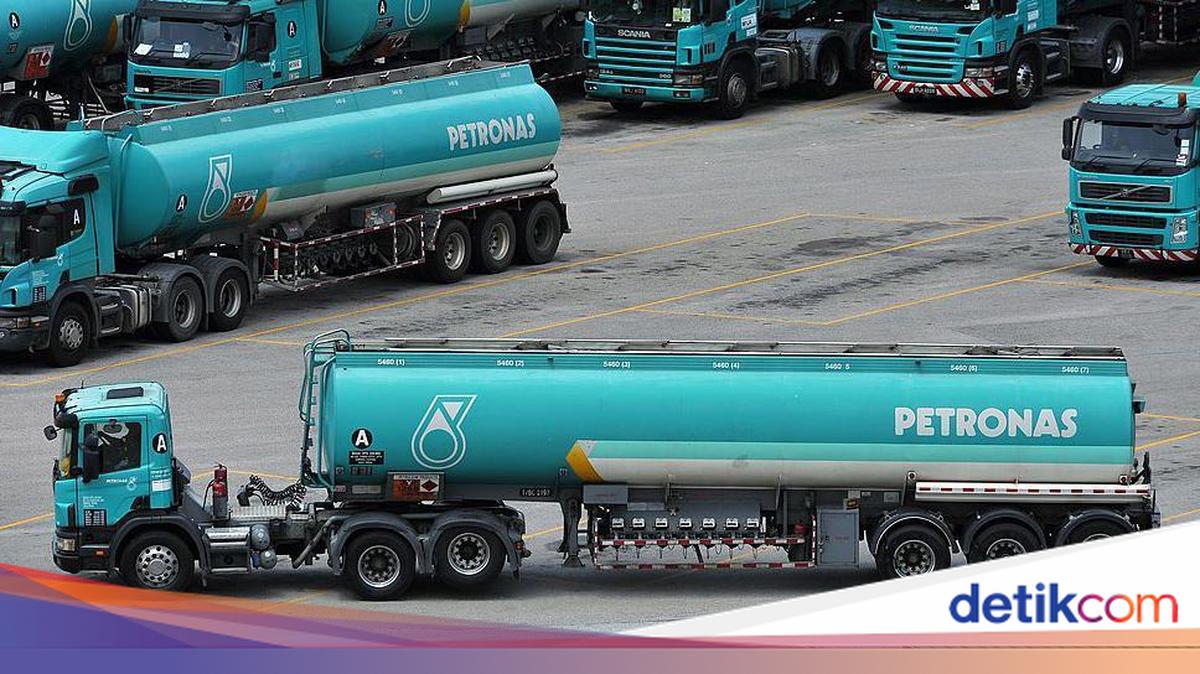
A tanker chartered by Petronas to transport crude oil from Iraq has crossed the Strait of Hormuz en route to Johor, Malaysia.
The news was announced by the Iranian Embassy in Kuala Lumpur via a post on X on Monday (06/04).
“We have said that the Islamic Republic of Iran does not forget its friends. The first Malaysian ship has crossed the Strait of Hormuz,” read the post, written in English and Malay.
The voyage of the ship named Ocean Thunder occurred a day after Iran stated that Iraq was exempt from the blockade in the Strait of Hormuz, as reported by Reuters news agency citing data from financial institution LSEG and maritime data from Kpler.
Ocean Thunder loaded around one million barrels of Basrah Heavy crude oil on 2 March and is estimated to unload its cargo in Pengerang, Johor, in mid-April, according to Kpler data.
The tanker, which according to data was chartered by Petronas unit Petroterm, is among seven Malaysian-related ships that have received permission from Iran to cross the strait, two sources told Reuters.
The seven ships are linked to Malaysian companies, including Petronas, Vantris Energy, and MISC.
Fruit of Diplomacy
In March, Malaysian Prime Minister Anwar Ibrahim expressed thanks to Iranian President Masoud Pezeshkian for granting permission to Malaysian oil tankers to cross the Strait of Hormuz.
Malaysian Transport Minister Anthony Loke attributed this to “good diplomatic relations with the Iranian government,” according to Malaysian media.
The Philippines is the latest country to reach an agreement with Iran.
Iranian officials have assured “safe, unobstructed, and swift passage” for Philippine-flagged ships through the waterway, said Philippine Foreign Minister Theresa Lazaro.
Theresa said the agreement, reached after a “very productive phone conversation” with Tehran on Thursday (02/04), is crucial to help ensure supplies of energy and fertiliser.
The Philippines imports 98% of its oil from the Middle East and was the first country to declare a national energy emergency after petrol prices there more than doubled since the US and Israel attacked Iran at the end of February.
However, she noted that ships linked to countries considered enemies or parties involved in the current conflict will not be allowed to pass.
She said that ships from the United States, Israel, and several Gulf countries playing a role in the ongoing crisis will not be granted transit permission.
“We are in a state of war. This region is a war zone, and there is no reason to allow ships belonging to enemies and their allies to pass. However, the strait remains open to others,” she stated on 25 March.
BBC
The Philippines, often seen as a US ally, is an interesting case that could show Iran is “willing to make distinctions,” said Roger Fouquet from the Energy Studies Institute at the National University of Singapore.
“Iran appears to differentiate between a country’s alliances and its active participation in the conflict,” he added.
Other countries have also held talks with Iran.
Pakistan announced on 28 March that Iran had agreed to allow 20 of its ships to cross the Strait of Hormuz.
“This is a positive and constructive signal from Iran and is worthy of appreciation,” said Pakistani Foreign Minister Ishaq Dar.
“Dialogue, diplomacy, and confidence-building measures like this are the only way forward.”
Getty Images An Indian tanker carrying liquefied petroleum gas crosses the Strait of Hormuz.
Iran has also publicly welcomed Indian-flagged ships crossing the strait.
“Our Indian friends are in safe hands, no need to worry,” wrote the Iranian Embassy in India in a post on X last week.
The post was a response to another post by its offices in South Africa stating that “only Iran and Oman” would decide the future of the Strait of Hormuz.
Indian Foreign Minister Subrahmanyam Jaishankar told the Financial Times in March that the passage of his country’s tankers was “the fruit of diplomacy.”
What about Indonesian ships?
Acting Corporate Secretary of Pertamina International Shipping (PIS) Vega Pita stated that his side, together with the Indonesian Foreign Ministry, has begun discussing the technicalities of releasing two Pertamina tankers still trapped in the Strait of Hormuz.
Vega said the government began discussing the technical release of the ships after the Iranian government gave a positive response to Indonesia’s negotiation efforts.
“PIS together with the Foreign Ministry is discussing the technicalities so that the two ships, namely Pertamina Pride and Gamsunoro, can cross the Strait of Hormuz safely,” said Vega Pita as quoted by the Antara news agency in Jakarta on Saturday (28/03).
Furthermore, Vega expressed appreciation for the Foreign Ministry’s support. According to him, PIS has coordinated intensively with the Foreign Ministry while the two ships were trapped due to the US-Israel war in Iran.
“Diplomatic efforts are still ongoing to this day,” said Vega Pita as quoted by Antara.
What Remains Unknown
It is unclear under what conditions several ships have successfully passed through the Strait of Hormuz and whether they paid to cross the strait.
Over the weekend, a Japanese ship carrying liquefied natural gas crossed the Strait of Hormuz, said shipping company Mitsui OSK Lines to the BBC.
“The safety of the ship and all crew has been ensured,” the company said, without commenting on whether any payment was made and how the crew obtained safe passage.
However, energy economist Roc Shi from the University of Technology Sydney noted that although agreements between several countries and the Iranian government mark a “diplomatic breakthrough,” it is not a resolution to the problem.
It remains unknown how long these assurances will last.
Source: jawawa.id (https://jawawa.id/newsitem/malaysian-tanker-crosses-strait-of-hormuz-iran-does-not-forget-its-friends-1775613254)
Originally published by detikcom (https://news.detik.com/bbc-world/d-8432753/kapal-tanker-malaysia-lintasi-selat-hormuz-iran-tak-melupakan-teman), translated from Indonesian