
Malaysian citizens raise red and white flag, request to join Indonesia
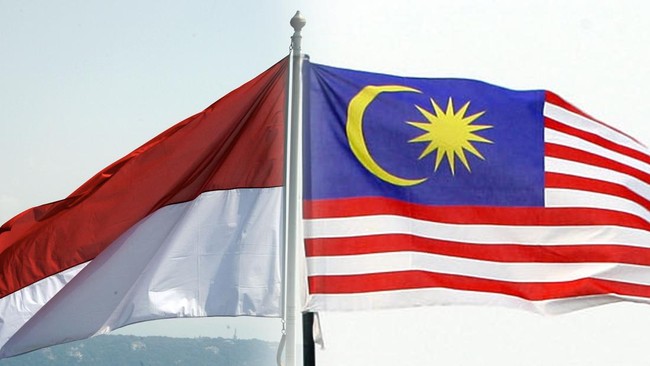
Jakarta, CNBC Indonesia – Long before Malaysia became an independent nation, a grand idea emerged to unite the Nusantara and Malaya regions under a single nation called Greater Indonesia. This concept gained traction during the final stages of Japan’s occupation of Southeast Asia and involved nationalist figures from both regions.
During Indonesia’s path to independence in August 1945, several Malay nationalist figures reportedly supported the unification idea, demonstrated by raising the red and white flag and declaring willingness to join the independent Indonesia.
The Greater Indonesia concept encompassed Indonesia, Malaya, Singapore, Brunei, and North Borneo. This idea emerged amid anti-colonial sentiment and the desire to create a unified homeland for the Malay ethnic group in Southeast Asia.
A key moment occurred when Sukarno, Mohammad Hatta, and Radjiman Wedyodiningrat met Malay nationalist leaders in Perak, Malaya. This meeting became a significant episode in Indonesia-Malaysia relations.
The story began on 12 August 1945, when three members of Indonesia’s Preparatory Committee for Independence—Sukarno, Mohammad Hatta, and Radjiman Wedyodiningrat—were summoned to Dalat, Vietnam, to meet Hisaichi Terauchi, the Japanese military commander in Southeast Asia, who promised Indonesian independence on 24 August 1945.
On their return journey, Sukarno’s delegation stopped in Singapore before proceeding to Taiping, Perak, where they met Malay nationalist leaders Ibrahim Yaacob and Burhanuddin Al-Helmy.
Both led movements—Kesatuan Melayu Muda (KMM) and Kesatuan Rakyat Indonesia Semenanjung (KRIS)—which fought for Malaya’s independence from British rule. The meeting marked a crucial moment in the discourse on uniting Indonesia and Malaya ahead of independence.
The meeting gave rise to the Greater Indonesia concept, covering Indonesia, Malaya, Singapore, Brunei, and North Borneo. According to researcher Graham Brown’s 2005 study, the idea emerged from collaboration between local figures and Japan.
At the meeting, Sukarno stated: ‘Let us create one homeland for those of Indonesian blood.’ Ibrahim Yaacob replied: ‘We Malays will remain loyal in forging a homeland by uniting Malaya with independent Indonesia.’
However, the unification plan did not receive full approval. Historian Boon Kheng Cheah wrote in ‘Red Star Over Malaya’ (1983) that Mohammad Hatta and others may have rejected the unity idea.
Shortly after, Japan surrendered to the Allies on 14 August 1945. This prompted Jakarta’s youth groups to push for an immediate independence proclamation. Following the Rengasdengklok incident, Indonesia declared independence on 17 August 1945, earlier than Japan’s original schedule.
From then on, the Greater Indonesia concept faltered. Ibrahim Yaacob had to shift his struggle, while Malaysia only gained independence 12 years later, on 31 August 1957.