
Malaysia 'Understands' Why Indonesia Overhauls Its Exports
Malaysia ‘Understands’ Why Indonesia Overhauls Its Exports
Jakarta. A senior government official from coal-importing and palm oil-investing Malaysia admitted Thursday that his country now understood the rationale behind Indonesia’s new export policies.
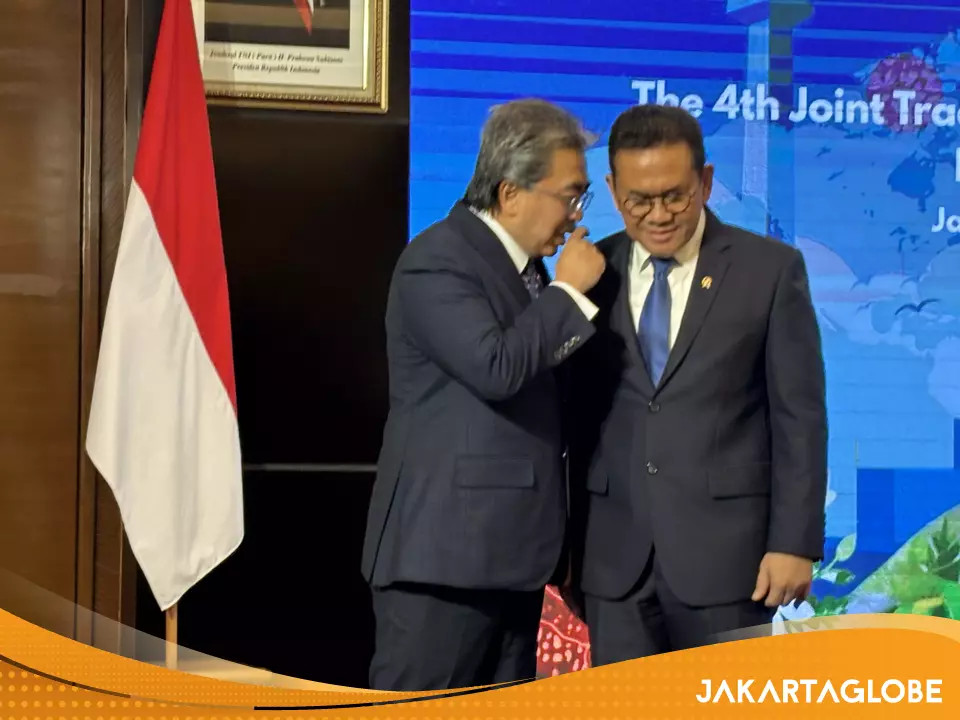
Malaysian Trade Minister Johari Abdul Ghani was in Jakarta to meet his Indonesian counterpart Budi Santoso for talks on deepening economic ties.
It hadn’t been long since Indonesia overhauled its export systems, ranging from tighter shipment monitoring to mandatory earnings parking. Speaking to the press after the closed-door discussions, Johari admitted to having talked about the changes.
“We are trying to understand the export proceeds policies introduced by Indonesia. We have started to understand that. We know the reason why that policy is,” Johari told reporters.
Johari went on to say that the new rules would earn Malaysian businesses’ backing.
“If there is anything good for Indonesia and if we want to come here to do business, we will continue to adhere to the policies that Indonesia has.”
Indonesia has mandated exporters of natural resources to park receipts in state banks for at least a year, a move that Jakarta expects can prop up the falling rupiah and boost foreign exchange supplies.
Under the latest relaxations, eligible miners only need to place at least 30% of their export earnings for 3 months. This facility is available for companies whose shareholders who hold at least a 10% stake come from either the US, China, Hong Kong, Canada, or Australia. They may even place the money in non-state banks.
Malaysia is a major investor in Indonesia’s palm oil sector, meaning that any receipts from overseas shipments will be subject to the mandatory one-year retention rule.
Southeast Asia’s biggest economy has begun centralizing exports of palm oil, coal, and ferroalloys to prevent companies from understating their shipment values and evading taxes. Decades of these fraudulent practices have cost Indonesia about $908 billion. Shipments of the said commodities now have to go through the state-owned entity Danantara Sumberdaya Indonesia (DSI). The entity is even planning to start tracking the vessels soon. Coal is Indonesia’s leading export to Malaysia.
Budi did not specifically comment on these policies during the presser, only saying how the governments had agreed to “further strengthen bilateral trade and investment cooperation”.
Malaysian investments in Indonesia totaled around $1 billion in the first half of 2026. Annual trade reached $16.8 billion as of July, government data showed.
Tags: Keywords: