
Malaysia budget 2027: Anwar faces balancing act on cost-of-living relief as general election looms
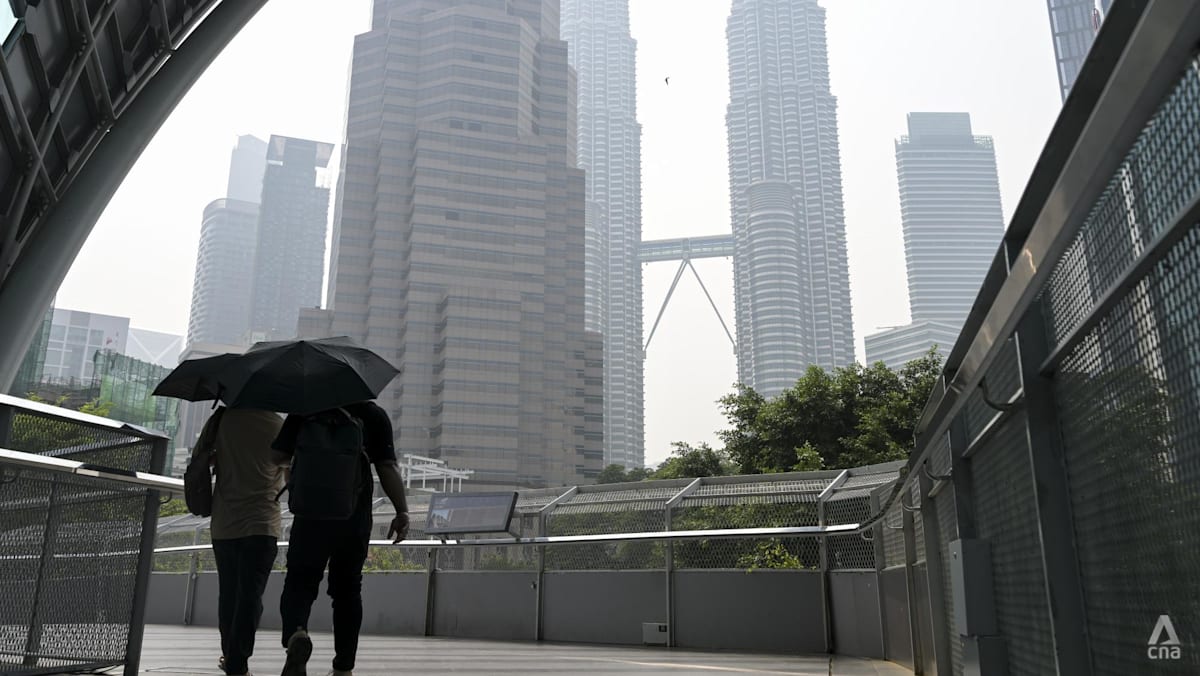
Malaysia budget 2027: Anwar faces balancing act on cost-of-living relief as general election looms
Middle-income households are expected to get greater attention, even as economists warn that electoral pressures could slow politically difficult fiscal reforms.
KUALA LUMPUR: With the 2027 budget potentially being Malaysia’s final fiscal blueprint before the 16th general elections (GE16), Prime Minister Anwar Ibrahim faces a delicate economic and political balancing act: delivering meaningful cost-of-living relief without undermining fiscal discipline or alienating voters through costly reforms.
Economists expect Anwar’s government to put greater emphasis on supporting middle-income earners alongside lower-income households, while taking a more cautious approach to politically sensitive reforms as the electoral clock ticks down.
The budget comes after Anwar’s Pakatan Harapan (PH) suffered heavy setbacks in the Johor and Negeri Sembilan state elections this year, adding to political pressure on his administration ahead of GE16, which must be held by February 2028.
Economist Anthony Dass of the FSG advisory group told CNA that while the budget was likely to place greater emphasis on immediate households concerns, he did not expect it to be dominated by broad-based short-term handouts.
“The government still has to balance support for the rakyat (public) with fiscal consolidation, structural reforms and measures to strengthen longer-term economic growth,” he said.
“I expect Budget 2027 to be more people-focused, but not necessarily an election giveaway budget.”
The budget - the fifth under the current administration - will be tabled on Friday (Oct 9) at 3.30pm by Anwar, who is also finance minister.
RELIEF TO MOVE BEYOND LOWER-INCOME HOUSEHOLDS?
Economists expect middle-income households, known in Malaysia as the M40 (middle 40 per cent), to receive greater attention in the budget alongside continued support for lower-income groups.
Lee Hwok Aun, a senior fellow and co-coordinator of the Malaysia Studies Programme at ISEAS-Yusof Ishak Institute, told CNA that “emphatic commitments” to cash assistance - some targeted at low- to middle-income households and some universal for all Malaysian adults - can be expected.
JPMorgan Chase said in a report that the M40 had moved up the cost-of-living agenda, with Anwar making the group a central focus.
“Budget 2027 puts greater attention on the M40 squeeze alongside continued support for lower-income households,” read the paper.
It said that as the subsidy rationalisation continued for the RON95 petrol, it expected savings to be partly redirected towards targeted assistance and measures addressing recurring costs across food, housing, transport, healthcare, education and childcare.
The finance ministry highlighted support for the middle class in its Aug 18 pre-budget statement, including RM150 (US$37) in student schooling aid and two RM100 cash grants for all adults nationwide.
The ministry also emphasised tax breaks targeted at the middle class, such as exemptions for first-home purchases, expanded insurance premium deductions for children, and tax relief for early childhood education (up to RM3,000) and special needs therapy (up to RM10,000).
Analysts stress that such safety nets will be vital to buffer against incoming economic headwinds.
Economist Sedek Jantan of IPP, a financial planning group in Malaysia, said targeted assistance could become more important if a stronger El Nino in 2027 puts further strain on food production and prices.
“This could put renewed pressure on household purchasing power. However, the key question is whether these measures are fiscally sustainable,” he told CNA.
“I would expect the focus to increasingly be on targeted assistance rather than broad-based measures, so that support reaches those who need it most without creating a persistent burden on government finances.”
That constraint remains important even as government spending rises. UOB projects expenditure to reach a record RM445.9 billion - equivalent to 19.6 per cent of the GDP - while the fiscal deficit narrows to 3.3 per cent of GDP from an estimated 3.5 per cent this year.
“This would reinforce the government’s commitment to gradual fiscal consolidation, striking a balance between supporting growth and preserving medium- to long-term fiscal sustainability,” UOB said.
REFORMS CONTINUE, BUT HOW FAR WITH GE16 LOOMING?
Economists told CNA that while reforms will continue, they are likely to proceed at a more cautious pace.
Sedek said that the government could not afford to completely put structural reforms on hold, but expected a more calibrated and carefully sequenced approach, particularly for measures that directly impact household incomes and business costs.
He said the government could further tighten eligibility for subsidies and reduce leakages before making more substantial adjustments.
On revenue, Sedek does not expect major new taxes on individuals or companies, with the government likely to focus instead on improving tax compliance, broadening the effective tax base and strengthening collection.
Anwar said in August that the finance ministry was studying a proposal to create a hybrid tax system combining features of the Sales and Service Tax (SST) and the Goods and Services Tax (GST).
Dass also said reforms will continue, but added it was politically difficult to introduce measures that impose visible additional costs on households.
“I don’t expect the government to abandon structural reforms, but I do expect the pace and sequencing to become more cautious,” he said.
Others believe the political window for more painful reforms is closing.
Lee of ISEAS-Yusof Ishak Institute said major structural reforms were becoming politically risky, particularly further subsidy rationalisation that would fully or partially float prices.
He noted that the government had already scaled back plans to progressively target fuel subsidies, opting instead to retain the full su
Source: jawawa.id (https://jawawa.id/newsitem/malaysia-budget-2027-anwar-faces-balancing-act-on-cost-of-living-relief-as-general-election-looms-1791413423)
Originally published by CNA (https://www.channelnewsasia.com/asia/malaysia-budget-anwar-ibrahim-balancing-act-election-6438551)