
Malaysia Bans Civil Servants from Using Waze over Fears of Data Leaks to Israel
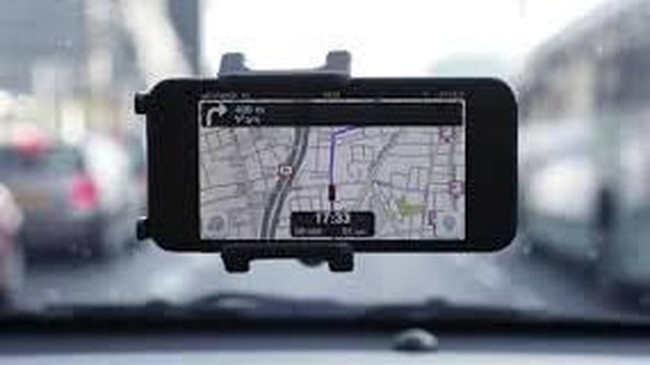
Malaysia has banned civil servants from using the navigation app Waze amid growing concerns about foreign surveillance and the security of sensitive government data by Israel.
Prime Minister Anwar Ibrahim has also urged the public to stop using the app and switch to local navigation services. The government says protection of official information and citizens’ personal data must be strengthened to safeguard national security and digital sovereignty.
“Sensitive government information and citizens’ personal data must be protected from exploitation by the Israeli regime in ways that could undermine national security and sovereignty,” the Malaysian Prime Minister’s Office said, according to The Straits Times on Saturday (24 October 2026).
Anwar raised concerns about the handling of data by Waze Mobile, a company founded in Israel that operates under Israeli law. The Malaysian government is encouraging people to move to locally developed apps such as TuJu, which it says offers data and privacy protections.
Waze was founded in Israel in 2008 before being acquired by US technology giant Google in 2013. Although it is now part of Google, the app is still operated by Waze Mobile, which is based in Tel Aviv, according to its privacy policy.
Malaysia has long supported the Palestinian cause and firmly refuses to recognise Israel diplomatically.
Fears of increased foreign surveillance
The Waze ban comes days after researchers from the University of Toronto’s Citizen Lab and cybersecurity firm Confiant reported the alleged misuse of online advertising by Israeli advertising company Discover-Tech to track internet users and facilitate spyware attacks.
The company’s advertisements reportedly appeared on more than 120,000 websites and 75,000 mobile apps, potentially exposing hundreds of millions of users to surveillance.
Researchers linked the operation to Candiru, an Israeli spyware developer. The company’s software was reportedly used to target 45 devices belonging to Qatar-based broadcaster Al Jazeera between 2024 and 2025.
Reuters also reported that the advertisements reached sensitive networks associated with NATO, the Pentagon and the United Nations. However, there is no evidence that all of those networks were successfully hacked.
Munira Mustaffa, a security expert at Chasseur Group, said recent disclosures about surveillance operations linked to Israel had heightened concerns about potential espionage. The operations were suspected of targeting Al Jazeera through sophisticated online advertising that was difficult to detect.
“The situation involving Israel raises serious concerns,” Mustaffa said.
She cited efforts by some European countries to reduce their reliance on Microsoft after reports that Unit 8200, the Israeli military’s main signals intelligence and cyberwarfare unit, used Microsoft cloud servers in the Netherlands and Ireland to store data on Palestinians targeted for surveillance.
Several countries have also begun restricting foreign digital services in government workplaces. In January 2026, France announced plans to phase out US video-conferencing services such as Zoom and Microsoft Teams across government agencies by 2027.
Germany and India have also introduced domestically developed instant-messaging apps for government employees, citing security and data-protection concerns.
Similar concerns have previously been raised about fitness-tracking app Strava. A publicly accessible GPS heat map generated by the app once revealed the locations of military bases and personnel movements in several countries.
In 2018, Strava data showed several locations in and around Ukraine that could potentially have provided adversaries with information for planning attacks.
In 2023, former Russian submarine commander Stanislav Rzhitsky was shot dead while running in Krasnodar. Russian media speculated that his assailant had tracked his movements using Strava, which showed that Rzhitsky regularly ran along the route where he was shot. However, it remains unclear whether the app’s data was actually used to plan the killing.
Source: jawawa.id (https://jawawa.id/newsitem/malaysia-bans-civil-servants-from-using-waze-over-fears-of-data-leaks-to-israel-1792817439)
Originally published by CNBC Indonesia (https://www.cnbcindonesia.com/tech/20261024002655-37-779068/malaysia-larang-pns-pakai-waze-khawatir-data-bocor-ke-israel), translated from Indonesian