
Malang City Government Considers Halting ASN Recruitment to Comply with 30% Employee Spending Cap
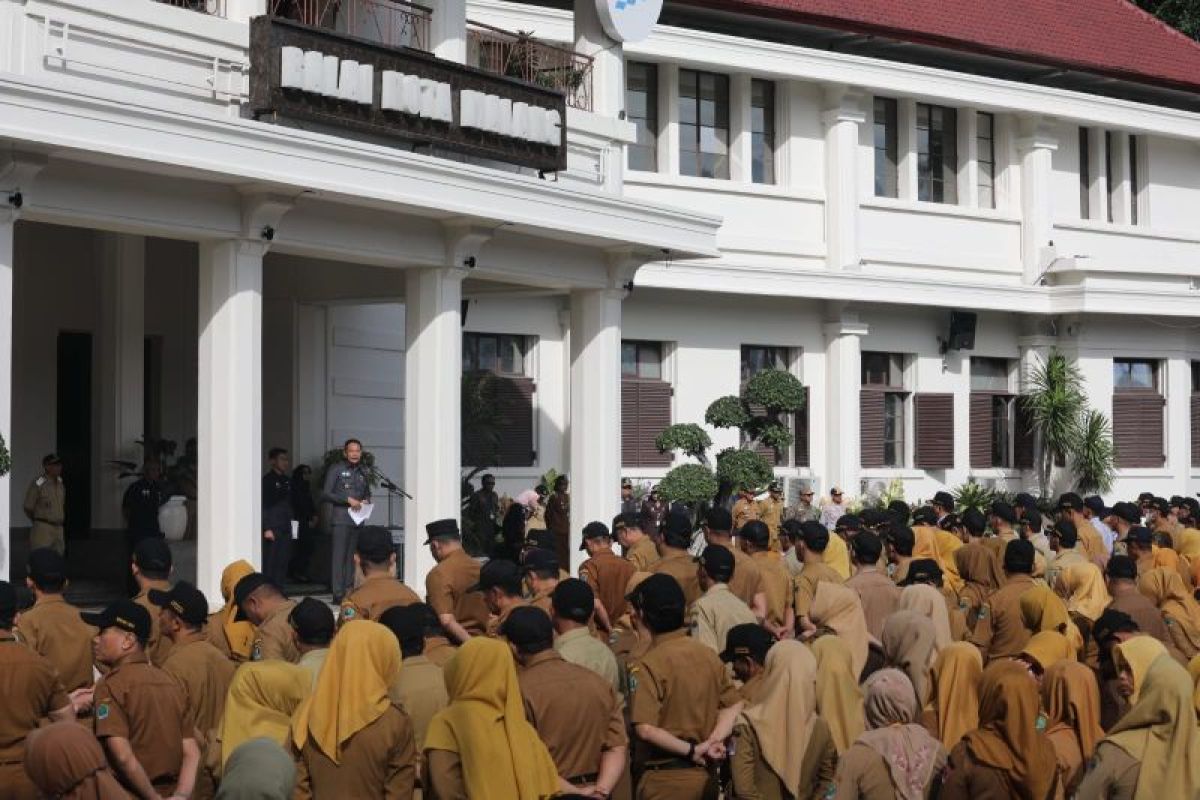
Malang, East Java (ANTARA) - The Malang City Government is considering the option of not recruiting new civil servants (ASN) to meet the maximum 30% employee spending limit, in accordance with Law No. 1 of 2022 on Financial Relations between the Central Government and Regional Governments (HKPD).
“The City of Malang’s strategy to achieve the 30% mandate this year may involve no procurement of ASN from the general public, whether as Candidate Civil Servants (CPNS) or Government Employees with Work Agreements (PPPK),” said Acting Head of the Personnel and Human Resources Development Agency (BKPSDM) of Malang City, Hendru Martono, in Malang, East Java, on Monday.
The employee spending scheme with a maximum limit of 30% of the total regional revenue and expenditure budget (APBD), as stipulated in the HKPD Law, will be implemented in 2027.
This policy requires local governments to adjust the amount of employee spending.
Based on data from the Regional Finance and Asset Agency (BKAD) of Malang City, employee spending reaches Rp1.08 trillion or 43.55% of the total 2026 APBD of Rp2.48 trillion.
The total number of civil servants (PNS) and PPPK in the local government environment is 9,856 people. This figure includes 3,000 PPPK appointed in 2025.
In addition, the Malang City Government has chosen not to open ASN recruitment through mutation or transfers from other regions.
This step is intended to prevent an increase in the number of ASN amid efforts to adjust to the central government’s policy.
Therefore, Hendru stated that reducing the number of ASN in the Malang City Government environment will prioritise natural processes, namely according to each employee’s retirement period.
Each year, it is estimated that around 300 to 400 ASN in Malang City will retire.
“Because what other strategy is there?” he said.
According to him, the Malang City Government cannot arbitrarily reduce the number of ASN who have not yet reached retirement age without a strong basis and reason.
“If they have not committed any violations but are continuously replaced, that cannot be done,” he stated.