
Makkah Sounds War Alarm as Saudi Arabia Becomes New Flashpoint in the Middle East
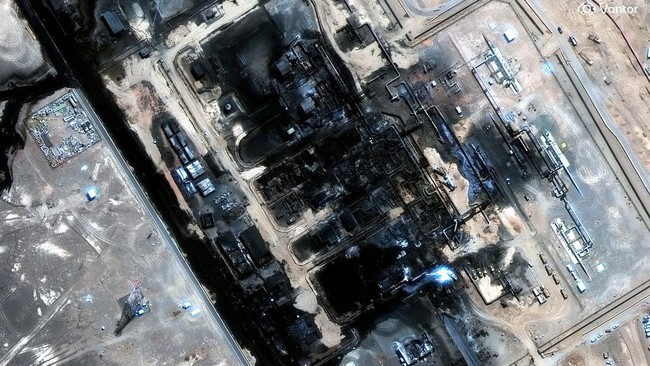
Jakarta, CNBC Indonesia – Saudi Arabia issued a security warning across several regions, including the holy city of Makkah and Jeddah, the country’s second-largest city, on Tuesday (15/9/2026). The warning came after a series of attacks by Iran-aligned groups, drawing Riyadh further into the war in the Middle East.
The security warning was lifted shortly afterwards. To date, Saudi authorities have not confirmed whether any projectiles reached the country’s territory. No group has directly claimed responsibility for the attacks.
Although brief, the warning covered a wider area than previous alerts since the conflict escalated last week. The alarm in Makkah was also the first to sound during the war in the city that hosts several of Islam’s holiest sites.
The Iran-aligned Houthi group has in recent days seized control of parts of Yemen’s Red Sea coastline. The area faces the Bab el-Mandeb, one of the world’s most important shipping straits, posing a new threat to Saudi oil exports diverted away from the Strait of Hormuz.
As fighting spreads to new parts of the Middle East, Iran’s position in its seven-month war against the United States has strengthened. The conflict has already caused shipping traffic through the Strait of Hormuz to shrink drastically, further threatening global oil supplies.
Over the past week, the Houthis have announced several major attacks on Saudi Arabia. These included an attack on an air base on Monday, described as retaliation for airstrikes on Yemeni territory.
Saudi Arabia has also accused another pro-Iran group based in Iraq of being behind Friday’s attack. That strike disabled one of Saudi Arabia’s main oil transport routes, the East-West pipeline, which runs across the Arabian desert.
US Energy Secretary Chris Wright told CNBC that crude oil flows through the pipeline were expected to resume within days.
Lightning Attacks
The Saudi-led military coalition fighting the Houthis in Yemen said Monday’s Houthi attack on the kingdom wounded 13 civilians.
The Houthis launched a rapid offensive along Yemen’s western coast last week. The operation culminated in the capture of an island at the mouth of the Red Sea.
Officials from the Saudi-backed Yemeni government, based in the south of the country and opposed to the Houthis, said Saudi and Yemeni air forces responded to the group’s advances by intensifying airstrikes on Houthi targets.
The strikes included areas around the historic Red Sea port of Mocha, captured by the Houthis last week. However, the Yemeni officials acknowledged that the Houthis now effectively control almost the entire western coastline along the Red Sea.
Saudi Arabia’s East-West pipeline stretches roughly 1,200 kilometres and connects oil fields in the Gulf region to the Red Sea. With shipping through the Strait of Hormuz disrupted by six months of war, the pipeline has become Saudi Arabia’s main export route.
Since the pipeline was shut following Friday’s attack, oil traders have warned that a prolonged closure could cut global oil supplies by as much as 4%.
Riyadh has not said when pipeline operations will return to normal. However, Wright, speaking on the sidelines of the G20 energy meeting in Houston, said the restoration was likely ‘a matter of days’.
He also said Saudi Arabia was taking steps to divert more oil away from the Strait of Hormuz with the help of the US military.
Oil Prices Boiling
The Houthis’ new presence at the Bab el-Mandeb, which means ‘Gate of Tears’, could further endanger this crucial export route. The strait, located at the mouth of the Red Sea, is a strategic link between the Red Sea and the Gulf of Aden.
Oil prices have risen since last week to their highest level since May. Brent crude futures broke through US$108 per barrel on Tuesday. Meanwhile, the average US retail diesel price, which is sensitive to political developments, hit a new record of nearly US$6.27 per gallon.
The UN Security Council on Tuesday discussed the deteriorating crisis around the Bab el-Mandeb.
US Deputy Ambassador to the UN Jennifer Locetta said the Houthi advances near the strait threaten global energy security. She also said the group’s maritime attacks have killed sailors and endangered international trade.
Locetta urged the Security Council to halt the transfer of weapons and financial assistance from Iran to the Houthis, which she said violated the UN arms embargo.
Saudi Ambassador to the UN Abdulaziz Alwasil accused the Houthi militia of ‘militarising international straits to blackmail the global economy’.
Saudi Arabia has led a coalition fighting the Houthis since 2015. The conflict subsided in recent years after a ceasefire was enforced. However, fighting broke out again this month when the Houthis pushed back forces allied with the internationally recognised Yemeni government.
The US Dilemma
Meanwhile, the United States, which bombarded the Houthis for two months last year, now faces a dilemma. Washington must choose between allowing a new threat to the global economy to grow, or providing military support to Saudi Arabia at the risk of being dragged into another costly battlefield.
Saudi Crown Prince Mohammed bin Salman met Egyptian President Abdel Fattah al-Sisi in Cairo on Tuesday. In a statement after the meeting, the Egyptian presidency said both leaders stressed the importance of guaranteeing freedom and security of navigation in the Bab el-Mandeb and the Red Sea.
A day earlier, the Crown Prince met the US regional military commander, Admiral Brad Cooper, in Jeddah. He also phoned President Donald Trump last week to request military support. However, US assistance has so far been limited to intelligence support.
Source: jawawa.id (https://jawawa.id/newsitem/makkah-sounds-war-alarm-as-saudi-arabia-becomes-new-flashpoint-in-the-middle-east-1789516275)
Originally published by CNBC Indonesia (https://www.cnbcindonesia.com/news/20260916053443-4-768215/makkah-kena-alarm-perang-saudi-jadi-titik-panas-baru-di-timteng), translated from Indonesian