
Makkah Pact: Will It Trigger a Major War with Yemen's Houthis? Here's What Analysts Say
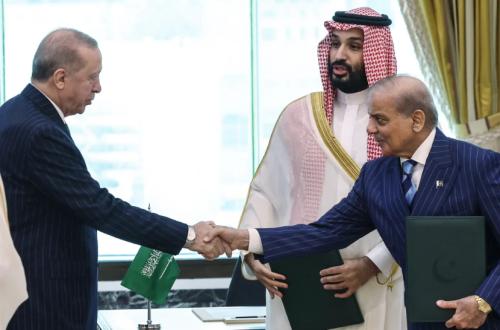
The signing of the Makkah Joint Defence Agreement between Saudi Arabia, Türkiye, and Pakistan is considered to have strategic significance that extends far beyond ordinary defence cooperation.
The choice of Makkah and Friday as the place and time of the signing is also seen not merely as a protocol consideration, but rather as intended to lend historical weight and spiritual meaning to the agreement.
This view was expressed by former Yemeni Information Minister and former Chairman of the Board of Directors and Editor-in-Chief of the Yemen News Agency (Saba), Nasr Taha Mustafa, in his analysis published by Al Jazeera, cited on Wednesday (19/8/2026), regarding the impact of the Makkah Pact on the development of the conflict in Yemen.
According to Nasr Taha, the three countries hold important positions in Islamic history as well as strategic weight in the contemporary world. For this reason, the agreement has attracted attention not only at the regional level but also internationally.
“The Makkah Pact for joint defence is the first Islamic alliance in the modern era that has a strategic and military character,” Nasr Taha wrote.
He assessed that although Saudi Arabia, Türkiye, and Pakistan have stressed that the alliance is not aimed at any particular country and is open to other states wishing to join, no regional country has yet been seen taking immediate steps to do so.
This situation cannot be separated from the ongoing tensions between the United States and Iran, particularly around the Strait of Hormuz.
According to Nasr Taha, one of the key tests for the Makkah Pact may well come from Yemen.
In recent weeks, the Houthi group has again stepped up its attacks, including against a number of oil facilities in southern Saudi Arabia.
The attacks then expanded to several military sites in Yemeni provinces under the control of the internationally recognised government.
The Houthis claim these locations were targeted because Saudi troops were present. However, according to Nasr Taha, casualty data shows that all of the victims were Yemeni citizens, most of them civilians.