
Makkah Pact: A New Experiment in Regional Security Architecture
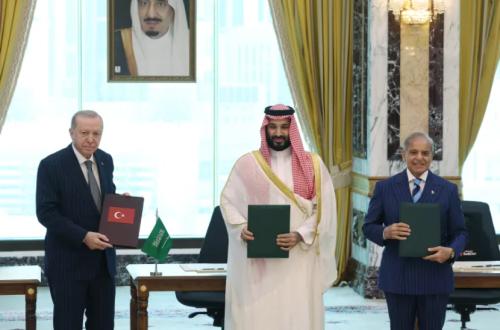
The Makkah Pact, signed by Saudi Arabia, Turkey, and Pakistan on 7 August 2026, does not merely form a new defence cooperation mechanism amongst the three countries. In a region at the intersection of the Middle East and South Asia, the pact also represents the institutional embodiment of a new effort to reduce regional security dependence on external actors.
The Makkah Pact is the result of approximately two years of preparation. During this process, the three parties first identified various issues that might arise during its implementation whilst simultaneously preparing solutions. Thus, the idea of cooperation eventually developed into a formal agreement.
A statement by Turkish Foreign Minister Hakan Fidan to Anadolu Agency serves as an important reference for understanding the legal framework and political logic behind the pact. Fidan stated that the Makkah Joint Defence Agreement is technically structured with a logic similar to Article 5 of the NATO Treaty.
NATO’s Article 5 stipulates that an armed attack against one or more member states is considered an attack against all members. If such an attack occurs, member states will provide assistance to the attacked party with actions deemed necessary, including the use of armed force, individually or collectively, in exercising the right of individual or collective self-defence.
The similarity between the Makkah Pact and NATO’s Article 5 lies in the principle that the attacked party will receive support from other member states. However, NATO’s Article 5 itself has only been invoked once, following the 11 September 2001 attacks in the United States. The application of this provision did not mean all allies were automatically involved in a joint military intervention.
Defence alliances essentially function more to strengthen security and stability amongst member states rather than automatically becoming instruments of military intervention against external parties. When one member is attacked, the support mechanism can be implemented gradually. Based on the decisions of the political-military committee to be established, assistance can range from intelligence sharing, logistical support, and ammunition supply, to the deployment of military units. Consequently, direct joint military intervention is relatively rare.
From an international law perspective, an important distinction is that the obligation for collective defence does not automatically create an obligation for military intervention. Article 51 of the United Nations Charter recognises the right of states to self-defence, both individually and collectively. However, this provision does not mean that collective defence mechanisms must always be realised through the use of military force in a predetermined pattern.
The institutional structure built by the Makkah Pact also bears similarities to the NATO model. A political-military committee comprising foreign ministers, defence ministers, and chiefs of armed forces staff will operate through a general secretariat tasked with implementing the agreed decisions.
What Fidan specifically emphasised was the discussion on defence industry cooperation. This could be a strong indication that one of the pact’s main centres of gravity lies with Turkey, which in recent years has developed into a significant player in the global defence industry.
The involvement of Turkey, Saudi Arabia, and Pakistan in the Makkah Pact raises questions about the converging interests of these three countries. Turkey possesses advantages in the defence industry, military doctrine, and operational experience. Saudi Arabia holds a strategic geographical position and financial strength. Meanwhile, Pakistan has a nuclear deterrent capability and a population exceeding 250 million.
This configuration indicates that the Makkah Pact is not merely an ideologically based alliance. Instead, the pact more closely reflects a pragmatic security partnership, where the strategic capacities and needs of each country complement one another. In this context, the Makkah Pact can also be seen as an effort to institutionalise the good relations that have long been established amongst the three countries.
One factor driving this move is the growing questioning of the traditional role of the United States as a security guarantor in the region. For Saudi Arabia, which hosted the agreement, this cooperation could be part of an effort to reduce dependence on the United States. At the same time, Riyadh needs partners to maintain balance with Iran in the Gulf region. This step also demonstrates Saudi Arabia’s desire to re-strengthen its central position in the regional security architecture.
For Pakistan, the Makkah Pact opens opportunities to become a more visible and influential actor in the regional security architecture beyond South Asia. This cooperation also potentially offers economic benefits through Islamabad’s long-established ties with Riyadh.
For Turkey, the cooperation could open several strategic opportunities, including expanding defence industry partnerships, increasing influence in the Gulf security architecture as the US role in the region undergoes redefinition, and strengthening Turkey’s position in regional trade and energy networks.
For the time being, it is difficult to describe the Makkah Pact as a severance of ties with NATO. Fidan’s statements and the pact’s working mechanisms instead suggest that this agreement is more accurately understood as a new deterrence model based on regional capacity.