
Making Indonesia’s Halal Industry a New Source of Growth
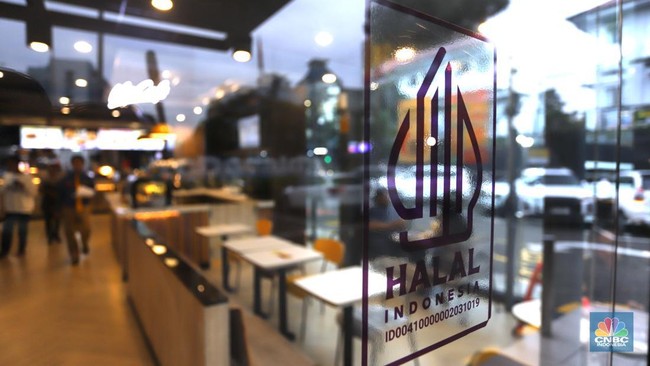
From 18 October 2026, Indonesia will enter an important new phase in the development of its halal industry. Mandatory halal certification will be extended to cover micro and small enterprises (MSEs), imported products and various other product categories, in accordance with Government Regulation No. 42 of 2024.
This policy is not merely an administrative matter or a regulatory requirement. It must serve as an instrument for industrialisation, stronger competitiveness and the creation of a new source of economic growth.
But alongside this significant opportunity lies a fundamental challenge: will this transformation create a productive and competitive halal industry ecosystem, or could it become a new compliance burden for millions of small businesses?
The policy’s value must not be measured simply by the number of certificates issued. Its success will depend on whether it can boost productivity, widen market access, create jobs and help Indonesian products succeed on the global stage.
From obligation to economic opportunity
Indonesia has a large domestic market and the world’s biggest Muslim population. This policy should provide a foundation for building an integrated halal industry. Halal is not just a product label; it encompasses the traceability of raw materials, production processes, storage, distribution and the integrity of the supply chain.
Its economic potential is considerable. Data from the Halal Product Assurance Agency (BPJPH) show that halal value-chain activities contribute around 27 per cent of national gross domestic product (GDP), amounting to more than Rp4,900 trillion.
The Ministry of Industry recorded Indonesian halal-industry exports of US$35.72 billion in the first half of 2026, up 7.22 per cent on the same period a year earlier. These figures show that Indonesia’s halal industry is no longer just a limited domestic market, but a strategic part of the global trading landscape.
Even so, high export figures do not necessarily mean that the domestic industry controls the entire halal value chain. The real challenge is to increase domestic value added, strengthen a self-reliant raw-material ecosystem and improve technological capacity in order to reduce reliance on imported inputs.
Without these strategic steps, Indonesia risks remaining a bustling consumer market within the industry, rather than establishing itself as a leading global producer of halal products.
Halal certification is important in giving consumers certainty and strengthening market confidence. But certification is not the ultimate goal of industrial development. A certified product does not automatically become competitive in terms of price, quality, packaging, supply consistency or marketing strategy.
MSEs that have met administrative requirements often still struggle to enter modern retail networks, the supply chains of large industries or export markets.
Mandatory halal certification should therefore be fully integrated with programmes to build capacity and develop businesses. The Government must ensure that certification goes hand in hand with support on standards, easier access to finance, adoption of processing technology, improved packaging design and wider distribution channels.
The Government must do more than regulate: it must also act as a facilitator, building businesses’ capabilities so that they gain tangible economic benefits.
MSEs must be the biggest beneficiaries
The most urgent challenge is ensuring that millions of MSEs are ready. Large businesses can generally absorb the costs of meeting standards and adjusting to regulations more easily. By contrast, home-based food sellers, traditional food producers and microbusinesses across the country still face constraints in capital, technical knowledge, raw-material documentation and access to assistance.
If the obligation focuses only on deadlines and penalties, it could impose a heavy compliance burden. Unprepared businesses may lose market access, while larger firms benefit disproportionately. The Government must balance enforcement with protection for microbusinesses by providing simple, affordable and inclusive services, so that MSEs truly become the policy’s main beneficiaries.
Four strategic steps should be prioritised. First, accelerate data collection and readiness mapping by categorising MSEs according to location, business size, product type and production complexity.
Second, expand support networks. Assistance programmes should involve local governments, universities, Islamic boarding schools, business associations, cooperatives and local communities, and reach production centres in remote areas.
Third, optimise funding and provide certainty. The Government must ensure that sufficient funding is available for free certification programmes and reaches the intended recipients. This must be accompanied by clear service timelines, transparent information on additional costs and a responsive complaints mechanism.
Fourth, ensure fair and phased oversight. Rules should be enforced judiciously, distinguishing between businesses that deliberately disregard the requirements and those facing administrative obstacles. Consumer protection must remain the priority, without ignoring the actual capabilities of small businesses.
Building a national halal value chain
The next task is to connect certification with industrialisation. Indonesia needs to build a halal value chain from upstream to downstream, spanning agriculture, livestock, fisheries, raw-material industries, food processing, pharmaceuticals, cosmetics, logistics and international trade. A government ministry or agency should lead this effort.
The relevant ministries and agencies must work within a shared policy framework. BPJPH is responsible for administering halal product assurance, while the ministries responsible for industry, trade, agriculture, fisheries, MSEs, tourism, the creative economy and finance must ensure the availability of raw materials, increased production capacity, financing and market access.
Partnerships between large industries and MSEs should also be strengthened. Large companies can drive demand while providing technology transfer, support on standards, purchasing certainty and integration of local suppliers. In this way, halal certification will not simply add to MSEs’ obligations, but will also help them enter industrial supply chains.
At the same time, Indonesia needs to strengthen its halal economic diplomacy. Mutual recognition of certificates, harmonisation of standards and the reduction of trade barriers are essential if national certification is to facilitate exports. Halal certification should open markets, not merely add another costly requirement.
Conclusion
Ultimately, mandatory halal certification is a golden opportunity to align consumer protection with economic growth. Indonesia has a large market, a substantial production base and strong social capital. But regulation and certificates alone will not unlock this potential.
A consistent policy approach from upstream to downstream is needed: accessible certification, ongoing business support, easier financing, industrial integration and open access to markets. With this holistic approach, mandatory halal certification can become a strong foundation for a productive, inclusive and globally competitive national industry.