
Makassar's RISE Programme Gains Global Recognition, Wins Award in the US
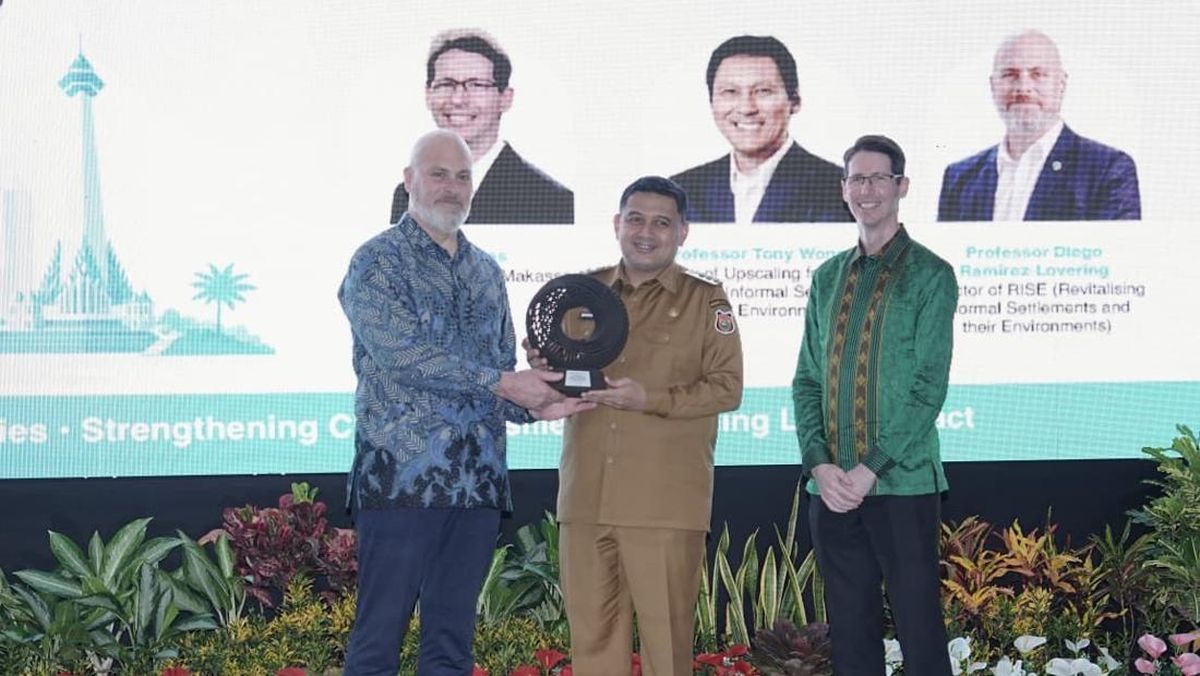
Makassar City has received the WRI Ross Center Prize for Cities 2025-2026 at an event held recently in New York, United States. This global recognition was achieved through the Revitalising Informal Settlements and their Environments (RISE) programme, which was among the top five finalists.
During the award ceremony, the acceptance was represented by the Consulate General of the Republic of Indonesia in New York, before being officially handed over through a series of Mayor’s Exclusive Roundtable Meetings held by the Makassar City Government together with Hasanuddin University and Monash University at Baruga Anging Mammiri, the Makassar Mayor’s Official Residence, on Monday (22/6).
Makassar Mayor Munafri Arifuddin explained that the event was a celebration of RISE’s success in improving sanitation quality, settlement environments, and public health through a community-based approach that has been implemented for nearly a decade in Makassar. “We received this award not because we sought it, but because we worked earnestly to ensure this programme delivers direct and tangible impacts within the community,” said Munafri.
Munafri stated that the award is the result of joint work with the Australian Government, which has provided real benefits for the community. The Makassar City Government is said to be committed to continuing and replicating the RISE Programme in areas that need improved sanitation quality and settlement environments. He also requested all regional apparatus, particularly Bappeda, to lead the preparation of the programme’s next development steps. Munafri reminded that there are still areas requiring improved sanitation systems and healthy environments. “This programme must be duplicated and initiated by the Makassar City Government to provide maximum budgeting for the continuation of the RISE Programme in this city,” he said.
RISE Director Professor Diego Ramírez-Lovering said that Makassar’s success is measured by infrastructure development, as well as collaboration between government, universities, development partners, and the community in creating healthier and more resilient environments. “Makassar has proven that community partnerships, technical innovation, and government commitment can synergise to improve community conditions and create healthier living spaces,” said Diego. He assessed that Makassar demonstrates real leadership in community-based settlement development and can serve as an important example for other cities worldwide in facing sanitation, health, and climate change challenges. “The next challenge and task is to expand the implementation of the RISE approach to more settlement areas so that its benefits can be felt by a wider community,” concluded Diego.