
Makassar–Parepare Train Passengers Grow by 25.48 Per Cent from January to May 2026
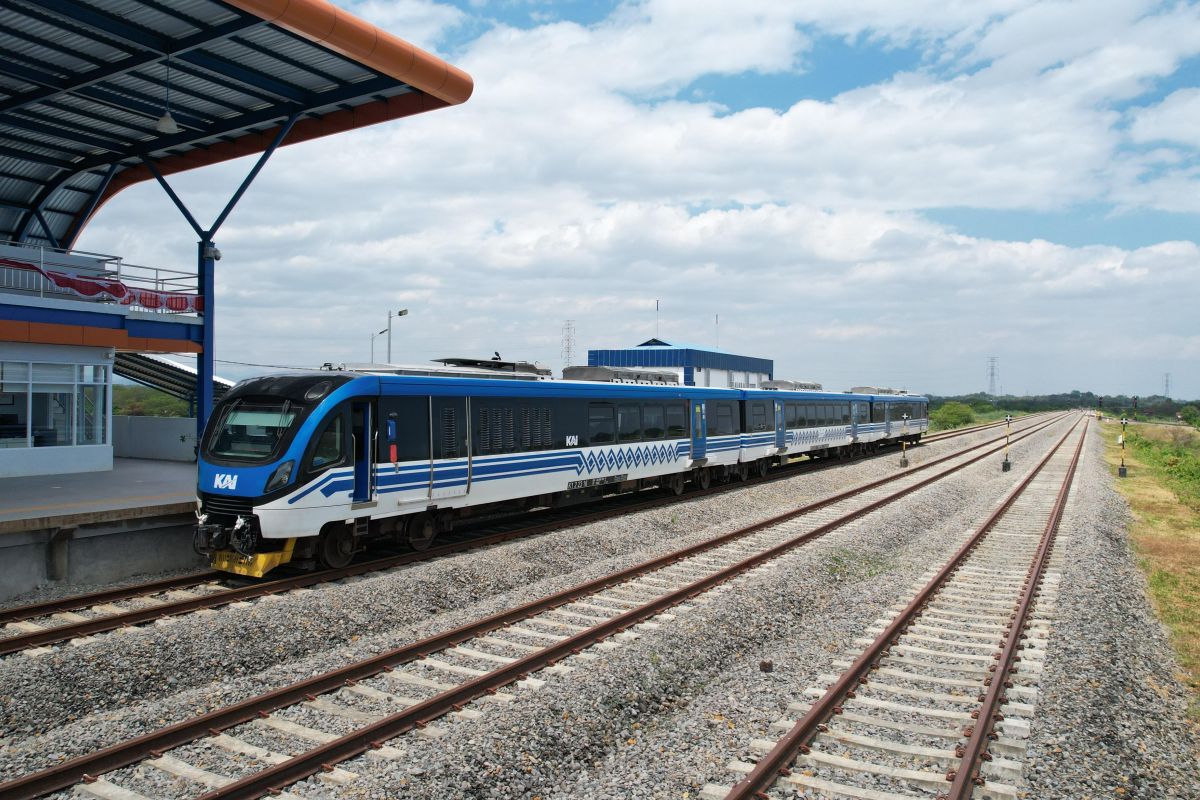
A total of 145,735 passengers utilised the Makassar–Parepare train service during the first five months of 2026. Since commencing operations on 29 October 2022, the service has served a cumulative total of 825,512 passengers.
As an archipelagic nation with a land area of approximately 1.9 million square kilometres and a population exceeding 280 million, connectivity is a vital factor in driving equitable development, expanding economic access, and bringing the public closer to essential services. While rail services have been a cornerstone of mobility in Java and Sumatra for decades, the benefits of rail-based public transport are now being felt more widely in South Sulawesi through the Makassar–Parepare line, which continues to show year-on-year passenger growth.
PT Kereta Api Indonesia (Persero) noted that between January and May 2026, the Makassar–Parepare service handled 145,735 passengers, a 25.48 per cent increase compared to the 116,146 passengers recorded during the same period in 2025. This upward trend has been consistent throughout 2026, with May recording the highest monthly volume of 35,442 passengers. This brings the total passenger count to 825,512 since the service began on 29 October 2022 up to 1 June 2026.
Anne Purba, Vice President of Corporate Communication at KAI, stated that this growth demonstrates that the railway is increasingly accepted as a preferred travel option in South Sulawesi. She added that the service strengthens inter-regional connectivity and supports public mobility towards various activity centres.
Currently, the Makassar–Parepare line covers a route of approximately 145 kilometres, connecting several strategic areas in South Sulawesi, including Mandai, Maros, Rammang-Rammang, Pangkajene, Labakkang, Ma’rang, Mandalle, Tanete Rilau, Barru, and Garongkong. The route traverses diverse economic and social landscapes: Maros serves as a buffer zone for Makassar and a gateway to South Sulawesi’s air transport; Pangkajene and Islands (Pangkep) is a hub for fisheries, processing industries, and tourism; and Barru functions as a coastal area supported by trade, services, and port activities.
The presence of the railway strengthens connections in areas previously dominated by road transport. Improved mobility opens broader opportunities for the public to access economic hubs, tourist areas, educational services, and social activities. A key attraction along the route is the Maros-Pangkep Karst area, a designated UNESCO Global Geopark, which offers passengers views of karst landscapes, paddy fields, and coastal activities.
According to data from the Indonesian Central Statistics Agency (BPS), the population of South Sulawesi reached approximately 9.56 million in 2025. The regional economy is supported by key sectors including trade, agriculture, manufacturing, fisheries, and tourism, all of which drive the demand for effective, safe, and comfortable public transport.
In a broader context, developing rail-based public transport is part of the effort to strengthen national development equity. As Indonesia’s active rail networks are currently concentrated in Java and Sumatra, the Makassar–Parepare service represents a significant step in expanding the benefits of rail transport to other regions. The 145-kilometre line is the initial phase of railway network development in Sulawesi, proving that the demand for reliable public transport is growing beyond the nation’s traditional rail hubs. KAI remains committed to supporting government efforts to expand the benefits of railway transport through safe, comfortable, and reliable services.