
Makassar City Government Strengthens Mitigation to Face El Nino Phenomenon
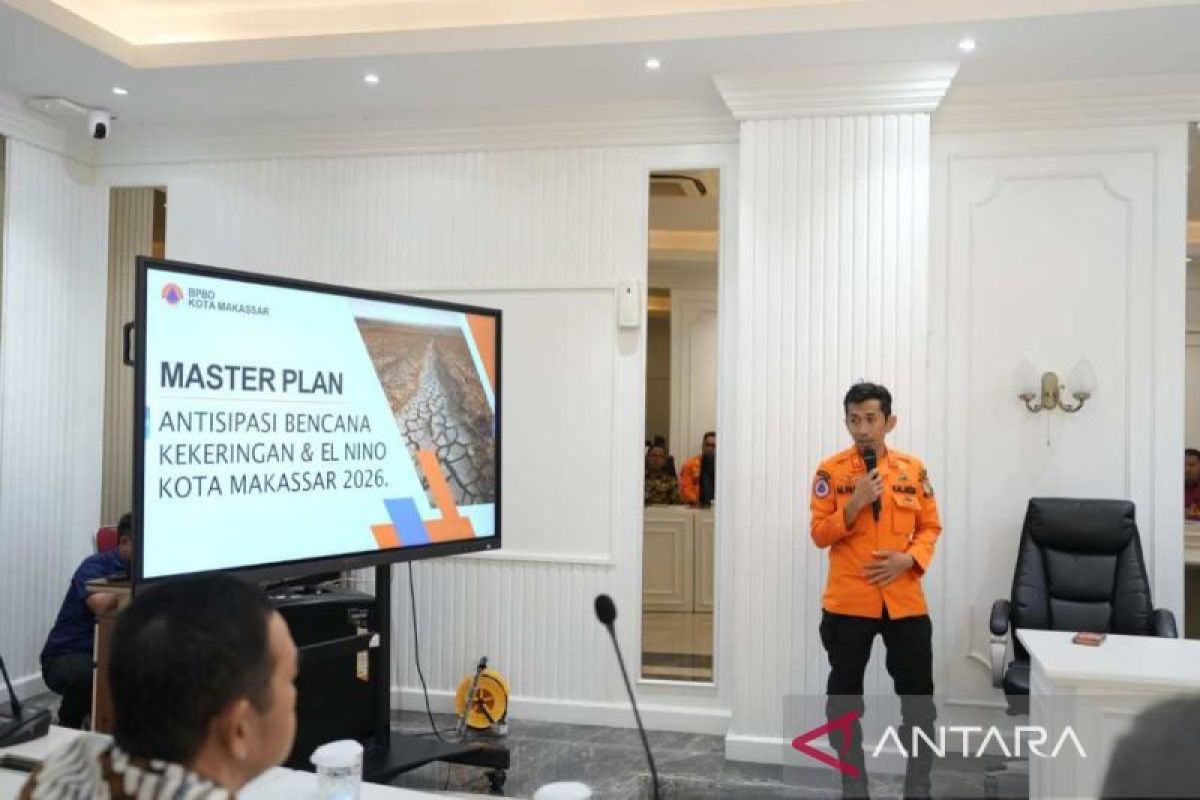
Makassar (ANTARA) - The Makassar City Government in South Sulawesi is strengthening mitigation efforts to address the threat of an extreme dry season in mid-2026, influenced by the El Nino phenomenon. Makassar Mayor Munafri Arifuddin, in Makassar on Thursday, emphasised that preparedness is no longer an option but a necessity. “The impact of El Nino is expected not only to trigger prolonged droughts and a drastic reduction in rainfall, but also to risk pressuring food security and increasing the potential for public health disruptions,” he stated. Munafri Arifuddin led a coordination meeting on Handling the El Nino Phenomenon, attended by his subordinates, to formulate concrete and integrated steps to ensure that every regional apparatus moves quickly and adaptively in facing the potential water crisis caused by extreme climate change from El Nino. He also urged Makassar City Government officials to strengthen preparedness against the potential impacts of the 2026 El Nino phenomenon by positioning the Regional Disaster Management Agency (BPBD) as the central command in crisis handling, particularly regarding drought threats and clean water distribution. Munafri stressed that all regional apparatus organisations (OPD) down to sub-district heads must act in an integrated manner, but field implementation will focus on BPBD as the team leader. “Going forward, BPBD will command as the main actor to ensure all processes run smoothly, including water availability and distribution. Do not just plan, but execute when needed. I will control this directly,” he said. He requested that all handling scenarios be prepared down to the most detailed technical level, including water distribution flows, supply sources, transport fleets, and mechanisms for distribution to the community. According to him, the water crisis is not merely a matter of availability, but has wide-ranging chain effects, from increased risk of infectious diseases, disruptions to educational activities, to potential social conflicts in the community. “The impacts must be considered; diseases could increase, activities at schools and health facilities could be disrupted, so all SKPD ranks and sub-district heads must anticipate,” he stated. Munafri also reminded that suboptimal information distribution could worsen the situation, including triggering pressure on services from the Regional Drinking Water Company (PDAM). Therefore, all OPDs are asked to ensure that communication and coordination systems run effectively. He exemplified the need for concrete simulations in sub-district areas by precisely calculating water sources, the number of prepared fleets, distribution points, and how storage is done amid limited community facilities.