
Makassar BPBD Partners with 23 Universities to Train 23,000 Disaster-Resilient Students
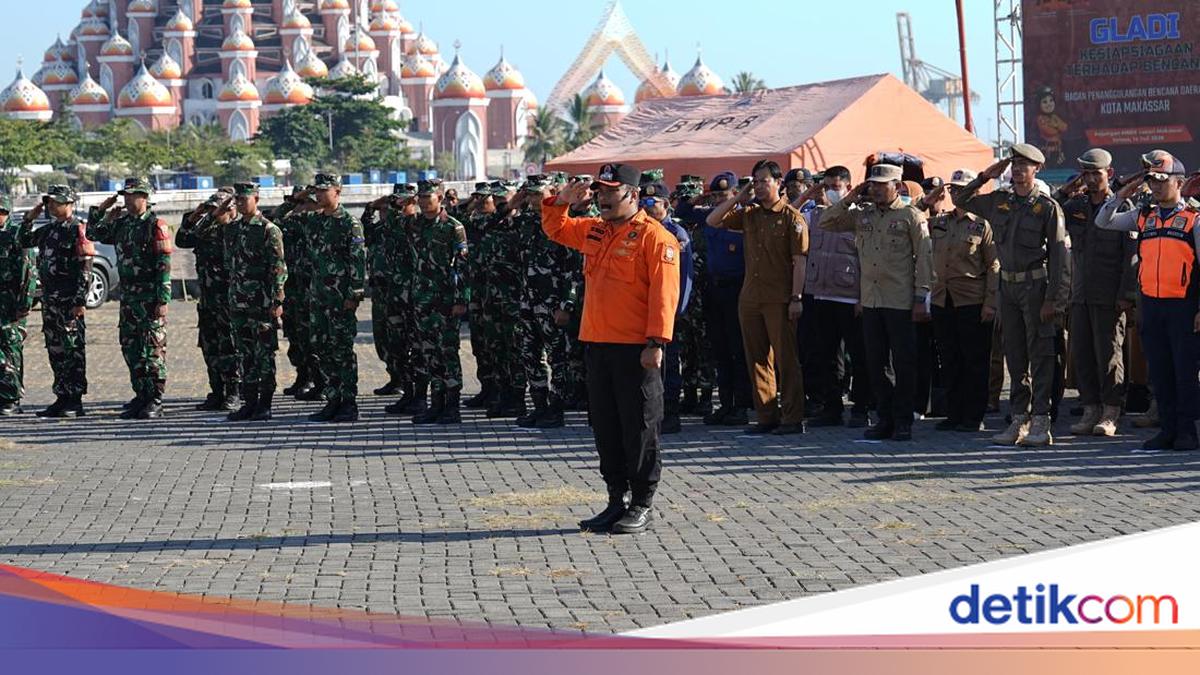
The Makassar city government will provide basic knowledge and competence to around 23,000 students to strengthen preparedness in facing various potential disasters. The city administration is partnering with 23 universities to ensure the programme’s success. This was announced by Makassar Mayor Munafri ‘Appi’ Arifuddin while leading the Makassar City BPBD assembly at the MNEK Pavilion, Center Point of Indonesia (CPI), on Tuesday (14/7/2026). Appi stressed that disaster management is not solely the government’s responsibility, but a duty shared by all elements of society. “The potential for disaster can arise at any time, therefore disaster management is not only the government’s responsibility, but a shared responsibility of all elements of society,” said Appi. “Disaster management efforts must be carried out in a planned, integrated, coordinated, and comprehensive manner by placing the community as the main subject in building resilience,” he stated. According to him, the preparedness assembly was not merely a ceremonial agenda, but an important momentum to strengthen the commitment of all stakeholders in enhancing readiness to face various potential disasters. “This activity is a momentum to strengthen commitment, unify steps, test the readiness of personnel and resources, and reinforce cross-sector synergy in facing various potential disasters in Makassar City,” he said. Appi believes that a culture of training conducted in an integrated, planned, and sustainable manner forms an important foundation for increasing public awareness, vigilance, and preparedness for emergency conditions. Through routine exercises, disaster simulations, and human resource capacity building, the government hopes that all elements will have the ability to respond to disasters quickly, precisely, and in a coordinated manner. “Through education, simulation exercises, and continuous capacity strengthening, we not only reduce disaster risk but also build a society that is adaptive and able to recover stronger after a disaster occurs,” he explained. On that occasion, Munafri also reminded that Makassar City has several potential disaster threats that must be a common concern. Based on disaster risk assessments, these threats include floods, extreme weather, drought, and tidal flooding influenced by climate change. “The community must have the ability to recognise threats, carry out self-rescue, respond to emergencies appropriately, and be able to recover after a disaster,” he added. As a concrete step, the Makassar BPBD is establishing cooperation with 23 higher education institutions in Makassar City to produce a young generation with knowledge, skills, and concern for disasters. The cooperation was marked by the signing of a Cooperation Agreement between the Makassar City BPBD and 23 universities during the 2026 Fiscal Year Makassar Regency/City Disaster Preparedness Assembly. The Chief Executive of Makassar City BPBD, Muhammad Fadli Tahar, said the collaboration is a strategic breakthrough to strengthen disaster capacity through human resource development starting from the university environment. “This collaboration is a major investment in building disaster management human resources in Makassar City,” he said. According to him, students will have the opportunity to learn directly in the field in accordance with the provisions and curriculum of their respective universities. Through this approach, students not only gain theoretical understanding but also practical experience in mitigation, preparedness, and disaster management efforts. “Students will learn directly in the field so they have more comprehensive experience and understanding regarding disaster management,” said Fadli. He explained that the programme targets at least 1,000 students from each participating university. Thus, it is estimated that around 23,000 students will be formed with basic competence in the field of disaster management. “This cooperation with 23 universities is one of the concrete steps by the Makassar City Government in building a city that is increasingly resilient and adaptive through strengthening cross-sector collaboration,” he concluded.