
Makassar Air Quality Deteriorates, BMKG Suspects Impact of Forest Fire Smoke
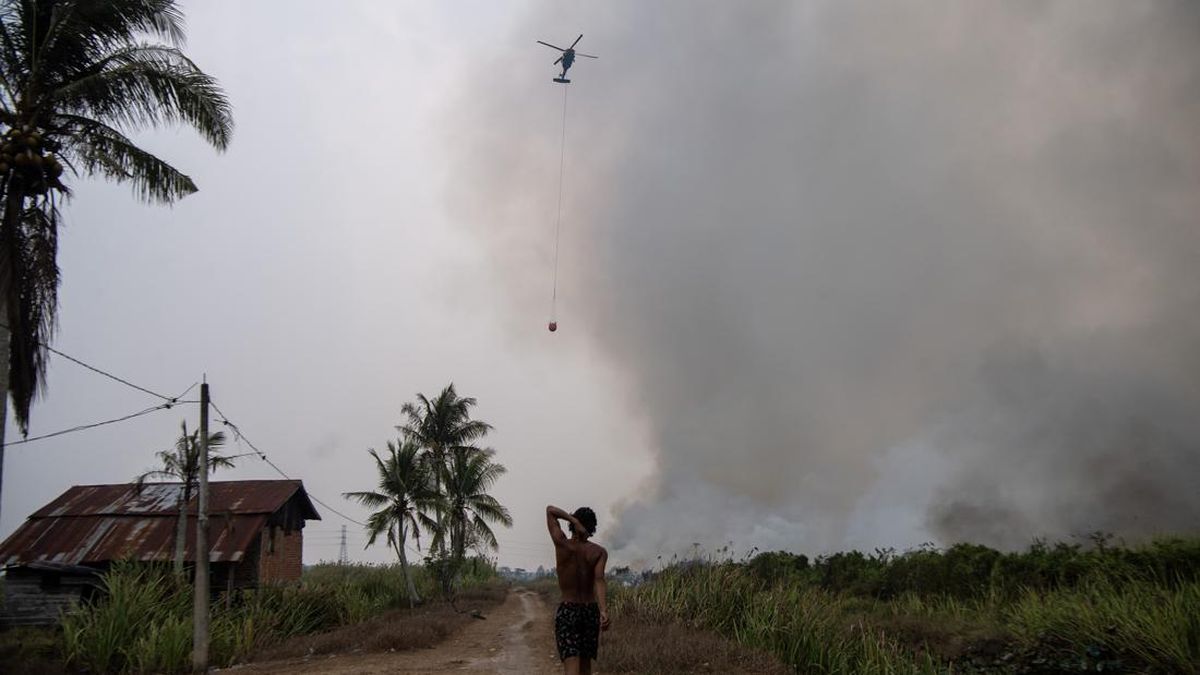
The Meteorology, Climatology, and Geophysics Agency (BMKG) Region IV Makassar has stated that air quality in Makassar is being influenced by smoke from forest and land fires (Karhutla) in Kalimantan, which is being blown by the wind towards South Sulawesi.
“Over the past few days, the PM2.5 indicators for Maros and its surroundings, including Makassar, have been monitored in the unhealthy to moderate category,” said BMKG Makassar Forecaster, Asriani Idrus, on Sunday (4/10).
Air quality tends to worsen from night to morning. However, conditions usually begin to improve from midday through to the afternoon.
“The unhealthy conditions usually occur from midnight through to the early morning. Today, it was monitored until 11:00 AM, but by 12:00 PM, it had returned to normal,” she said.
According to Asriani, wind movement patterns are one of the indicators strengthening the suspicion that smoke from outside South Sulawesi is entering the region. When winds blow from the west to the northwest, smoke particles from Kalimantan have the potential to be carried towards South Sulawesi.
Meanwhile, when the wind is dominant from the east, smoke from forest fires in Papua and Maluku also has the potential to enter South Sulawesi.
“The cause is mostly from fires, specifically forest fire smoke. Because I observed that the wind direction is generally from the west, it is likely being carried from Kalimantan to the South Sulawesi region,” she explained.
She stated that motor vehicle emissions are not yet a dominant factor in the current increase in PM2.5 concentrations. BMKG assesses that forest fire smoke remains the primary source of these particles.
“Vehicle smoke does not seem to be the cause yet, as it remains normal. Therefore, the main factor is smoke,” she said.
BMKG is also continuing to monitor hotspots in several regions of Kalimantan. Asriani mentioned that hotspots remain quite numerous, meaning the potential for smoke to be carried by the wind to South Sulawesi persists for the next few days.
“Looking at the data, it is still very red; the hotspots in Kalimantan are still very strong and have not subsided. Therefore, there is still a possibility of this continuing for several days,” she revealed.
In addition to air quality, BMKG noted that the hot weather experienced by residents in Makassar and several areas of South Sulawesi remains within normal parameters.
Asriting said that South Sulawesi is currently in the dry season, making relatively high air temperatures a natural condition.
“As for the hot weather, since we are currently in the dry season in the Makassar region, and generally throughout South Sulawesi, the current weather is very normal,” she explained.
Air temperatures in South Sulawesi are currently in the range of 30-35 degrees Celsius. However, the temperature felt by the body can be higher due to several other influencing factors.
According to Asriani, this condition relates to the heat index, which accounts for the combination of air temperature, humidity, wind direction, and solar radiation.
“So, the reason the air temperature feels hot is due to our body’s condition being influenced by the heat pressure from the environment,” she said.
Source: jawawa.id (https://jawawa.id/newsitem/makassar-air-quality-deteriorates-bmkg-suspects-impact-of-forest-fire-smoke-1791096910)
Originally published by CNN Indonesia (https://www.cnnindonesia.com/nasional/20261004121954-20-1411432/kualitas-udara-makassar-memburuk-bmkg-duga-imbas-asap-karhutla), translated from Indonesian