
Major Investment Flows into Regions, but Local Communities Must Benefit
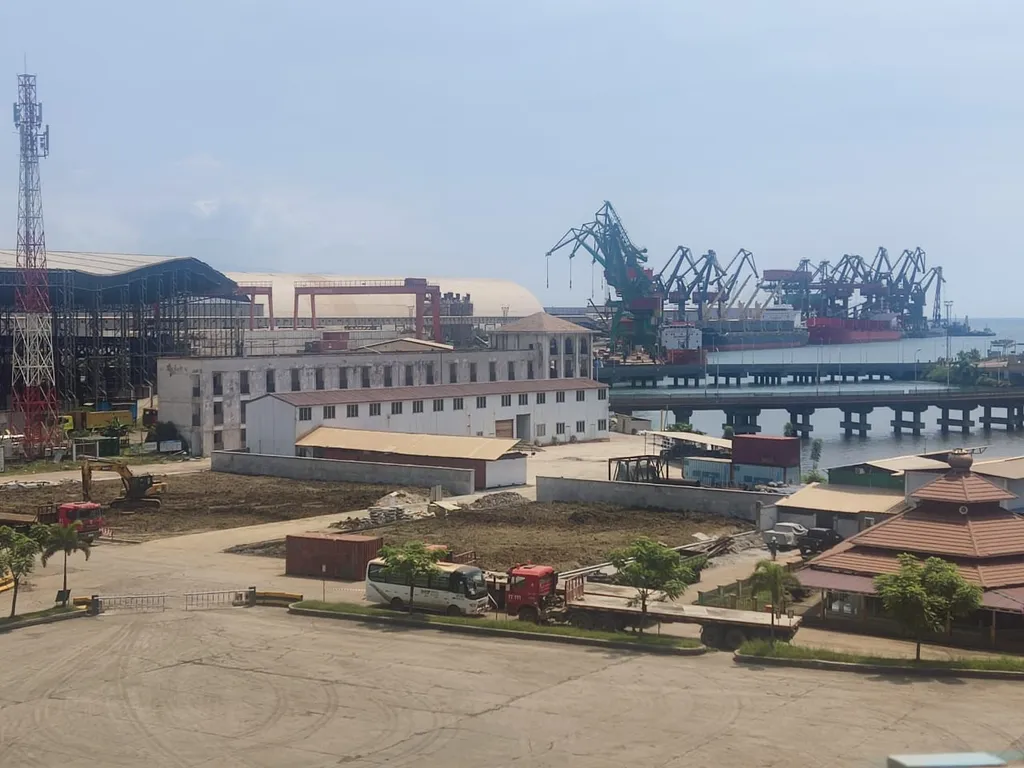
Investment and downstream processing should not stop at the figures; they must deliver job creation and improvements in people’s welfare.
JAKARTA — Investment entering Indonesia in the first half of 2026 met its target, with some investment located outside Java. However, investment should have a real impact, particularly on regions and their local communities.
“Rp 500 trillion in investment outside Java is good news, but it is not proof that downstream processing has succeeded,” said Achmad Nur Hidayat, an economist and public policy expert at UPN Veteran Jakarta, in Jakarta on Wednesday (14 October 2026).
Nurul Ichwan, Deputy for Investment Promotion at the Ministry of Investment and Downstreaming/BKPM, had previously claimed that investment was becoming more evenly distributed as more of it flowed outside Java.
In a recording uploaded by the Government Communications Agency (Bakom) on Monday (12 October 2026), Ichwan said investment outside Java reached Rp 502.8 trillion of the Rp 1,010 trillion invested in the first half of 2026. Downstream-processing investment nationwide accounted for about Rp 300 trillion.
“North Maluku and Central Sulawesi were among the five leading investment destinations in Indonesia in the first half of 2026,” he said.
Ichwan said regional investment growth created opportunities for local people to find better work closer to home. When investment enters a region, it brings not only factories and production facilities, but also demand for workers, transport services, accommodation, food and various related businesses.
Investment growth is therefore expected to benefit local communities.
Achmad Nur Hidayat said the location of investment was not necessarily the same as the location where its economic benefits were felt. The positive impact on local communities could be assessed by examining whether imported technology and capital goods were used, whether key experts came from outside the region, whether suppliers were based elsewhere, and whether corporate profits flowed out of the region.
If all these conditions apply, the benefits to the region and its people may be minimal, even when investment is worth tens of trillions of rupiah and a smelter is built. In such cases, local residents often receive only low-paid jobs while bearing the cost of environmental damage.
“Statistically, the investment may be outside Java, but economically it creates a kind of enclave economy. The region becomes a production site, but not necessarily a centre of prosperity,” Nur said in a written statement.
He said downstream processing must be assessed on more than three measures: investment value, smelters and exports. More important questions include how many local workers are employed, whether wages in surrounding communities rise, and what share of company spending goes to local small and medium-sized enterprises (SMEs) and businesses.
Other measures include whether regional poverty falls, whether locally generated revenue (PAD) increases sustainably, how much technology is transferred, and whether the economic structure shifts from simply extracting natural resources to establishing an industrial base.
“If these indicators do not improve, we should ask who is actually benefiting from the added value created by downstream processing,” Nur said.
Nur also argued that the Coordinating Ministry for Downstreaming and Energy Transition should take on a much greater role. “The coordinating minister must not become merely a ‘project coordinator’. The task should be to architect the national value chain,” he said.
The ministry should therefore ensure coordination among the energy and mineral resources, industry, investment, trade and manpower ministries, as well as regional governments and vocational education providers. In this way, a downstream-processing project could generate an economic ecosystem, rather than just a factory.
Every strategic downstream-processing project, Nur said, should have regional economic development targets. These should cover local employment and procurement, SME participation, technology transfer, growth in household incomes and poverty reduction in the district where the industry operates.
Downstream processing should also go further. Indonesia should not be satisfied with turning nickel ore into a semi-finished product for export, only to import the finished product later at a much higher price.
The Coordinating Minister for Downstreaming recently acknowledged this problem, saying that the Investment, Industry, and Energy and Mineral Resources ministries needed to coordinate and that industries stopping at semi-finished products should be reviewed.
The coordinating ministry must also ensure that downstream processing does not come at the expense of the environment. Corporations should not reap the benefits while the costs of water and air pollution, damaged roads, health impacts and lost livelihoods are left to local communities and regional budgets.
Nur said the true measure of success was not how much money flowed into a region, but how much prosperity remained there after the investment arrived.
If Rp 500 trillion flows into a region but local people remain poor, SMEs are merely spectators, local workers are confined to the lowest levels and the environment is damaged, the result is not development through downstream processing. It is simply the relocation of extraction from mines to industrial estates.
Nur also urged that the launch of 11 downstream-processing projects worth US$10.2 billion, or Rp 180 trillion, at the Indonesia Weda Bay Industrial Park (IWIP) by President Prabowo Subianto on 8 October should genuinely improve the welfare of local communities.
He noted that, despite Central Halmahera’s exceptionally rapid economic growth of 62.47 per cent in 2025, according to Statistics Indonesia, 9.15 per cent of the district’s population remained below the poverty line that year.
“This is the paradox of Indonesia’s downstream-processing drive. We have succeeded in creating new centres of economic growth, but that does not necessarily mean we have ensured that this growth translates into local prosperity,” he said.
Separately, Adinda Tenriangke Muchtar, Executive Director of The Indonesian Institute Center for Public Policy Research, said attention should focus not only on the amount of investment coming in, but also on how it is planned and carried out, with good governance and broad participation.
“Investment and downstream processing are not just about physical infrastructure or products; the process matters too if they are to be meaningful investments,” she said on Wednesday (14 October 2026).
Adinda said involving communities and local stakeholders was also important. This would help ensure that investment was planned and implemented in line with conditions on the ground, making it relevant to local needs and strategically appropriate.
Feasibility studies conducted beforehand should also steer investment towards productive sectors that generate multiplier effects, including improved welfare, job creation and a larger manufacturing contribution to gross domestic product (GDP).
“Inclusive, responsive, context-sensitive and relevant policymaking is important. It allows the interests of each region to be represented,” she said.
Adinda said the Coordinating Ministry for Downstreaming and Energy Transition could serve as a hub bringing together all relevant strategic parties. Given current global economic conditions, she also stressed the need for fair transfers to regions, as regional stakeholders are among the key actors in implementing investment and downstream-processing policies.
Source: jawawa.id (https://jawawa.id/newsitem/major-investment-flows-into-regions-but-local-communities-must-benefit-1791978621)
Originally published by kompas.id (https://www.kompas.id/artikel/investasi-besar-masuk-daerah-ada-manfaat-pada-masyarakat-setempat?open_from=Section_Terbaru), translated from Indonesian