
Major Currencies Plummeting Amid US Dollar Strength: A Warning!
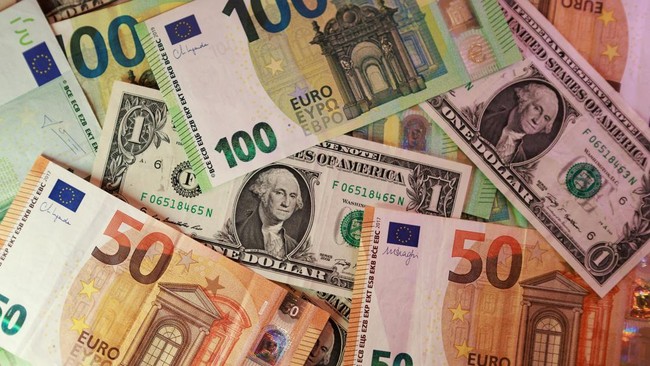
The US Dollar (USD) is once again demonstrating its strength in the global foreign exchange market. Throughout 2026, the majority of the world’s major currencies have weakened against the greenback, with several reaching their lowest levels in months.
The strength of the US Dollar is also evident in the US Dollar Index (DXY). The index, which measures the movement of the greenback against six major world currencies, has strengthened by approximately 3% year-to-date (YTD).
According to Refinitiv data up to the close of trading on Tuesday (29/09/2026), out of the six major currencies monitored, five have weakened against the US Dollar since the start of the year. Only the Japanese Yen has managed to record a slight appreciation.
The Swedish Krona has experienced the greatest pressure, weakening by 8.59% against the US Dollar throughout 2026, with the USD/SEK exchange rate at 9.9854. The Swiss Franc followed with a 5.19% decline, while the Euro weakened by 3.45%. The Canadian Dollar dropped by 3.41%, and the Pound Sterling depreciated by 1.79%.
Meanwhile, the Japanese Yen remains the sole exception among the six currencies, posting a slight gain of 0.07% against the US Dollar since the beginning of the year.
Euro Under Pressure at Lowest Level Since May 2025
Pressure on the Euro became more pronounced towards the end of September. In Tuesday’s trading (29/09/2026), the Euro fell to US$1.1312, reaching its lowest level since May 2025. The US Dollar even recorded its largest monthly gain against the Euro in approximately 14 months, strengthening by nearly 2.5% against the European currency throughout September.
One primary cause is the relatively strong US economic condition, whereas Europe faces numerous challenges ranging from energy prices to fiscal and political pressures. “The US economy remains hot, Europe is lagging in the global AI race, while energy supply and French politics remain major concerns for the Euro,” said Brent Donnelly, president of foreign exchange trading at Spectra Markets, as quoted by Reuters.
European benchmark gas prices even surged to their highest levels since 2022 in early September. Pressure is also emanating from France, as markets closely monitor debt issues and political deadlock ahead of next year’s presidential election. The yield spread between French and German government bonds widened to more than 115 basis points, the largest since 2012.
Swiss Franc and Pound Sterling Also Under Pressure
The Swiss Franc, typically a safe haven during market volatility, was unable to resist the strengthening US Dollar. The Dollar touched CHF 0.8358 during Tuesday’s trading, its highest level against the Franc in approximately 16.5 months, meaning the Franc is trading near its weakest position against the Dollar in over a year.
Pressure on the Franc stems partly from investors seeking low-interest currencies, other than the Yen, to fund carry trade transactions. In this strategy, investors borrow currencies with low interest rates to invest funds into assets that provide higher yields.
The Pound Sterling also trended downwards, hitting its lowest level in three months.
Japanese Yen Manages to Hold Firm
Amid the pressure on most of the world’s major currencies, the Japanese Yen remains the exception. The Yen has maintained a slight gain of 0.07% against the US Dollar throughout 2026. In fact, throughout September, the US Dollar was recorded to have weakened by approximately 1.5% against the Yen.
This movement is supported by the shift in Bank of Japan (BOJ) policy, Japanese interest rate hikes, and joint US-Japan interventions in July and August to curb the Yen’s depreciation. A series of warnings from the authorities of both nations have also made market participants more cautious about aggressively selling the Yen again.
US Interest Rates Remain the Key Factor
The strength of the US Dollar throughout the year is inseparable from the robust US economic conditions and rising interest rates. The market is now awaiting core Personal Consumption Expenditures (PCE) inflation data and US employment reports this Friday. Stronger-than-expected data could increase the likelihood of the Federal Reserve (The Fed) raising interest rates again, providing further momentum for the US Dollar.
However, those expectations moderated slightly after New York Fed President John Williams stated there was no urgent need for a rate hike. The probability of a Fed rate hike in October subsequently dropped to around 50%, down from the previous 71%.
With the DXY having risen by approximately 3% throughout 2026 and five of the six major world currencies under pressure, the direction of US interest rates will be a primary factor in determining whether US Dollar dominance continues or if global currencies begin to find room to rebound.