
Major Challenges Await BI Governor Candidate Destry Amid Global Turmoil
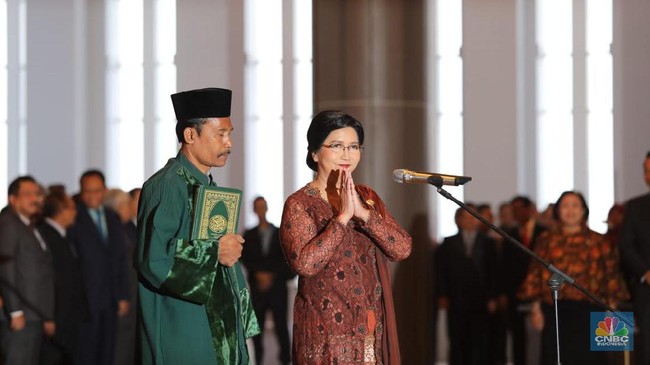
Destry Damayanti has become the sole candidate for Governor of Bank Indonesia (BI) chosen by President Prabowo Subianto, after Perry Warjiyo resigned from his post as head of the central bank on 25 July 2026. Destry’s name has been proposed for a fit and proper test at the House of Representatives (DPR) by the Head of State, via a presidential letter sent today, Monday (10/8/2026), through Minister of State Secretary Prasetyo Hadi. Destry is not a newcomer to the BI board of governors. Since 29 July 2019, she has served as Senior Deputy Governor of BI, continuing for the 2024-2029 period. When Perry resigned, she was appointed by the BI board of governors as acting Governor of BI.
Economist and Senior Fellow at the Center for Indonesian Policy Studies (CIPS) Harry Baskoro stated that Destry’s background would allow for leadership continuity at BI following Perry’s departure. “In my opinion, the single nomination of Ibu Destry provides one immediate advantage, which is continuity,” Harry, a former Senior Executive Director at BI, told CNBC Indonesia on Monday (10/8/2026). Harry noted that with her background, Destry possesses a highly competent understanding of the market and policy mechanisms to lead the central bank going forward. “She has been on the BI Board of Governors for a long time, understands the market and policy mechanisms, and is currently serving as acting governor. So from a transition perspective, this is a choice with relatively minimal surprises,” he stressed.
However, Harry cautioned that Destry’s leadership will face a number of challenges amidst the current high global economic and financial turmoil. He considers her challenges to be far greater than simply maintaining continuity. The first challenge, he said, will remain closely tied to rupiah stability and market confidence. Destry must be able to maintain policy credibility under still-high external pressures, without being trapped into defending a specific exchange rate level at too great a cost. “What must be maintained is not just today’s rupiah figure, but the market’s confidence that BI has a clear policy framework and sufficient ammunition to act when necessary,” Harry stressed.
The second challenge concerns the boundary between supporting growth and maintaining stability, especially after the Financial Sector Development and Strengthening Law (UU P2SK) which emphasises that BI should support growth. “And that is legitimate. But monetary operations are not a substitute growth engine. Abundant liquidity does not automatically become credit or investment if demand is weak, projects are not sufficiently bankable, or the business world still sees risks as too high,” Harry said. Because of this second challenge, Harry disagrees with the notion that a new BI governor’s performance should be considered successful if measured solely by the ability to pursue 8% growth. “Fiscal and monetary policy do need coordination, but they do not always have to produce the same answer. The value of a central bank is sometimes most visible when it dares to say that the accelerator has been pressed enough. Now is the time to press the brake,” Harry stressed.
The third challenge, he said, is closely related to the independence and credibility of the decision-making process at Bank Indonesia, especially after Perry Warjiyo’s resignation as Governor. “After Pak Perry’s resignation, the market is not only looking at who the governor is, but also whether BI still has the room to make decisions that may be unpopular when stability requires it,” Harry stated. Given these various challenges, Harry hopes the new BI governor candidate can work closely with the government without losing the ability to disagree. He stressed that coordination is important, but it must not become an obligation to always agree with the government’s wishes. “So the success of the next BI governor should not only be measured by how much liquidity is provided or how high credit grows. Measure it also by whether the rupiah remains credible, inflation expectations are anchored, the market trusts BI’s policy framework, and when necessary, the governor is still able to say: ‘Not this one, not yet’,” he asserted.