
Major Central Banks Set to Raise Interest Rates in Unison
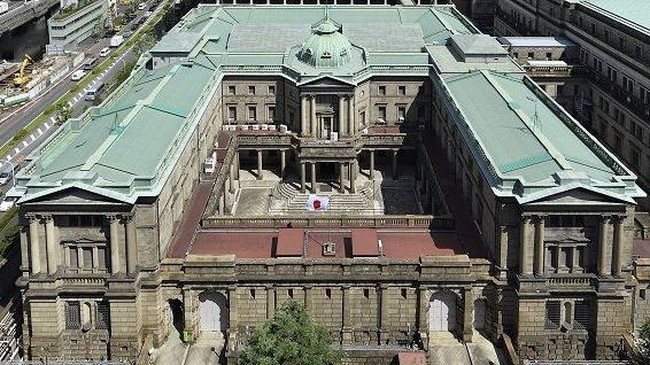
Major central banks worldwide have collectively maintained interest rates this week. However, they have warned that they could soon raise them to prevent the surge in energy prices resulting from the widening US-Israel-Iran war from leading to broader inflation.
The US Federal Reserve (The Fed) kept interest rates unchanged, but three policymakers deemed the reference to a “easing bias” in the policy statement no longer appropriate. Meanwhile, central banks in Europe and Japan have signalled that they will raise rates at upcoming meetings.
Quoting Reuters, here are the positions of 10 central banks in advanced economies, ordered from the highest to the lowest policy interest rate:
Australia
The Reserve Bank of Australia (RBA) has raised rates twice this year, now at 4.1%, the highest level in the G10 group. Markets see an around 80% chance of another RBA hike next week, and expect at least two more increases by year-end.
Inflation remains high, with Wednesday’s data showing headline inflation at 4.1% in the first quarter compared to the same period last year. That is well above the RBA’s 2-3% target, although core inflation at 3.5% offers some relief.
Norway
Norges Bank will also hold a meeting next week after previously stating the possibility of raising rates one or two times this year to dampen re-emerging inflationary pressures from strong wage growth and higher energy costs.
Norway’s central bank held rates at 4% in March. Core inflation, around 3.0% in March, has exceeded the 2% target every month since early 2022.
United Kingdom
The Bank of England (BoE) maintained its benchmark rate at 3.75% on Thursday, with one vote in favour of a rate hike.
The BoE also scrapped its usual practice of issuing central projections for inflation and other key economic indicators, replacing them with three scenarios. The most extreme scenario indicates the need for a “marked” increase in borrowing costs.
United States
The Fed held rates steady on Wednesday with an 8-4 vote, the narrowest margin in decades. Three officials rejected the policy direction leaning towards easing, while one official voted for a rate cut.
The Fed retained its “easing bias” in its policy statement. However, outgoing Fed Chair Jerome Powell said changes could be made as early as June.
Traders expect the Fed to skip rate cuts throughout 2026 and may even raise rates in the first half of 2027.
New Zealand
The Reserve Bank of New Zealand held rates at 2.25% in early April. Its governor said this week that core inflation measures remained stable within the 1-3% target range in the first quarter, though the central bank is prepared to act if necessary. Markets expect three rate hikes by year-end.
Canada
The Bank of Canada (BoC) held rates at 2.25% on Wednesday, stating that higher oil prices would benefit Canada through increased export revenues, though slightly pressuring businesses and consumers.
The BoC forecasts oil prices to fall to US$75 per barrel by mid-2027, and if that occurs, its policy rate would be at the appropriate level. However, the central bank emphasised it would respond quickly if inflation proves persistent. Inflation rose to 2.4% in March, still within the BoC’s target range.
Eurozone
The European Central Bank (ECB) is also waiting for now. The ECB held rates at 2% on Thursday.
Nevertheless, it signalled growing concerns over surging inflation, bolstering speculation that the ECB will raise rates several times this year. The first move is likely in June.
ECB President Christine Lagarde said the decision to hold rates was unanimous, but during the press conference, she noted that the possibility of a rate hike had been “extensively discussed” by policymakers.
Sweden
The Riksbank will hold a meeting next week, with most economists expecting no change to the 1.75% benchmark rate.
However, Swedish policymakers have also warned of higher inflation risks due to the war and stated they could take action if necessary.
Japan
The Bank of Japan (BOJ) held rates at 0.75% on Tuesday but gave an unusually firm signal regarding a near-term rate hike. Japan’s central bank also warned of the need for extra vigilance to keep inflation in check. Three members dissented and proposed a rate increase.
Since 2022, the BOJ has cautiously raised rates from negative territory. However, the level remains far lower than in other countries, contributing to yen weakness, which in turn could further fuel inflation.
Complicating the situation for the BOJ, yields on Japanese government bonds are now at their highest levels in decades.
Switzerland
With a 0% interest rate, the Swiss National Bank (SNB) has the lowest rate in the G10 group. The SNB is expected to hold rates steady at its June meeting and rely on foreign exchange interventions to curb sharp appreciation of the Swiss franc, supported by investors seeking safe-haven assets.
A stronger currency lowers import prices, thus dampening the inflationary impact from higher energy costs, but it also risks pushing inflation below the SNB’s 0-2% target range.
Consumer prices rose 0.3% last month compared to March 2025, the highest in the past 12 months.