
Maintaining Trust Through Immunisation
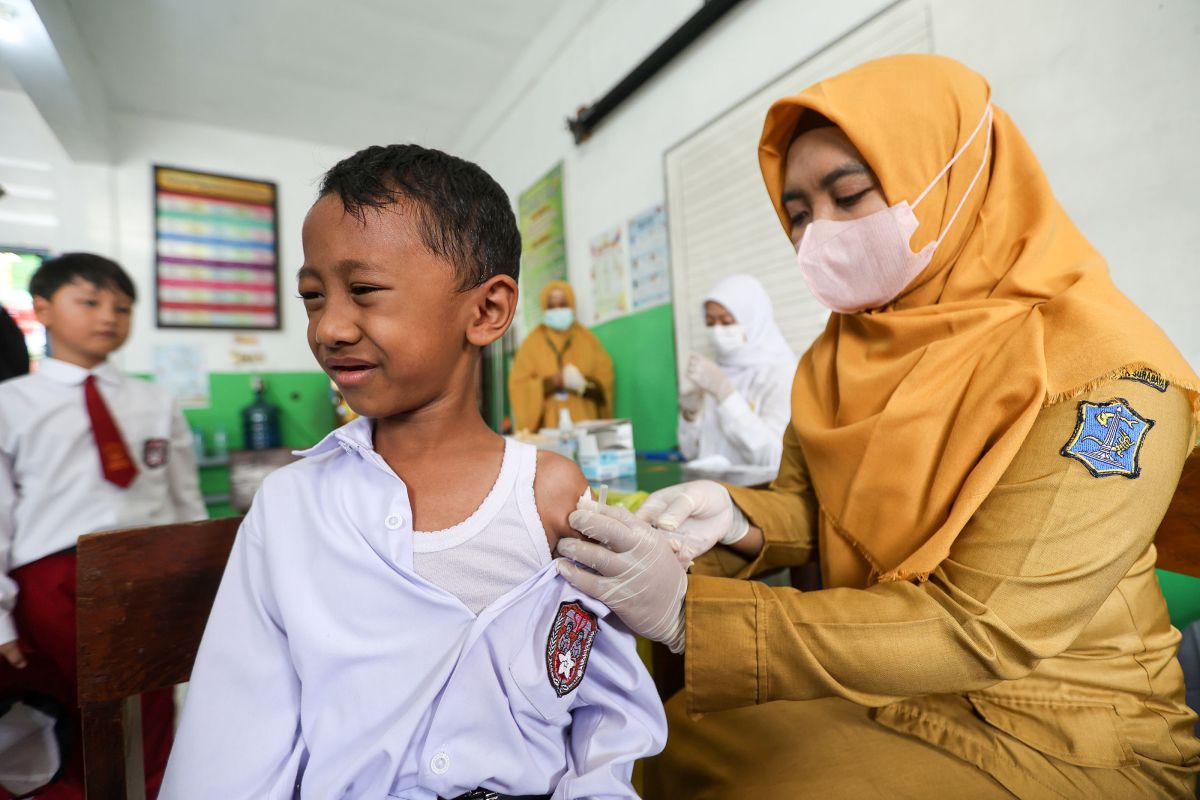
Surabaya is demonstrating that building public health requires cross-border cooperation. The government provides services, healthcare workers ensure quality, schools provide access, religious leaders build confidence, and the media disseminates accurate information.
Surabaya (ANTARA) - An immunisation consent form taken home by a schoolchild often appears to be a mere annual routine. However, behind that simple sheet lies a crucial decision that determines the health of an entire generation.
When parents sign the consent, they are not merely permitting their children to receive vaccines, but are actively participating in building a collective fortress of protection to ensure that infectious diseases do not find space to thrive again.
In Indonesia, the School-Age Immunisation Month (BIAS) serves as a vital instrument to ensure this protection remains intact. This programme does not only supplement individual immunity but also maintains herd immunity so that various vaccine-preventable diseases (PD3I) remain under control.
This challenge becomes increasingly relevant as various countries face a resurgence of diseases that have long been preventable through vaccination. The decline in immunisation coverage following the pandemic, increased population mobility, and the heavy flow of disinformation have made these threats a reality once again.
In this context, the Surabaya City Government’s move to partner with the Indonesian Ulema Council (MUI), the Ministry of Religious Affairs, the education sector, healthcare workers, and community leaders to ensure the success of BIAS 2026 is noteworthy. This approach demonstrates that immunisation is no longer solely a medical issue, but also a matter of public trust.
Maintaining Trust
Surabaya is targeting a BIAS 2026 coverage of 90 per cent, an increase from the approximately 85 per cent achieved in 2025. While this target may appear to be a mere statistical figure, behind that five per cent increase are thousands of children expected to receive protection from dangerous diseases, such as measles, rubella, diphtheria, tetanus, and the Human Papilloma Virus (HPV).
This data was presented by the Surabaya City Government during a cross-sector coordination meeting ahead of the implementation of BIAS 2026.
For many years, Indonesia has built one of the largest immunisation programmes in the world. Various diseases that were once major threats have been significantly suppressed. However, this success does not mean the threat has vanished.
Reports from the World Health Organisation (WHO) and UNICEF in recent years show that millions of children in various countries have missed or delayed routine immunisations following the COVID-19 pandemic. This condition increases the risk of outbreaks of measles and other preventable diseases.
Indonesia is not entirely immune to these challenges. The Ministry of Health has repeatedly warned that a decline in immunisation coverage could trigger outbreaks (KLB) in several regions if not immediately rectified.
This is where Surabaya is taking a different approach. The city government is not only strengthening healthcare services but also building social communication through religious leaders, school principals, leaders of Islamic boarding schools (pesantren), health workers, and village officials.
This step arises from the reality that vaccine refusal today is more often triggered by doubt rather than limited access to services. Some parents are still influenced by incorrect information regarding the safety or the ‘halal’ status of vaccines.
This phenomenon shows that the digital era not only facilitates the spread of information but also accelerates the spread of doubt. A social media post lacking scientific evidence can reach thousands of people in minutes, while explanations from healthcare workers often require more time to rebuild trust.
Therefore, Surabaya’s decision to involve the MUI and the Ministry of Religious Affairs is strategically significant. Public health approaches become more comprehensive when scientific messages run alongside religious and social approaches.
MUI Fatwa Number 4 of 2016, which states that vaccines in government immunisation programmes are halal, serves as an important foundation in addressing the growing doubts.