
Maintaining Road Comfort: How PAM Jaya is Expanding Jakarta's Piped Water Access
The acceleration of PAM Jaya’s piped water service expansion has consequences for the mobility of Jakarta residents. The construction and rehabilitation of pipe networks spread across various roads in the capital have the potential to trigger traffic congestion due to excavation projects.
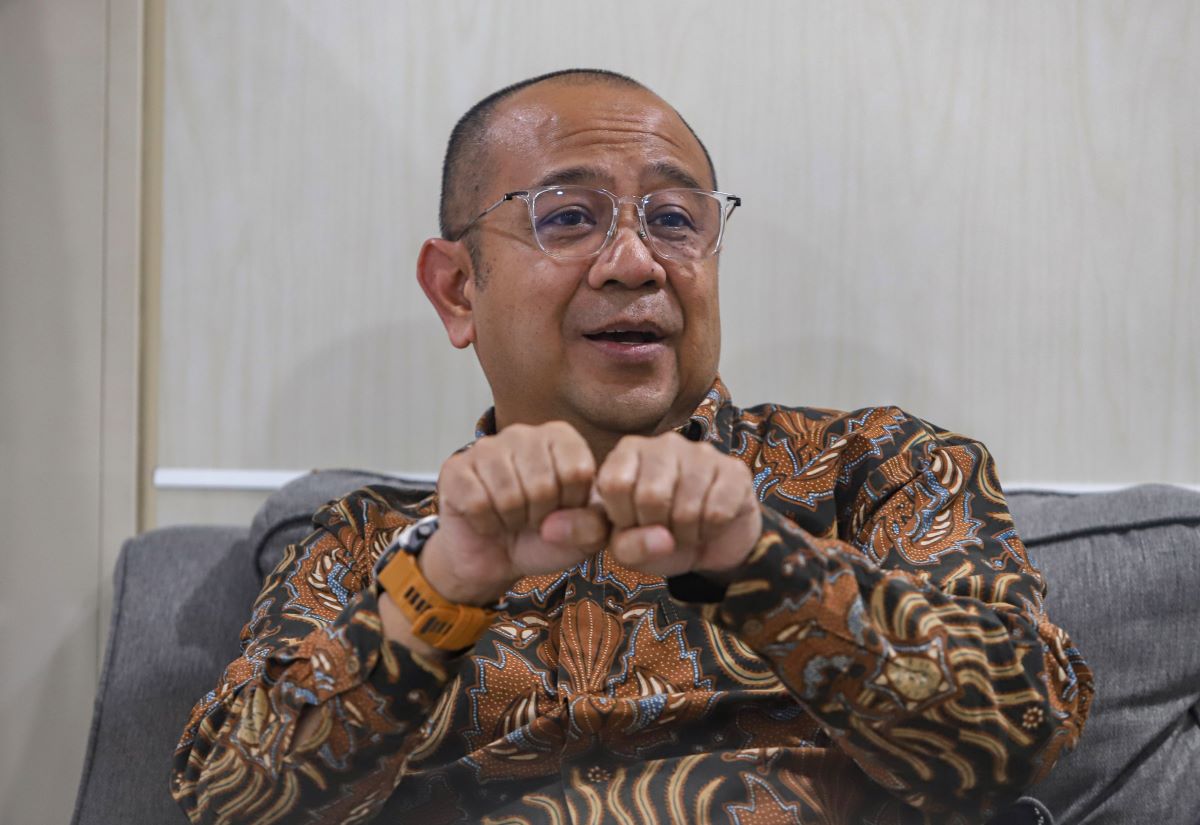
PAM Jaya President Director Arief Nasrudin acknowledged that the development of water networks cannot be separated from disruptions to city activities. Unlike transportation projects that are located in specific corridors, PAM Jaya’s network must reach residential areas down to the smallest neighbourhoods.
“Indeed, our development is massive. It is not like the MRT or LRT, which only have one line. We will reach even the smallest villages,” Arief told Media Indonesia on Tuesday (11/8).
PAM Jaya is currently continuing to expand connections to achieve 100% service coverage. However, in several areas, the main pipeline network must be built first before house connections can be made. The process of laying the main pipes and conducting pressure tests means the work can take quite a long time, even more than a year at some points.
Challenges increase when PAM Jaya’s work runs concurrently with other utility projects, which risks narrowing the roads. To anticipate this, PAM Jaya is strengthening coordination with relevant agencies so that excavation work is not carried out simultaneously on the same route. “The Governor does not want that. On one line, we must detect which goes first. They must not be done at the same time,” Arief stressed.
In addition to coordination, PAM Jaya also demands a commitment from contractors to optimally restore the excavated areas to their original condition after the project is completed. According to Arief, traffic disruption is a consequence that must be managed for the sake of equitable access to clean water. “What is important is that whatever is dug up is tidied up again as it was before,” he said.
Beyond improving excavation infrastructure on the ground, PAM Jaya is also beginning to explore major funding options through an initial public offering (IPO). This step is being taken to strengthen service expansion without relying entirely on the Jakarta Regional Budget (APBD).
Arief revealed that the IPO exploration was carried out under the direct direction of Jakarta Governor Pramono Anung, as a form of seeking creative financing schemes. “The Governor has indeed asked us to explore it. We are currently exploring the potential because the funding calculated by PAM Jaya is enormous. We are trying not to burden the budget. The Governor is pushing for creative financing,” he said.
If the plan is successfully realised, PAM Jaya has the potential to make history as the first municipally owned water utility company in Indonesia to be listed on the Indonesia Stock Exchange (BEI). However, Arief emphasised that the IPO is still in its early stages. PAM Jaya must first improve its corporate governance, from professionalism and transparency to the neatness of its standard operating procedures.
“To go towards an IPO, the company must be truly professional, transparent, and accountable. Everything must be open and the SOPs must be neat,” Arief explained. He concluded that listing on the stock exchange carries significant consequences for the company’s performance. Therefore, PAM Jaya is choosing not to rush into a decision before all internal aspects are fully prepared.