
Maintaining Quality, Upholding Trust
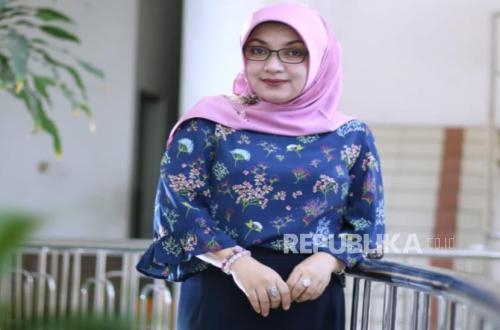
This week, the atmosphere at Amikom University Yogyakarta has been incredibly intense. From examination rooms to leadership meeting halls, the rhythm of work has moved without pause. On one day, I was reviewing scientific manuscripts while examining the progress of Stage 2 Doctoral Dissertation Seminars in Informatics. On another, the systems and governance of our directorate were put to the test through ISO 9 lot 9001:2015 and 21001:2018 Surveillance Audits by an external audit team from PT Decra.
Discussions regarding Outcome-Based Education (OBE) for the Faculty of Economics and Social Sciences, followed by Internal Monitoring and Evaluation (Monev) for Research and Community Service (PkM) recipients of the 2026 BIMA Grant, commenced this week. Subsequently, we at the LPPM gathered again to follow up on various notes and recommendations resulting from the ISO audit.
At first glance, this series of agendas might appear to be mere university administrative routines—stacks of documents, performance indicators, standard fulfilment, evaluations, and continuous meetings. However, upon deeper reflection, there is a common thread connecting all these activities: the endeavour to maintain quality and uphold trust.
As external auditors examined the implementation of ISO 9001:2015 for Quality Management Systems and ISO 21001:2018 for Educational Organisation Management Systems, we were reminded once again that quality is not a result of chance or luck. Good quality is born from a process that is planned, measurable, consistent, and subject to continuous improvement. The same applies when discussing the OBE curriculum. The primary focus of OBE does not stop at what lecturers teach in the classroom, but extends to learning outcomes, skills, and the practical benefits graduates carry with them when facing the dynamics of society.
This principle is closely linked to the implementation of the BIMA Grant Internal Monev at the LPPM. Research and Community Service must not end merely as reports. Evaluations must be conducted to ensure that funded research proceeds according to plan, produces promised outputs, and addresses societal issues to provide meaningful benefits. I felt the same while listening to the presentations of doctoral students in their dissertation progress seminars. Behind the depth of academic arguments and the sharpness of methodology lies a long process of training perseverance, scientific honesty, and responsibility for the knowledge being developed.
Managing an educational institution means accepting the trust of parents who entrust their children to be educated and shaped. Maintaining quality from the upstream—student admissions—to the downstream—the processes of learning, research, community service, and graduation—is a form of moral accountability that must not be broken. Audits and evaluations are, in essence, mirrors to see how far we have progressed and which parts still require improvement. This is the spirit of continuous improvement, always opening space to become better. Ultimately, all these processes return to two vital elements: competence and integrity. A good system requires people who have the ability to execute it correctly. Ability must go hand-in-hand with honesty, responsibility, and the willingness to uphold trust.
In the context of higher education, ISO 9001:2015 and ISO 21001:2018 certifications, OBE curricula, research and community service monitoring, and admissions evaluations are all efforts to build a reliable and high-quality system. However, all these instruments are ultimately just means to an end. What is more important is how they are implemented by individuals who continuously hone their competence while maintaining their integrity. This reminds me of the verse in the Qur’an describing the criteria for someone deemed worthy of responsibility: ‘One of the two women said, “O my father! Hire him. Verily, the best person you can hire is the strong and trustworthy.”’ (QS. Al-Qasas: 26).
That verse feels highly relevant to university life. There is a demand to continuously build capability, increase quality, and perform work to the highest standard. At the same time, there is a trust that must be guarded, because behind every educational process, there are human lives and futures entrusted to us. May every small effort we undertake this week be valued as a service and bring blessings. Wallāhu a’lam.