
Maintaining Peace in Maluku: From Customary Oaths to Conflict Mapping
Ambon (ANTARA) —
When disputes arise in a community, their effects do not necessarily remain limited to those directly involved. Misunderstandings can spill over into relations between groups, fuel tensions among residents and even develop into wider conflict if they are not resolved promptly.
In Maluku, preventing this requires more than the presence of security forces once tensions begin to rise. Customary institutions embedded in community life, trusted figures who mediate disputes, and the role of government and police in identifying areas of vulnerability all form part of efforts to maintain peace.
These efforts proceed along several interconnected paths: resolving problems at community level, strengthening communication between groups, mapping potential conflicts and enforcing the law to ensure that peace agreements do not disregard victims’ rights.
For Maluku’s Indigenous communities, a negeri is more than an administrative area. It encompasses histories of origin, kinship ties, social institutions and inherited values that guide communal life.
Renny Nendissa, a law academic at Pattimura University, emphasised the important role of customary law in resolving issues at negeri level and restoring social relations within communities.
However, customary law cannot be used to remove criminal liability, particularly in serious cases such as murder.
Customary settlements can create space for dialogue and agreements between parties, while national law provides protection and legal certainty. Each must be applied according to its proper function so that peace efforts continue to take justice into account.
Decky Tanasale, secretary-general of the Maluku Latupatti Council, described customary law as a foundation of community life passed down by the ancestors. He stressed the importance of the roles played by the raja, or customary leader, and the Saniri Negeri council in resolving problems before they develop into wider disputes.
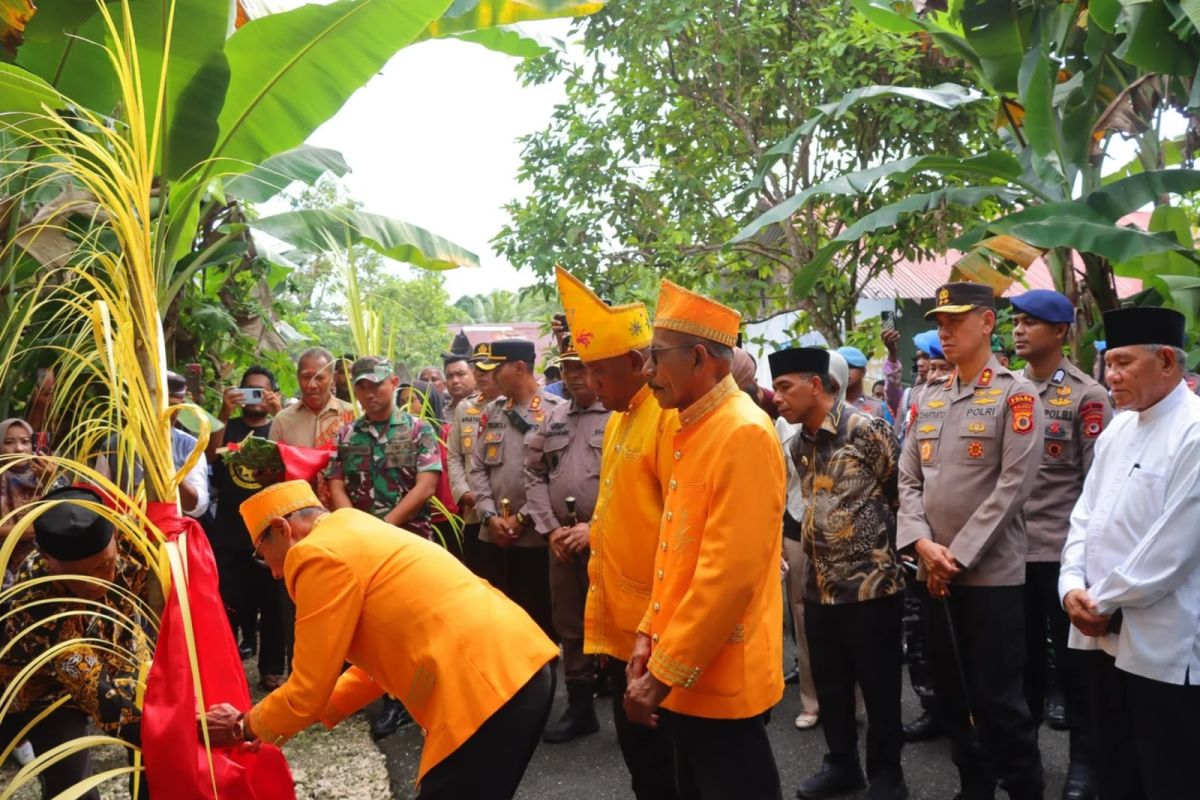
A customary approach to defusing conflict has been used in Southeast Maluku Regency. The Southeast Maluku Police, together with the local government, the Regional Leadership Coordination Forum (Forkopimda), and community and customary leaders, applied sasi hawear and a customary oath to stop repeated clashes in several locations, including Ohoijang and Karang Tagepe.
The ritual, which began on 28 March 2025 at Landmark Park in Ohoijang, was accompanied by security patrols and public outreach led by customary figures. Several locations previously prone to clashes have remained safe and calm since the sasi was imposed. It has not yet been lifted.
The experience shows how customary institutions can form part of efforts to halt disputes. Sustaining peace, however, still requires commitment from the parties in conflict, continued monitoring and an appropriate response where criminal offences have occurred.
Decky also highlighted the concept of the “three stones of the hearth” — government, customary institutions and religion — as complementary pillars in community life. Together, they are expected to build communication and prevent differences from turning into confrontation.
Rosa Yuliana Imoliana, head of the Maluku Provincial Secretariat’s Legal Bureau, said the regional government was encouraging stronger customary institutions through regulations that would provide a legal framework for the administration of customary villages in Maluku.
This strengthening is important to ensure that customary institutions’ status and authority have a clear legal basis in governance, while allowing them to continue their role in community life.
Maluku Police public relations chief Rositah Umasugi said resolving community problems requires collective effort and an approach that prioritises peace. Disputes between groups, for example, must not be allowed to spread and harm other residents who were not involved.
A community-based approach is one starting point for preventing conflict. Its success, however, depends on the parties’ willingness to engage in dialogue, honour agreements and respect the applicable legal process.
Reading the warning signs before conflict escalates