
Maintaining Optimism Amidst Geopolitical and Geoeconomic Risks
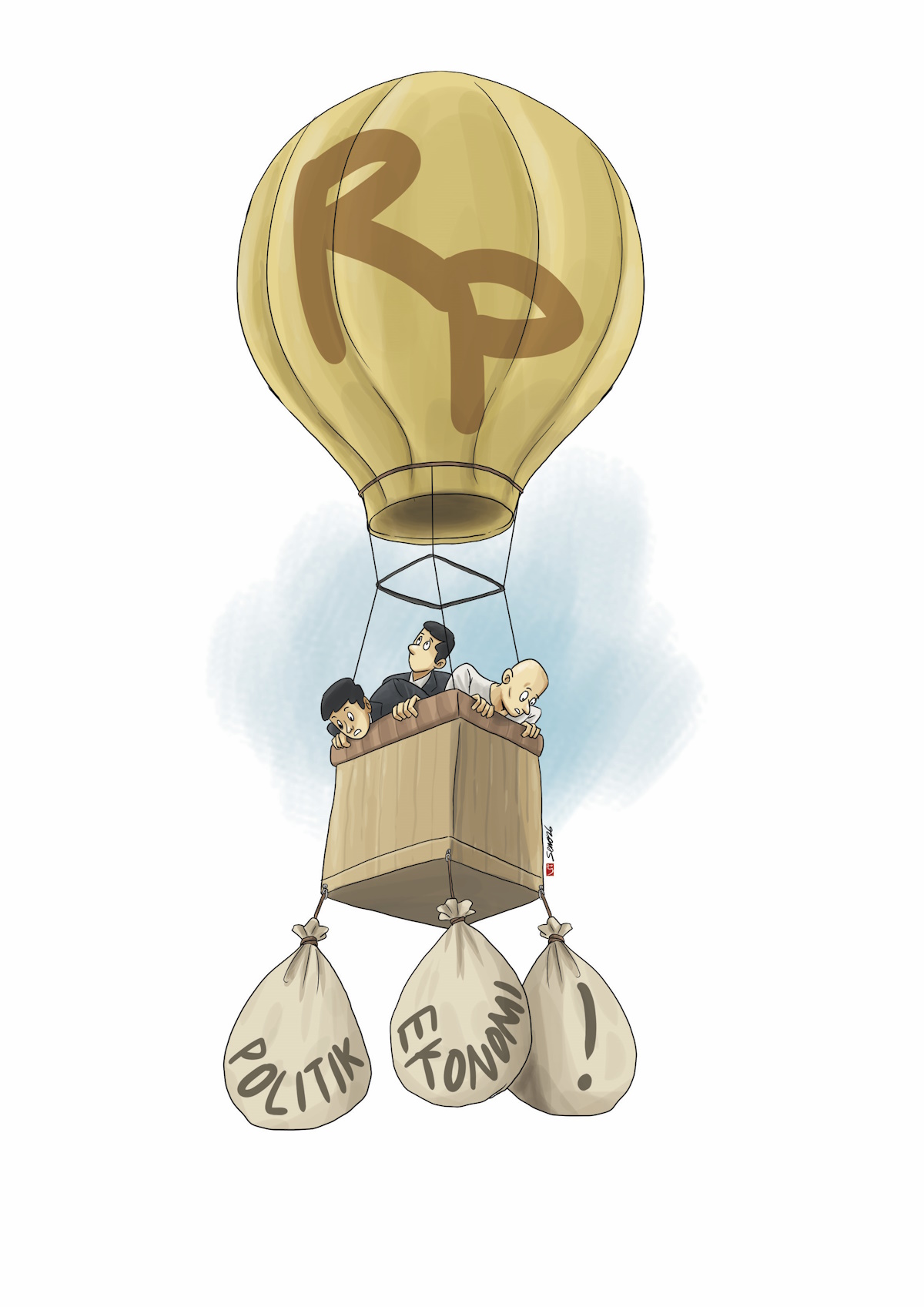
Indonesia’s economy has grown fairly well, averaging around 5.12 percent per year over the last four years (2022-2025), with details of 5.31 percent in 2022, 5.05 percent in 2023, 5.03 percent in 2024, and 5.11 percent in 2025. During the same period, the banking sector also showed positive performance. Average annual credit growth from 2022 to 2025 was 10.48 percent, with figures of 11.35 percent in 2022, 10.38 percent in 2023, 10.39 percent in 2024, and a slowdown to 9.69 percent in 2025. Annual growth in Third Party Funds (DPK) remained positive, albeit fluctuating, at 8.58 percent in 2022, slowing to 3.73 percent in 2023, rising again to 4.48 percent in 2024, and surging significantly to 13.83 percent by the end of 2025. The banking intermediation performance was also reflected in profitability metrics that remained in a positive zone, thereby increasing corporate value and stock valuations for publicly listed banks. Banking sector shares showed a significant price increase. These economic and banking sector achievements are valuable capital for navigating 2026 and beyond, which remain overshadowed by external and internal pressures. The global economy faces challenges amid geopolitical uncertainty in the Middle East, impacting energy supply disruptions, rising oil and strategic commodity prices, and increased risks to global trade and supply chains. This condition drives inflationary pressures and narrows the room for monetary policy easing in several developed countries. In the United States, expectations for a Fed funds rate (FFR) hike have increased due to rising inflation risks and uncertainty over trade and fiscal policy direction, which has dampened market sentiment. Entering July 2026, global risks rose again with the continuation of the US-Iran conflict. Traffic in the Strait of Hormuz, which had improved after an interim deal between the US and Iran in mid-June 2026, was hampered again following a re-escalation of the war intensity between the two countries in early July 2026. Another looming external pressure is the tariff war, which began in April 2025. In its decision, Indonesia was subjected to a 10 percent tariff, based on Indonesia’s commitment to an agreement on reciprocal tariff (ART) regarding the import of goods made with forced labour. Additionally, the US stated that products from Indonesia and 16 other countries would meet commitments on the prohibition of forced labour and enforce the ban. The adjustment of import duties on Indonesian products to the US must be addressed wisely and tactically by domestic policymakers so that national trade interests remain advantaged or at least not disadvantaged. The negative impact of the tariff war and the Gulf war is already being felt in Indonesia, where signs of economic and banking sector weakening have emerged over the past two years. By mid-2026, gross credit growth was still held at around 12 percent annually. It is termed gross growth because there is a high number of undisbursed loan facilities amounting to Rp2,490 trillion, equivalent to 21.52 percent of the total available credit ceiling. International credit rating agencies such as Moody’s and Fitch Ratings revised Indonesia’s economic outlook or debt rating from stable to negative in early 2026, although the investment grade status (BBB or Baa2 level) was maintained. There are three main factors causing the negative outlook. First, policy uncertainty, due to growing concerns over the consistency of the economic policy mix and centralisation of decision-making. Second, Indonesia’s medium-term fiscal prospects are considered likely to be affected by increased policy uncertainty and concerns over the consistency of the economic policy mix, including the credibility of governance, where the downgrade reflects concerns over weakening predictability of policy direction and unclear policy communication. Third, fiscal pressure, as the 2026 budget deficit is projected to widen slightly to around 2.9 percent of gross domestic product (GDP) with a less-than-optimal revenue ratio. Most tangibly, a massive wave of layoffs (PHK) has occurred in various regions over the past year. According to data from the Ministry of Manpower, at least 88,519 people were laid off in 2025. In the period from January to June 2026 alone, the number of workers laid off reached 43,000. Meanwhile, the Indonesian Trade Union Confederation (KSPI) recorded nearly 100,000 people laid off in 2025, and in the period from January to March 2026, the number of layoffs reached 27,000 workers. The wave of layoffs occurred due to several external factors, such as weakening export demand, geopolitical uncertainty, and changes in global supply chains. However, domestic issues are no less decisive. Rising production costs, pressure on labour-intensive industries, weak manufacturing competitiveness, and investment that has not been able to create jobs on a large scale have narrowed the space for businesses. The Central Statistics Agency (BPS) released data showing the national economy grew 5.11 percent year-on-year throughout 2025 and increased to 5.61 percent in the first quarter of 2026. However, in the second quarter of 2026, growth corrected to 5.29 percent. As a result, the labour market is actually shrinking. People are finding it increasingly difficult to get jobs with decent wages.