
Maintaining Indonesia's Global Competitiveness, Trivigo Urges Industry to Move Quickly on Solar Energy Adoption
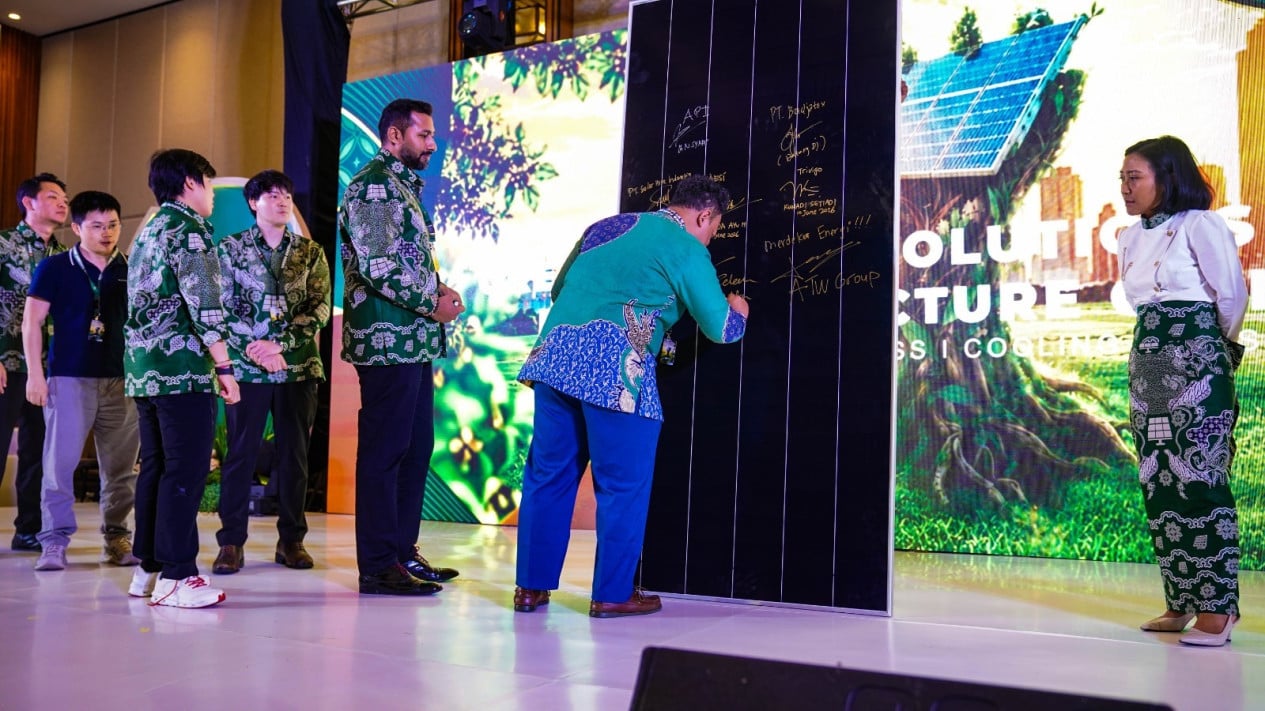
Bandung – Global market demands for low-carbon products, rising energy cost pressures, and increasingly open opportunities for renewable energy utilisation are pushing Indonesia’s manufacturing industry to accelerate its transition towards green energy. Chief Executive Officer of Trivigo, Kunadi Setiadi, asserted that three major factors are currently moving in tandem, creating the best momentum for industry to begin switching to green energy. According to him, increasingly supportive regulations, more affordable solar panel technology prices, and global market demands regarding the carbon footprint of Indonesian products form a combination that rarely occurs at one time. “There are three things that rarely move together, and all three are moving now. Regulations are increasingly supportive, technology prices are more competitive, and global market pressure on carbon footprints is increasingly real. When these three factors are aligned, delaying a decision becomes a loss we choose for ourselves,” Kunadi said at the Green Energy Solutions Forum for Manufacture Owners. Kunadi explained that energy cost pressure is now one of the biggest challenges for the manufacturing sector. In the textile industry, for example, electricity costs can account for up to 15 to 25 percent of total production costs. Amid increasingly tight export competition, energy efficiency is a factor that directly affects business margins and a company’s ability to win international markets. “A factory does not go bankrupt overnight because of an electricity bill. But margins will continue to narrow year after year until one day the company realises it is no longer competitive. Energy is the main foundation of industrial competitiveness,” Kunadi stressed. During the forum, he also dispelled the notion that solar energy investment is still too expensive. According to him, many industry players still focus on the initial investment value without seeing the long-term benefits the company can gain. “The right question is not how much the installation costs, but how much it will cost if we do not do it. With current technology and financing schemes, many projects can achieve a return on investment within four to six years, while the savings benefits can be enjoyed for decades to come,” he explained.