
Maintaining global trust in Banyumas coconut sugar
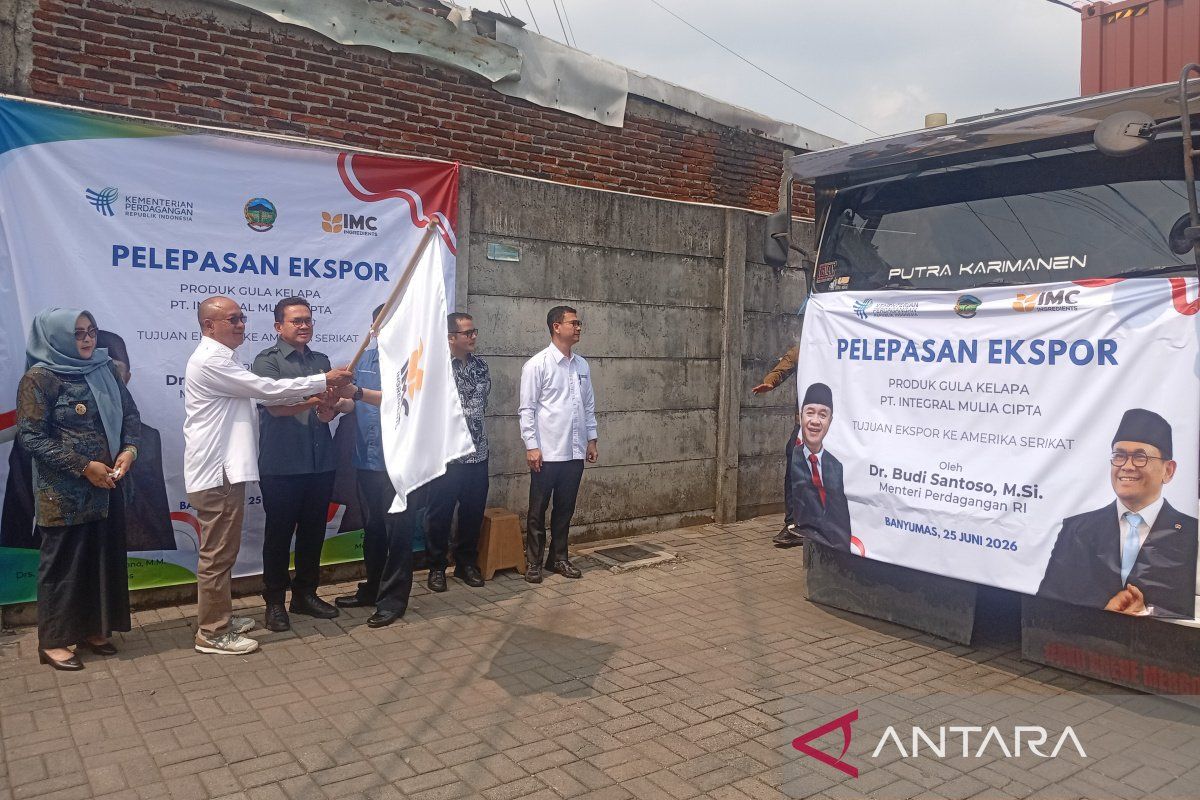
For Banyumas, maintaining its reputation as a major global supplier of coconut sugar is about more than just preserving export figures. Behind every grain of coconut sugar lies the hope of thousands of coconut sap collectors (penderes) who depend on coconut trees for their livelihoods.
Purwokerto (ANTARA) - Behind the sweetness of coconut sugar from Banyumas Regency, Central Java, enjoyed by consumers across the globe, lies the hard work of thousands of sap collectors who climb coconut trees every day to collect high-quality nectar.
However, in the global market, sweetness alone is not enough. Trust is the primary capital that must be continuously maintained through quality, certification, governance, and collaboration between various parties.
Banyumas Regency has long been one of the hearts of Indonesia’s coconut sugar industry. The Regent of Banyumas, Sadewo Tri Lastiono, noted that approximately 90 per cent of the world’s demand for coconut sugar is supplied by Indonesia, with about 80 per cent of that originating from the Greater Banyumas region, which includes Banyumas, Cilacap, Purbalingga, and Banjarnegara. It is from this region that coconut sugar penetrates markets in Asia, Europe, the United States, and the Middle East.
This global market trust was recently reaffirmed through the export release of crystal coconut sugar, or coconut sugar powder, valued at 46,000 US dollars destined for Chicago, USA, from the PT Integral Mulia Cipta (IMC) factory in Wiradadi Village, Sokaraja District. The factory processes coconut sugar produced by Banyumas farmers.
However, according to Sadewo, maintaining export markets is far more difficult than opening them.
Sadewo, who has experience as an exporter alongside his supervised cooperatives, recalled a bitter experience when four containers of coconut sugar sent to Germany during the COVID-19 pandemic were rejected because testing showed the presence of refined sugar.
According to him, the issue did not originate from the sap collectors, but was suspected to have occurred within one of the trade links after the products were collected.
That incident served as a vital lesson that a single small mistake can destroy trust built over many years. Therefore, improving cooperatives, monitoring the supply chain, and strengthening organic certification are non-negotiable necessities.
Organic certification even brings tangible economic benefits. Through the Premium CSR scheme from buyers in Europe, cooperative members who have obtained organic certificates receive an additional income of approximately Rp5,000 per kilogram of coconut sugar. This incentive directly increases the income of the collectors while encouraging them to continue maintaining product quality.